Category Archives: Nature

Hawk and Crow

Hawks were much on Henry’s mind during the April days of 1855. Often, he had taken to the water, and, as he rowed and floated, he saw fish hawks; being Henry, he wanted to know what these hawks were eating, and a number of entries have a catalogue of pout parts found beneath a hawk’s perch – another recorded arc in our round world’s cycles. And whenever he walked he scanned for them too: “Going up the hill, I examined the treetops for hawks.”

Throughout these days and lines wherever hawks appear so too does the loud, dark shadow of the crow. For days now I’ve had this avian pairing in mind as another chapter of its story plays out atop a tall hemlock next to the Sudbury River.
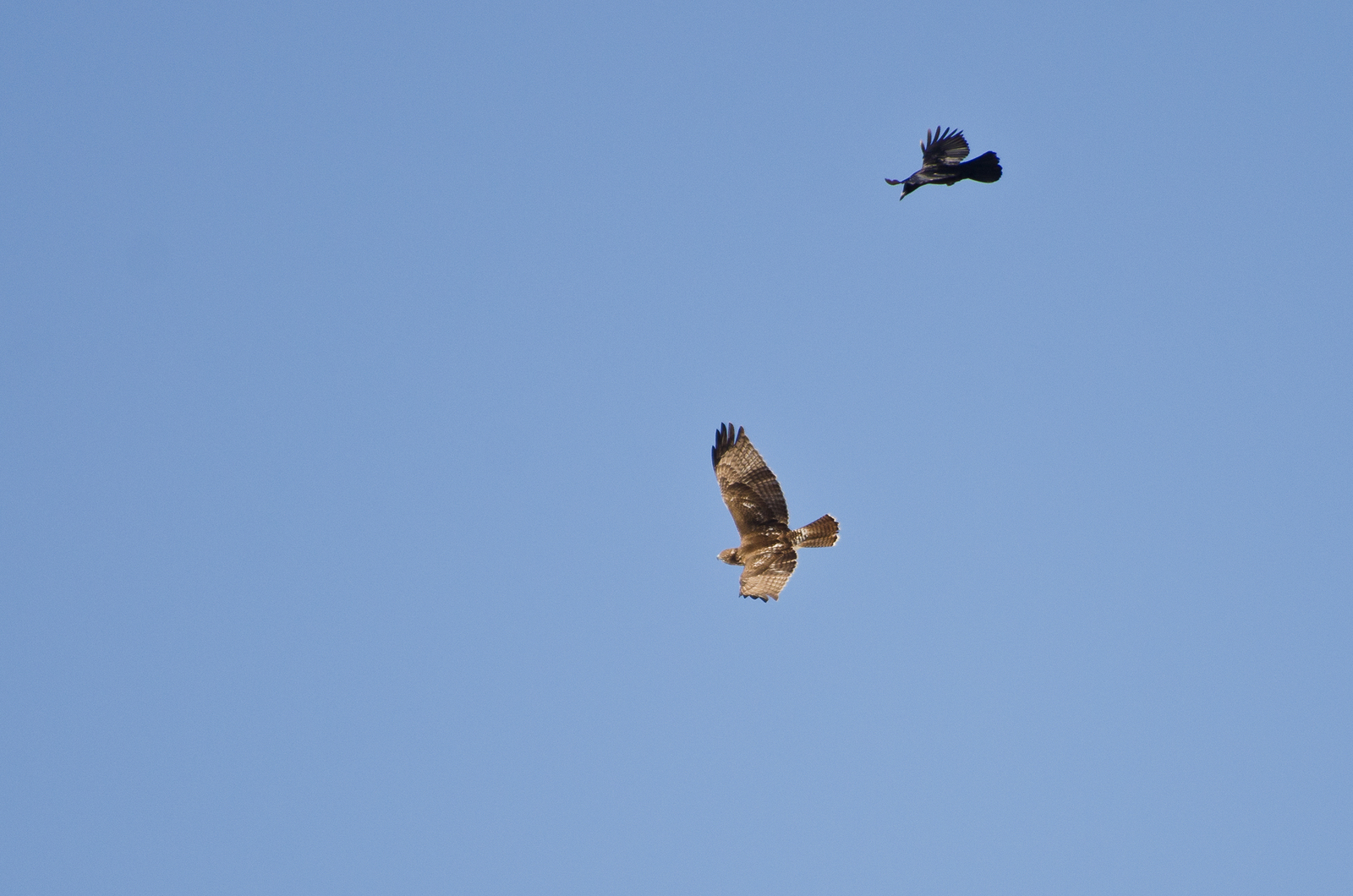
Air Dance - Hawk and Crow

Air Dance – Hawk and Crow

Hawk Notes from Three Spring Days

Most mornings this spring, the tall hemlock by the Sudbury River has been topped by his figure. Still from this distance, sentinel-like, this young redtail hawk takes in the floodplain, and were I a four-footed scurrier, I’d hope to be aware he’s there.

Morning after a strong front blew through: no time to be totem for the redtail today. He comes to his morning perch and lights, folds his wings; immediately he has to flare them for balance, then the red rudder of his tail fans out and tips him forward. He looks like a child on a teeter-totter, or an athlete rehabbing his bum ankle. For a full minute he wobbles; the whole world of his vision must rock. Then he opens his wings, flies off downwind, sinking to and skimming the field before pulling up into the gray branches of just-flowering, shorter maple.

And this morning under low clouds, I’m watching as the hawk pulls up flaring wings to his perch; above and fully engaged is a single crow, and the crow begins a series of inverted parabolas, diving on the hawk, whose feathers are truly ruffled – he still looks as if he slept in them. Then, for a minute or so, the crow lights in a nearby tree crown, and, through binoculars I can see him “talking” at the hawk, who turns to face him. “Yo, young fella,” he seems to say. “I’m comin’ right back; I’ll be on you all day like red on your tail.” The crow then lifts off and resumes his diving harassment, and, at each near approach, the hawk ducks his head a little and opens his beak…and I wonder if there’s a price for flying too close, or if this is another part of the world’s tutorial for this young hawk, who also seems to be in his first molt.

On this third morning the washed air after a rain makes the redtail shine, even as his primary color is dun. He is perched to the right and below his usual uppermost point, and perhaps that’s because his black nemesis is here too. Can this be the same crow? Did he sleep nearby, open his yellow eye and say, “Where’s my hawk?” stretch his wings and resume his inverted parabolas of outrage? Really? As I watch through glasses, the hawk tracks the swooping dives of the crow, opening his beak and flaring a wing and cringing (it must be said) at each approach; the crow drops into my magnified field of vision, accelerating to and by the hawk’s head, then rises away and out of sight. I time his appearances – every 7 or 8 seconds, he’s back; when a longer interval arrives, I put down the glasses and find him atop a nearby maple. Even without magnification, it’s clear he’s still talking at the hawk, even as he must be doing whatever the bird equivalent of panting is.

Then, after all this, the crow suddenly arrows away south; the hawk watches him go, wondering, I’m sure, when he’ll be back. I wonder too. For now, the hawk is again alone on top, totemic, imperturbable.

Spring is bird season in Henry’s journals – and here today. Their morning chorus chases off the cold winter silence, and everywhere they are constructing the coming season from beakfuls of grasses and twigs. Overseeing it all is a Sudbury River hawk.
Why My Daily Run Is Better Than Climbing Everest

We near May, and it’s the Himalayan silly season again, the narrow slice of time before the monsoon makes already extreme weather impossible for climbing. And in the various base camps beneath the planet’s grandest mountains, expeditions are arranged like little summer camps for adults. I say this because most of the climbers there are with commercial expeditions led by guides who function as counselors – they make all the decisions, set the schedules, assess the ground and sky before them. And the “campers?” They follow along, plod and haul themselves, or are guide-hauled, through unimaginable weather and terrain; occasionally, often in clusters, they even lose their lives – it is after all an extreme camp. But mostly they do as they’re told. Some come back having “climbed” to the world’s highest summit.

Today, at noon and under the springiest of skies, I stepped from my door and set out on foot for local woods. I had in mind an hour’s run, mostly of trails softened by recent rains and outlined by a cold front’s scrim of snow. Some minutes later, I reached the old railroad grade that runs alongside the Assabet River, and I turned upstream. The grade is slight and only a few root-bundles disturb its reliable surface. And so it wasn’t long before I’d fallen into a lulling cadence and my mind had drifted free. I had mountains on my mind, mostly from my habit of carrying a topo map with me for those spare moments when I’m waiting for something – a class, a colleague, a pizza. My maps usually feature the White Mountains or local USGS quadrangles, but recently the Himalayas have been in my pocket.

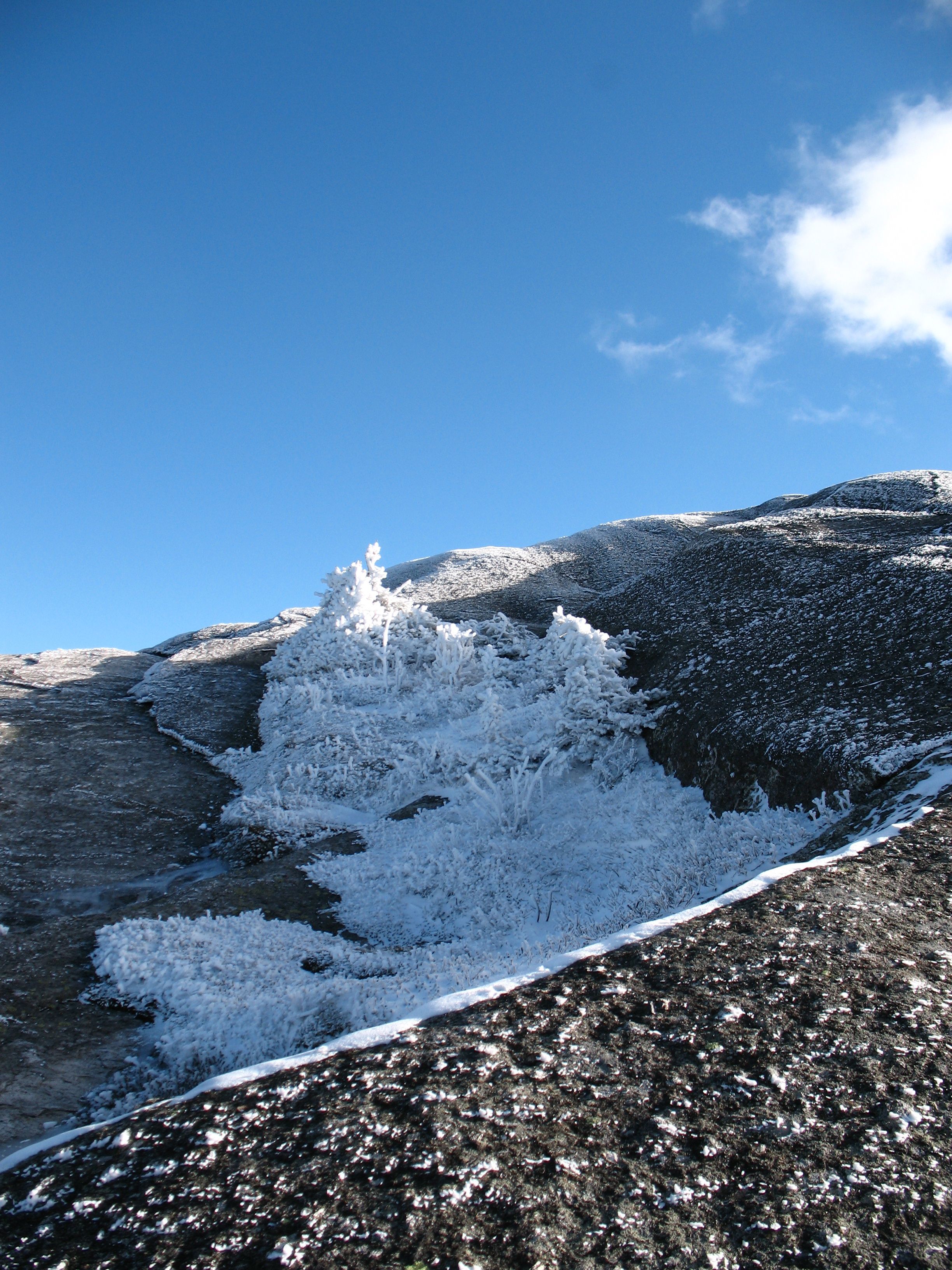
Pocket-world, Home Mountain

Pocket-world, Home Mountain

Perhaps that’s because I’ve been thinking about the long ago, when my parents realized a lifelong dream and walked 175 miles from Kathmandu to the Base Camp of Everest, took in those awesome uplands from 16,000 feet (took hundreds of photos too) and then walked the 175 miles back to Nepal’s capitol. I was in high school at the time and relieved to be allowed to stay there. And, of course, they brought back maps, which I read avidly. For my parents an essential part of the dream was walking the Himalayan landscape and approaching Everest under their own power. Yes, they had a Sherpa guide and small party of porters, but this was 1965, well before the trekking era set in; only sporadic expeditions of real mountaineers or oddball dreamers visited in those days.

For some reason, around that time, and despite a fascination with and affinity for the upland world, it became clear to me that I was happy confining farflung mountainscapes to maps, that I liked my local hills enough for a lifetime. And that, unlike many of my younger self’s convictions, has held.

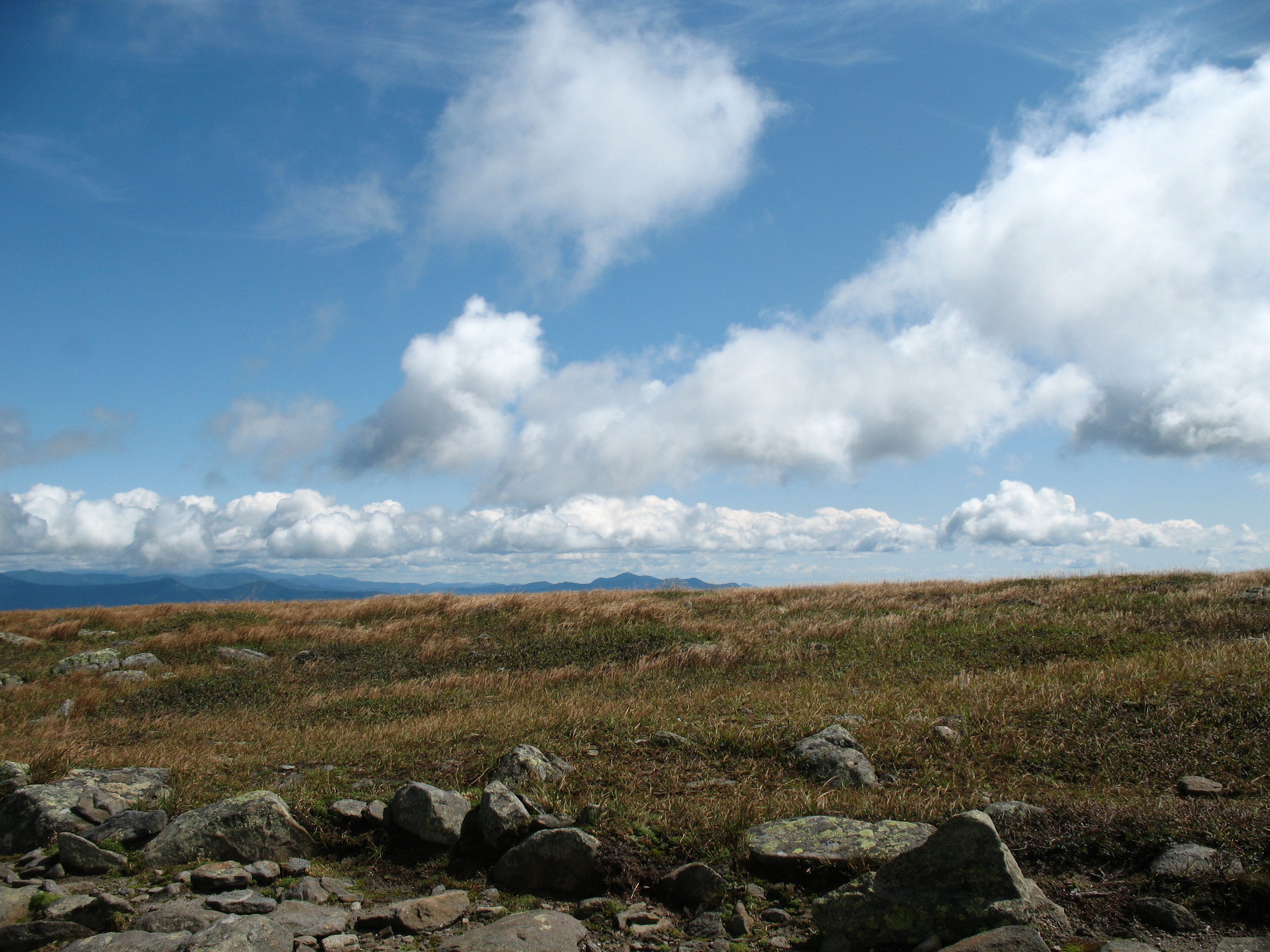
East from Moosilauke, Another Home Mountain

East from Moosilauke, Another Home Mountain

Many years later, when Henry Thoreau’s writings became walking companions, I found expression for the deep local travel that I had intuited as a teenager. It began to seem to me that where I walked and ran was all one landscape, and that, when I traced the contours of one of my maps, I could also use my feet to follow on nearby trails. One day in midwinter I was looking out at the roof-dumped snow just beyond a plate glass door; up its vertical ice, a cold-stunned fly was climbing, making his way higher across the seracs and up the gullies. Surely, that fly was on his own Everest; it was nearby.

So too is mine. No need to hire planes and outfitters; no need to arc across the world; just unfold the local quadrangle and aim for those two bunched contours you’ve never visited…or the ones that puddle like silk dropped to the floor. They all run together underfoot.

Up to My Eyes in Walden

It’s not often that free time and a jewel of a day coincide. Typically, we watch a limitless blue sky and its windless, late summer light from behind the smeared glass of work. One of the most common fantasies I hear as colleagues siphon off coffee on such a morning begins like this: “I can’t wait to have a day like this off, so…” And then he or she trundles off to one of work’s rectangles.

Thursday, September 19th sets up this way: it’s cool and windless in the morning; the humidity is low and the trees and river look sharp edged in the clear, slanting light. I wonder, wonder I do – what’s my day looks like once my late-morning class is through? A few reshuffled appointments and a pile of abandoned papers later the afternoon looks as clear as that slat of sky between the high pines.

And so, a little after noon, I step between two trees onto the Wright Forest trails behind Walden Pond with an eye on a long ramble whose route I’ll make up as I go. A quarter of an hour in, I reach the unmarked turn-off for the old race course whose crooked oval persists these hundred-plus years after the amusement park on Walden’s west end faded. I decide to canter a circuit of the old course, where I am the slowest horse; still, I am also the only horse, and so I finish first. My prize is more trail-time.

I’m soon at the pond, where I amble along its north shore and climb over its uptics before easing through the growing congestion on the east-beach side. A few school-groups note the pond dutifully in journals, while their tech-addicted peers hide from teacher-eyes in the shadows and expect from their screens. An assortment of other refugees from work and other obligations loll pondside. Almost everyone is looking out over the water. Along the old esker that leads me away, I see flashes of pond through the trees, and then I reach the slope leading up to Emerson’s Cliff, a small crag at suitable remove from the nearby bustle.

As ever, no one’s here, but a breeze stirs and the air is cooler atop this mini-mountain. Down its rocky backside, the trail enters an absent world; the worn track says others walk here, but I’ve never seen anyone. How quickly we leave a crowd behind when we deviate from the usual rounds. I near the beaver lodge in the swampy dell below the railroad tracks and see the old gnawed trees tipped into the water. Then, across the tracks again and into the big pines of Lincoln. “Why not,” a wandering voice asks, “visit Misery?”

Ten minutes bring me to the left to Mt. Misery. Misery’s backstory has eluded me, but the name seems inapt, even inept, for such a fine cone of stone in big woods.

I’m retracing part of my route and sweat rolls from my running; “the pond, repeat after me, the pond,” says some interior voice, and I repeat, “the pond.” Fifteen minutes later I’ve reached a sliver of beach on the southwest shore. The water level is low, but, as ever, the greeny water is clear, even after a summer of sloshing by the lotion-slathered leviathan that is Walden’s daily beach crowd. What resistant purity. Shoes off, shirt too. Step, step, step, plunge – pale critter submerging. I swim a few strokes, let my feet fall and note that the drop-off is already over my head. My toes tread in water five degrees cooler than the surface. Belly to the sky, I float and let the land’s heat and the step step of minutes wash away.

Walden Water

Some time later, I am in four feet of water with my eyes a few inches above the skin of the surface. Across from me is Thoreau’s Cove, its guardian sandbar speckled with waders; distant kayaks glide forward like swans; the pines point to the sky, which looks immense. A rogue duck disturbs this reverie, paddling a few feet from my nose. Perhaps I look like a pale stone with a token scrap of  moss on top. The duck pays me no notice. Instead, he is avid for something on the unrippled surface; he keeps stabbing his bill right and left, paddling back and forth in front of me. Am I being taunted? I begin to wonder. Perhaps this is simply a quest for some duck-truth. I look more closely and see finally that he is hoovering up tiny flies from the surface. This warm day has called up a new hatch, I suppose, and those that break the surface-tension are mired in the water. Perfect picking for my duck. A tiny fly drops lightly onto the water an inch before me and doesn’t dent the water; he lifts off again. The duck gathers his less light-footed brethren.

As I’ve watched, the water-envelope around me has warmed. I stir, and a little cool brushes me. In my crouched stance, in my clear water with its skin stretching out and out, I am effortlessly calm. The day seems paused. Soon, I’ll emerge, drip dry, towel sand from my feet with my shirt and put on my shoes for the Fairhaven trail back to my car. I will find that I’ve been out for the Thoreau-approved four hours.

But for now, let’s leave me here duck lucky and up to my eyes in Walden.


Note: for a superb history of the pond see Walden Pond – a History by Barksdale Maynard.