Category Archives: Walden

Narcissus and Henry

Reflective Writing Near the Water’s Edge

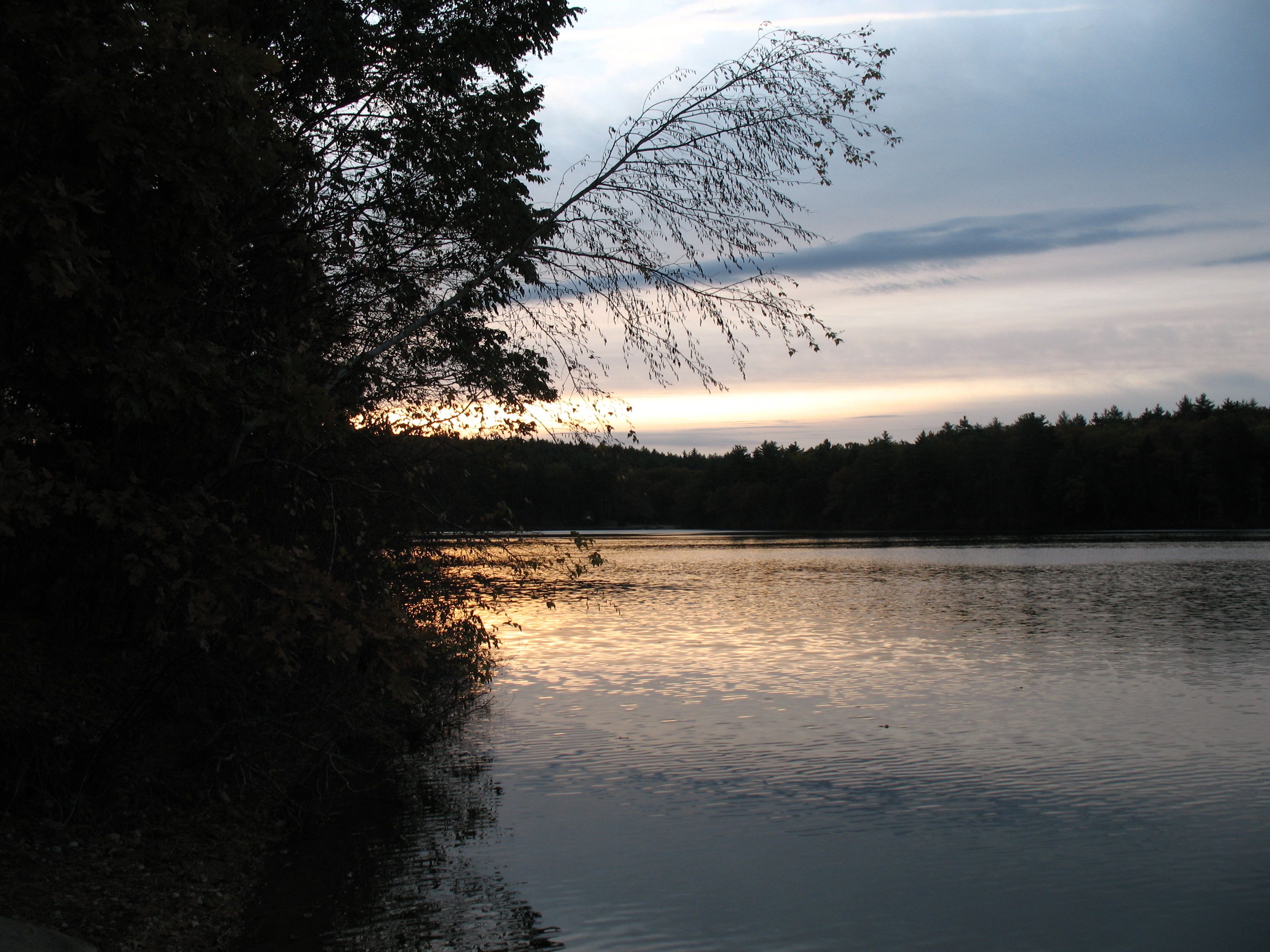
Walden Pond is alive again with wind and light. I’ve been there often during the past month, admiring its blues and greens (depending upon where I am in elevation and the day’s light) and wondering at its still-clear waters. One day soon I’ll wade in. But for now, as the water warms a bit each day, I’ve only been looking, and, as looking often does, this pond-gazing has triggered memory.
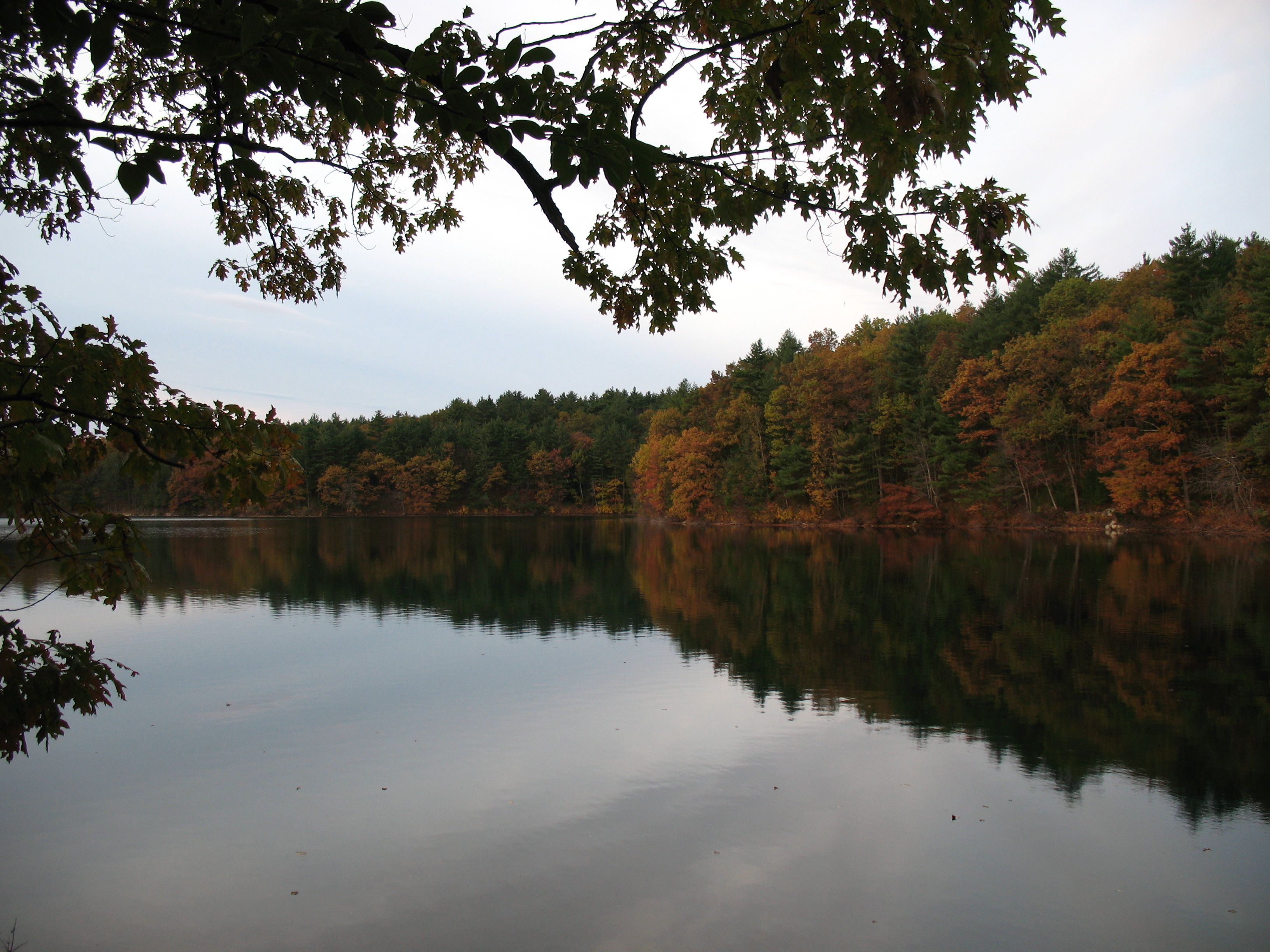
Walden's Reflective Waters, (albeit in a different season)

Walden’s Reflective Waters, (albeit in a different season)

Last spring, a student sat down to describe a dilemma she’d encountered while writing about her reading of Walden. “As I write, in part about myself, I don’t want it to seem narcissistic,” she said. This worry followed a description of the expansive pleasures of meeting with friends to talk about whatever ideas were current in the air of school, to talk about something other than the self.

As we talked over her concern, a thought grew. First we looked up the legend of Narcissus and reread the story of his falling in love with his reflection, which he took to be real. Before he saw himself, Narcissus was puzzled and harried because the local nymphs simply wouldn’t leave him alone. “I’m just me, just a man,” he seemed to be thinking as he wandered and pondered this unwanted attention. Then, he came to a pool of water and looked down. All that attention seemed merited now; Narcissus couldn’t bear to leave the pool in which his beautiful image floated, and so he wasted away there.

Then we began to talk about Henry Thoreau and water.

Henry too looked into the waters of Walden often, she noted, but, when he did so, he saw something other than himself; he saw, in fact, another being, perhaps a companion-self – the pond.

All of this got me to thinking that what we were really talking about was the difference between Thoreau’s faith in “I” and our society’s fascination with “I.” At the beginning of Walden, Thoreau points out that he will write about himself, about “I,” in no small measure because he knows no one else so well. But this writing will not celebrate the trivial “I,” the “I” of gossip and small affairs. It will, instead, follow the questing “I,” the one who would learn of the world and send that learning on to others…with the admonition, finally, that they learn for themselves, that they learn the “I’s” they are.

So, to see yourself in a pond, not because it looks like you, but because it lives like you seems the right distinction. As we emerged from our conversation, my student went off to write, and I thought about my faith in the “I” she is and will be.
Death from Above – Life Everywhere

By Ashton Nichols

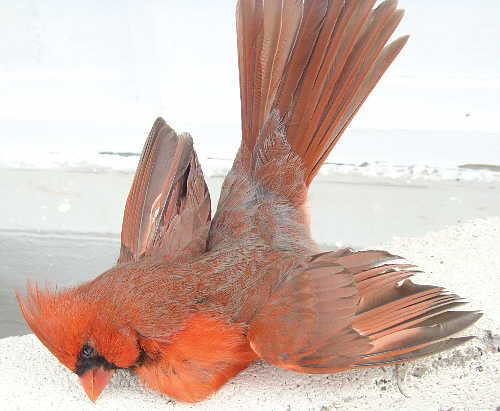
A juvenile red-tailed hawk in the woodlot behind our house roosts regularly in one tall locust tree and one tall pine tree. On a cool, recent May morning, he has slaughtered a large, brilliant red male cardinal and left his prey splayed in a crucified pose on the path that cuts toward the back corner of our property. The cardinal’s wings are angled on the straight horizontal, his head is completely gone, and his formerly fat midsection is now flattened and open, all of its organs absent. A blood-red mass in the middle of his body matches the color of his feathers almost perfectly. One small piece of his innards hangs over his reptilian leg skin and onto the ground. His tail is fanned out perfectly, as if a taxidermist or a museum exhibitor had arranged it in this fashion.

crucifiedbird

As Thoreau said of the recently dead horse that was lying in the woods not far from his Walden cabin and rotting in the 1850s, “I love to see that Nature is so rife with life that myriads can be afforded to be sacrificed and suffered to prey on one another; that tender organizations can be so serenely squashed out of existence like pulp.” What he meant, and what he repeats often throughout his masterpiece, is that death is the engine of life, death is the substance of birth. Without death, there would be no new life and no raw materials to fashion the next generation of life. This is actually what disturbed those early Victorians most when they first read the works of Charles Darwin. It was not that we were descended from ape-like creatures, nor that we were part of a long line of remarkable living beings to whom we are obviously closely related: all of us from mammals to fish (and even further) have two eyes, two ears, one nose but two nostrils, two arms and two legs–or thereabouts–and one brain. That hawk’s brain looks a lot like your brain; so does that cardinal’s missing brain.

deadhorse

The next morning the caught cardinal is gone, no remnant of the red-tailed raptor’s feast remains, nothing at all except one tiny fluff of still blood-red feathers. Where has that beautiful body disappeared to on this cool and sunny dawn? On this second morning, the juvenile red-tail is still perched above his killing field, his head clicking from side to side, his eyelids batting quickly, his talons clutched tightly on the wide branch beneath. Later that afternoon, he is joined by a second hawk, the two vigilant hunters standing only inches apart, their eyes surveying the wide farm fields and woods toward the low mountains beyond, off in the north and the west. All cardinals in this neighborhood of ours–beware!

Solarity

The other day, after reaching Thoreau’s closing image in Walden – “The sun is but a morning star.” – we went to the pond. We left early, driving the two miles over quiet roads and arriving (with permission) at the closed park. One lone angler was on the east shore; we headed for the house site. Outside the book after six weeks in its room, we were headed back to where it began.

At the house site, we crowded into the little post-and-chain rectangle and read a few passages about the March morning in 1845 when Henry Thoreau began building his house. We looked up at the “tall arrowy pines” and in imagination felled a few; we “left the bark on.” Then, we admired the sprawling cairn nearby. Now, it was time for the water and the sun, and each of us went to a sitting place along the banks of the northwest shore. Everything was afire with sunlight, even the undersides of branches had caught the light of the “second sun,” the one that flashes up off the pond. Already the night cold was gone; the new day was afoot. The sun had brought it.

Morning at the pond

Morning at the pond

While my students entered their various solar reveries, I watched them from across Thoreau’s cove, and it wasn’t long before I entered a reverie of my own, this one about the power possible from the same sun that lights Walden. Are we not, clever species that we are, able enough to use that power directly instead of continuing with our habit of unearthing its stored remnants and burning them, thereby setting off a cascade of unnecessary change in our atmosphere?

That, in turn, made me think of Thoreau Farm’s solar challenge – to which we have given happily. The challenge seems especially apt, as I emerge from another reading of Walden, where it has been a gift to be brought over time again to this morning star, and then left there on the shores of a new day to choose my direction.

And, now that we have “fallen back” into Standard Time, it is a gift to awaken each morning to the low-angled, November sun as it streams through the leafless trees. Even at this northern latitude and in our shortened days, the sun has power.

That morning, we left the pond warmed; perhaps some of us were newly awake. The sun had worked its daily magic.

I hope you’ll consider helping us bring some of this magic to Thoreau Farm.