Category Archives: Nature

Borne Along

“Skated to Baker Farm with a rapidity which astonished myself, before the wind, feeling the rise and fall – the water having settled in the suddenly cold night – which I had not time to see…a man feels like a new creature, a deer, perhaps, moving at this rate…I judged that in a quarter of an hour I was three and a half miles from home without having made any particular exertion, – à la volaille.” Journal 1/14/1855

And that seems just the expansive note to counter winter’s deepness, where often we read and feed our way from afternoon’s light and evening’s dark. Today that deepness burrows in as cold of the nose-webbing, frost-feathery sort. At first light it was 10 below zero, and the rhododendron leaves were curled in tightly on themselves like so many little cigars; the birds were boisterous at the feeder: fill it again, they seemed to say. The snow looked confident in its new blue shadows.

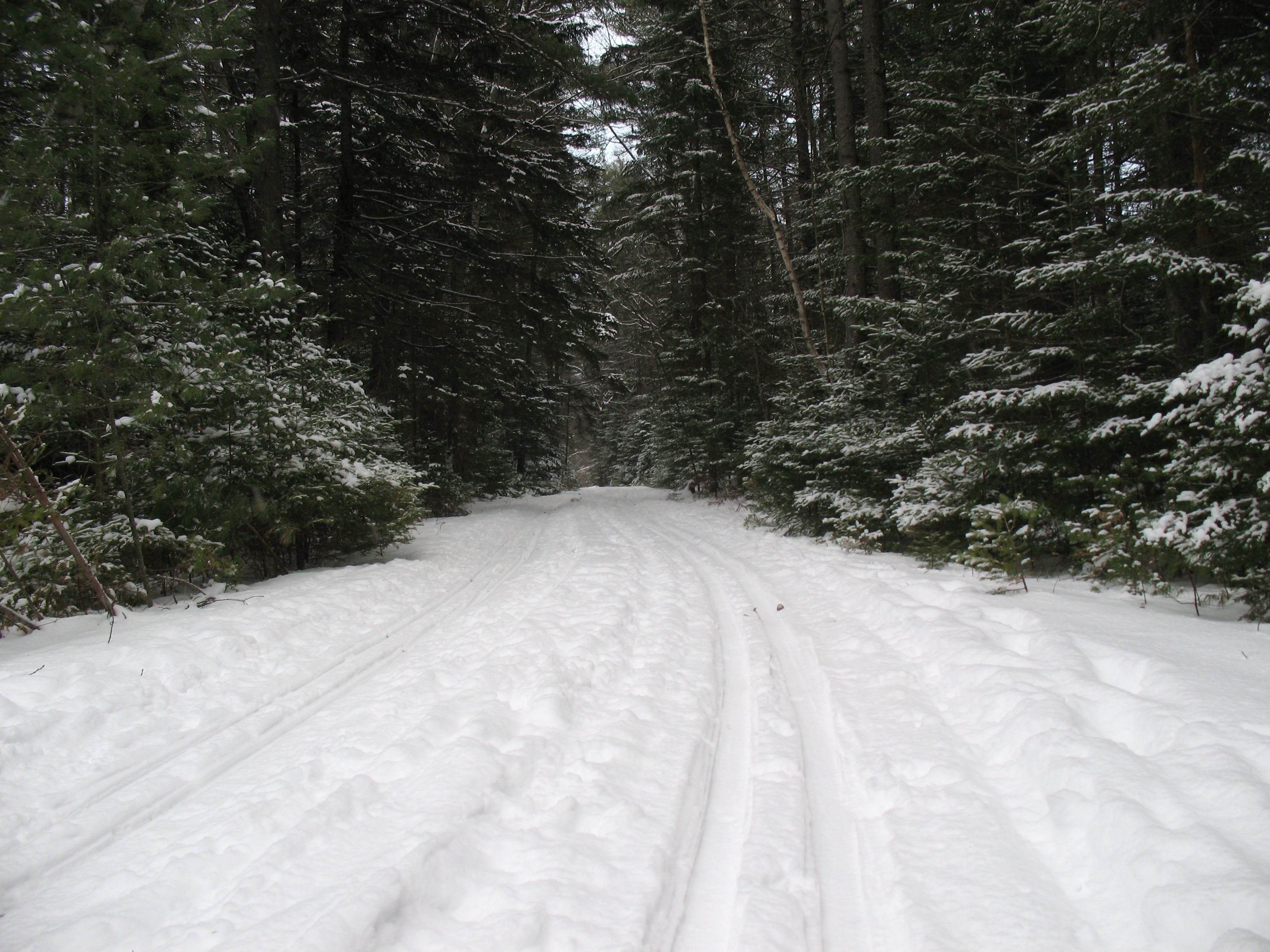
By noon, however, a gray lid had slipped over the sky, and, as I streaked wax on my x-c skis, the light was flat. I would ski down a narrow woods road to the edge of a tidal marsh, and then run along its flank to the tundra of a local golf course, where I would loop back to my start-point. Cross-country skiing, like its cousin, skating, depends upon a mix of traction and slipperiness. On a good day the way the snow crystals impress themselves upon your skis’ waxed bottoms creates just enough bond to allow you to push off; then your ski glides forward over the glassy crystals. And then you press down your ski and kick off a next stride. And a next. When all is well with this subtle bond-and-glide between wax and snow, you fairly float along the surface, warmed by the effort and aware only of the cold by way of the wind you generate in passage.

So too the edged grab then glide of skating (which has, or course, become its own form of x-c skiing, though my skis are the classic sort).
The Way Out

The Way Out

There are, of course, other days, ones of slippery labor, when there’s no bond and you flounder in place. Or there’s so much bond that the snow clumps to your skis and you are reduced to lumpen-footed walking of the most awkward kind – imagine no toes on your six-foot feet.

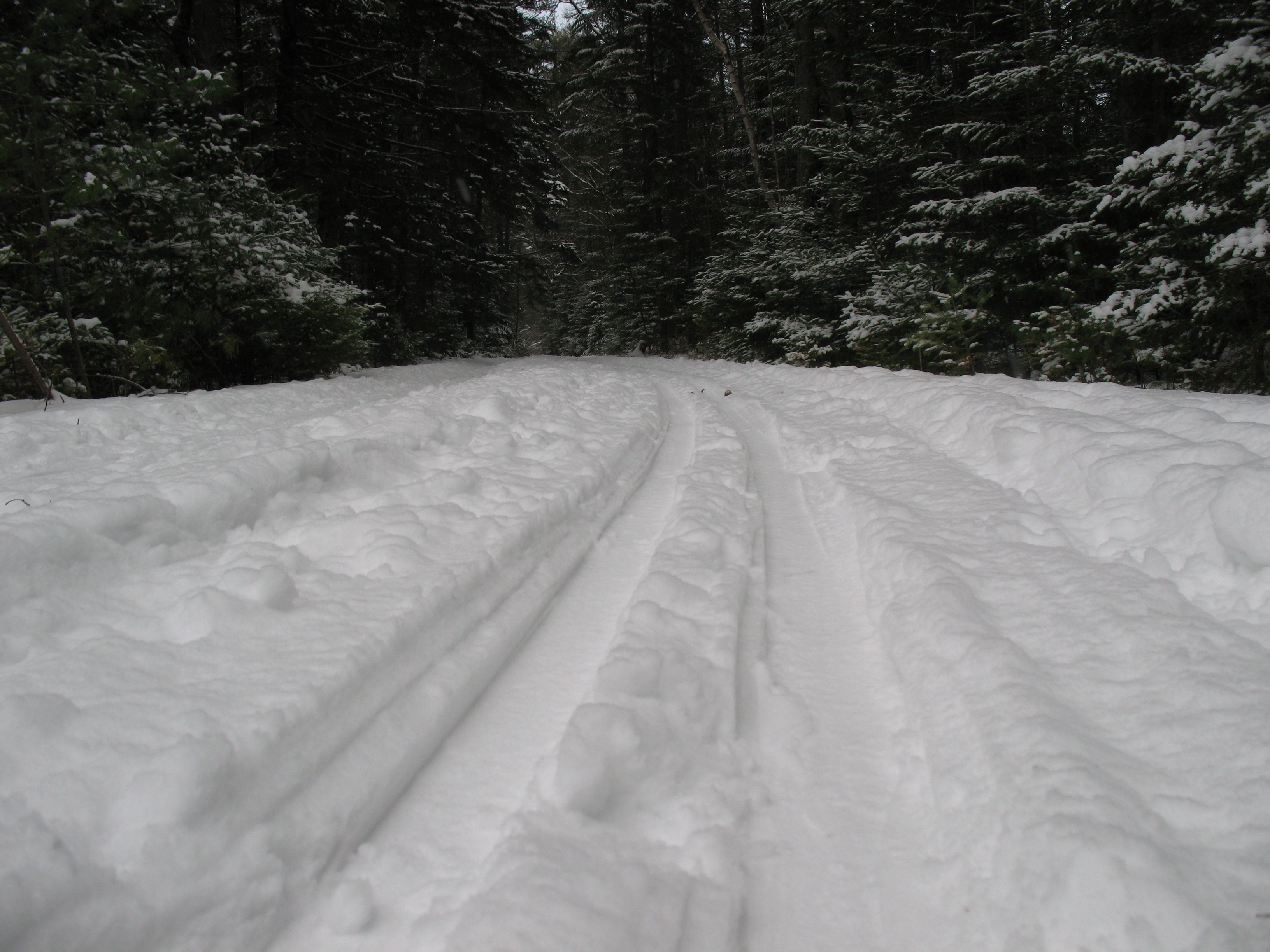
But let’s live in today’s ease of flotation over snow, traverse this bit of winter borne up on a surface that must be as close as we ever get to walking across the tops of clouds.

“Without having made any particular exertion, – à la volaille,” as Henry said.
Atop clouds of snow
Atop clouds of snow

Little Moose Tale

Not long ago, as winter settled heavily over us, I read in our local paper of a distant snow-story that made me smile. The story featured an avalanche, some snowmobilers and a moose. Not much room for good result with those variables, but here was surprise.

On a Sunday, three men, Marty Mobley, Rob Uphus and Avery Vunichich, set off on a snowmobiling outing some 50 miles northeast of Anchorage Alaska. Enough new snow had fallen to make the men wary of the slopes that rose above. Avalanches, even small ones, move with a speed and power that can outrun snowmobiles (or skiers) easily. As they drove through a pass on their way out, the three men noted a slope marked with both ski and moose tracks.

An hour later, on the way back, they arrived at the same slope and found that it had avalanched. When they saw movement the three men hurried toward it; that movement resolved not as a skier, but as a nose sticking up (barely) from the snow. And that nose was a moose nose.

The three men retrieved their shovels and began to dig. Some minutes later they had uncovered enough of the moose to allow it to move. The moose stood; the men stood back. Then, the moose ambled off.


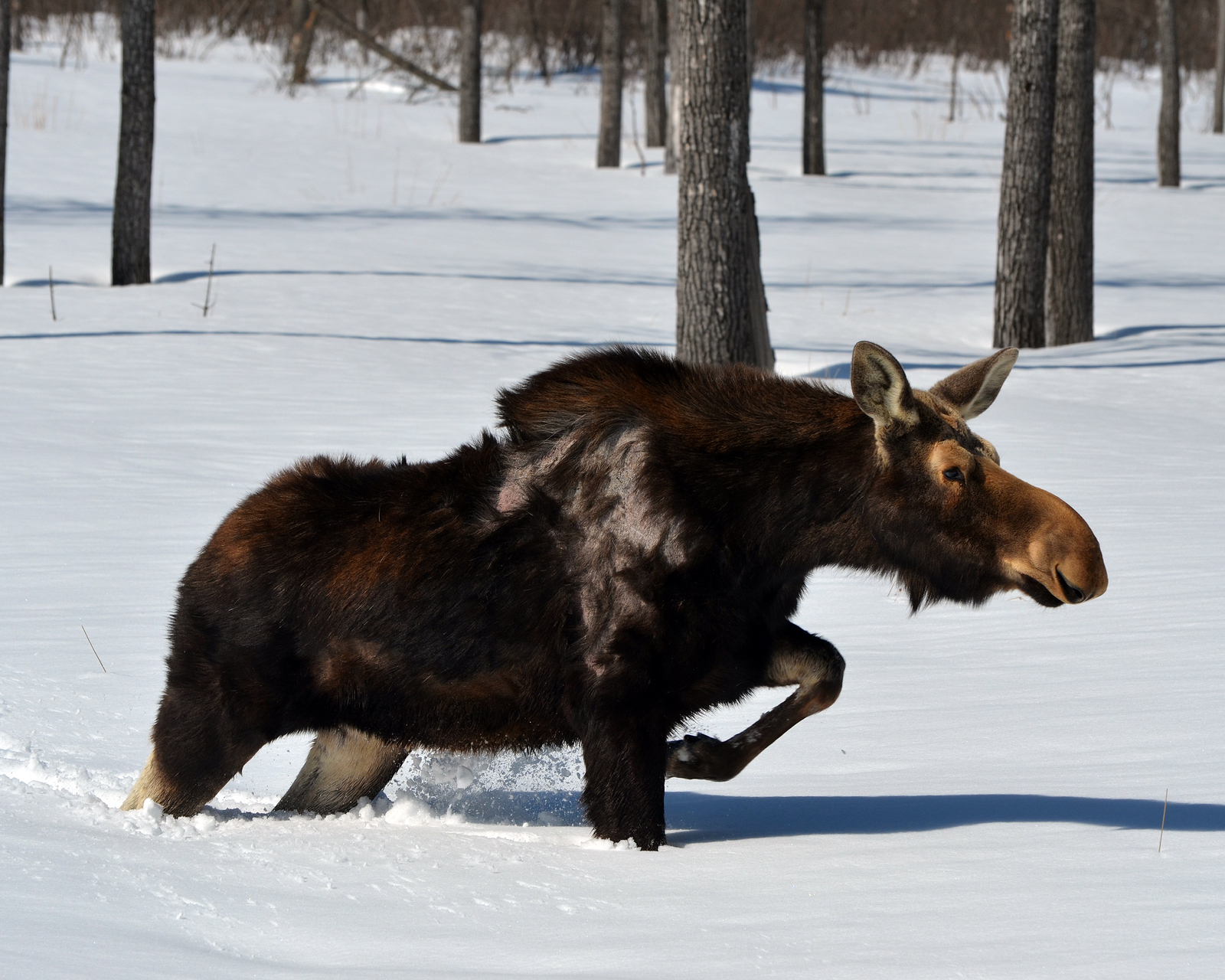
A moose, not the moose, in usual motion.

A moose, not the moose, in usual motion.

Imagine for a moment the moose packed in the snow. Avalanched snow sets quickly, firming up like cement; the moose was stored beneath it like an exhibit, but his nose must have scented the three men as they approached and then began to shovel. All those minutes of unnatural nearness until he could rise and resume the usual distance between moose and men.

And imagine the men working their shovels carefully along the sides of the stilled moose; imagine the man who brushed lightly the snow away from the great marbles of the moose’s eyes.

Drunken Trees – the Hang(ing)over

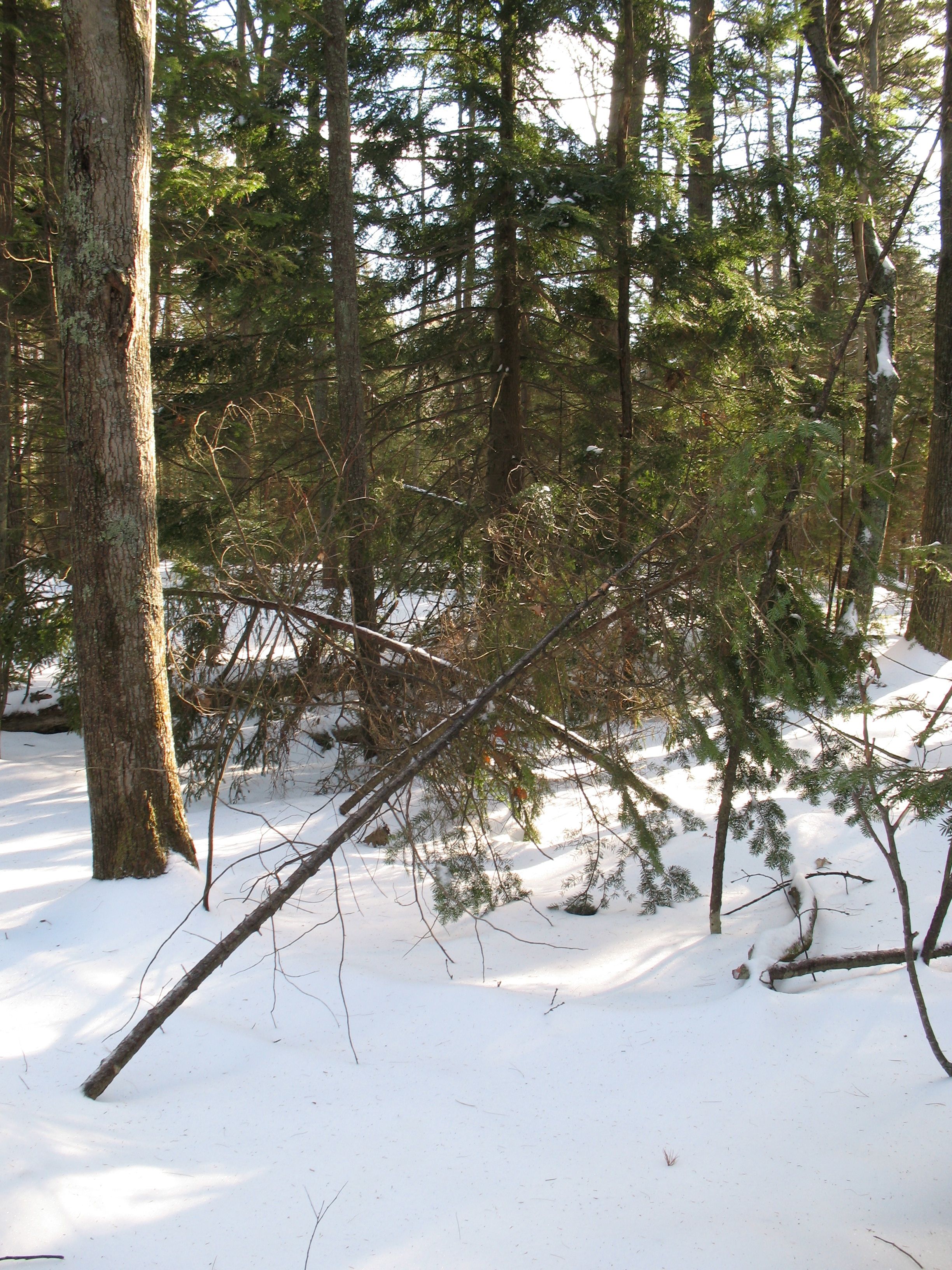
There’s a story aslant in our local woods, its angles evident to any walker who pauses to consider. A number of the balsams and white pines under 20 feet in height are tipped variously in imitation of the better-known “drunken forests” of the far north. Those trees, living in the soil above permafrost, aim, as their peers world around do, at the sun. But sometimes – more often lately as the far north warms – when the permafrost melts in planes or pockets, the soil above it drops unevenly. And, of course, the trees follow. The treescape then resembles a geometry problem gone wild.

All of this came into focus after a little wondering while wandering the other day. What, I wondered, can be up with all these partially downed trees? The obvious suspect was our Thanksgiving snowstorm, a sullen fall of white cement that did the usual pruning of limbs and outing of power. Such evidence is everywhere in the neighborhood, awaiting spring clean-up. But the tipped trees took a little more thought and sifting of images; when I recalled a photo of a drunken forest, the story came clear.

Tipped little trees

Tipped little trees

Our lesser conifers caught the same heavy Thanksgiving snow as their bigger relations, and, as the storm wore on, they bowed before that weight and wind’s additions. Then, under the stress, the little neighborhoods of their root-balls began to give way, pull from the earth. “Root-ball” is really the wrong word for our conifers’ attachments, because it implies depth. Firs in our old glacial lands spread their root-fingers across the forest floor, rather than diving down where nutrients are spare and rocks are plentiful. Maybe root-hands is a better phrasing. And so, until the ground freezes and a locks in their holds on the land, little firs are prone to being partially uprooted, tipped by top-weight.

Just so our nearby drunken woods, now added headache hung over from the “revels” of our holiday storm.

IMG_1536