Category Archives: Living Deliberately

December Immersion – from Walden to Paris

No, I’ve not been soaking in Walden water, or any other water, as our winter comes on, but I have been re-immersed recently in Henry Thoreau’s words. Prompted by an invitation to explain Thoreau’s experiment in living to 20 graduate students at Institut des Hautes Études en Arts Plastique (IHEAP) in Paris, I’ve returned to Walden, and, as always happens when I reread this deeply familiar book, I’ve been amazed by its insights and universality.

At the same time, I’ve been challenged by the “seminar” that lies ahead this week. Not only will it be via SKYPE, not for me a familiar way of being with others, but the group of artists from around the world I’ll be working with reportedly have only the slightest sense of who Henry Thoreau was. And, as added complexity, a number of them will be working in a 2nd language.

How to bring Henry into sharp and real focus in our 90 minutes?

IHEAP’s focus for this year’s program is a help: soustraire, or subtraction, as method for and in support of creativity and art is the year’s theme, and I’ve found it a fine lens for looking at Henry’s Walden experiment. After all, Walden is all about subtracting the usual or familiar from life in pursuit of awakening and then adhering to the real, and Thoreau, crucially, has to subtract the expected self in favor of finding a real self.

Hmmm…I’ve just reread the last sentence and found myself saying, “show me what you mean.”

Okay, here’s example: Henry Thoreau, possessor of exceptional physical and mental vitality, and – very rare for his day – a college education, would have been expected to be a central figure in Concord. He became just that, but not in the way local society would have imagined. Rather than becoming a “select” man of the town, at 27 Henry decamped for a nearby pond and set up solitary living. “What’s that Henry (or David) Thoreau up to?” many must have muttered. Added to that consternation was Thoreau’s determination to become a writer. “He’s gone off the tracks,” more than one Concordian must have declared. And indeed he had (as well as going off on the tracks, but that’s a pun only Henry would like.)

What more did Henry subtract from his life so that he might develop his insights and art? Here’s a partial list of identities not pursued or subtracted: husband, father, teacher, householder, pillar of town society, rich man, majority member, all-day worker, church-goer, elected official.

And what subtractions might you add to this list? Or remove from it?

Thinking of creativity and art as subtraction has been fascinating; it is, among other things, another application of Thoreau’s famous advice: “simplify, simplify”;  it is also acknowledgement that we are in need of less rather than more in this age of surfeit.

Bluebird Birthday

By Corinne H. Smith

I eased through a birthday last week. I say it this way because I didn’t celebrate the occasion. This year didn’t carry a momentous number ending in 0 or 5. And once you hit the half-century mark, you have no need for fanfare. No reason to get dressed up and have a party with school friends, with a big birthday cake and candles and a rousing game of Pin the Tail on the Donkey, like we did way back when I turned seven. It’s now just a day like any other. I was determined not to play it up.

Then again, I allowed Facebook to out me. The quick online greetings started early. I ignored them as best as I could and logged off to go to my job at a used bookstore. One of my co-workers came in later with a strange expression on her face.

“Did Facebook lie to me this morning, or is today your birthday?” she asked.

I nodded. “Today is my birthday,” I admitted.

“Then I have a small birthday present for you,” she said. She handed me a candy bar. It was the exact brand and size that she has seen me nibble on every workday for a year and a half. It was the perfect present. I thanked her for this considerable generosity.

Truth be told, I had already gotten quiet birthday wishes at work the previous day. They came as I was cataloging a book. I opened the front cover and a card fell out. I’m used to this happening. People leave all sorts of items behind in donated or abandoned books: bookmarks, receipts, subway tickets, postcards and such. This greeting card had on its cover a painting of a bluebird in front of a forsythia bush. The scene was bright and almost too colorful and Spring-like for this all-brown November day. “Especially for You On Your Birthday,” it read. Coming into my hands within 24 hours of my own anniversary, this card seemed to be meant for me. Inside was written the name of the previous owner (who is now deceased, I know) as well as the signature of the friend who had sent him this card. I couldn’t return it to its original receiver. I didn’t know who the sender was. I felt only slight remorse at commandeering the card. I slipped it into my bottom drawer so that I could take it home.

At the end of the day, when I walked into my kitchen, I put the card on the table next to my two others. I had gotten these through the mail from long-distance friends. One was funny, and the other one was nice and heartfelt. Both reflected well the people who had sent them. They made me smile.

bcards2014

I looked at this third card and wondered if I should have just dropped it into a recycling bin. It was pretty enough. But it was too flowery for my style and too much like an old-person’s card. I am not an old person. I wouldn’t have given this card to anyone. And I would have shrugged it off as a mistake if one of my actual friends had seen fit to send me one like this.

To keep, or not to keep? I opened the card again. This time I saw a small paragraph on the bottom left that I had missed seeing earlier. It defined the picture on the cover. “Eastern Bluebird. The bluebird ‘carries the sky on its back,’ wrote Henry David Thoreau.” Now I laughed out loud. I didn’t have to read the rest of the description. I knew that this card had come directly to me from Henry. What other explanation could there be? It’s a keeper. Thanks, Henry.

Outward or Upward Bound

One of the writing projects I’ve taken on is a biannual column about mountain accidents and searches and rescues for the Appalachian Mountain Club’s Appalachia Journal. The column’s primary purpose is educational – if we read the stories of those who fall or go astray in New Hampshire’s White Mountains, we may become wiser walkers. At least that’s the theory. The column’s readership also knows the lure of disaster stories. Along with these stories of misfortune and perseverance in the backcountry, I offer analysis of what went wrong (and right) in each instance. And I hear from readers who like to point out their own takeaways and share their own stories.

So during the warm ease of summer’s heartland, I take some days to revisit mountain tales accrued during the winter past; the column then will appear at the outset of winter next, and, theoretically, its readership then goes wiser into the winter hills.

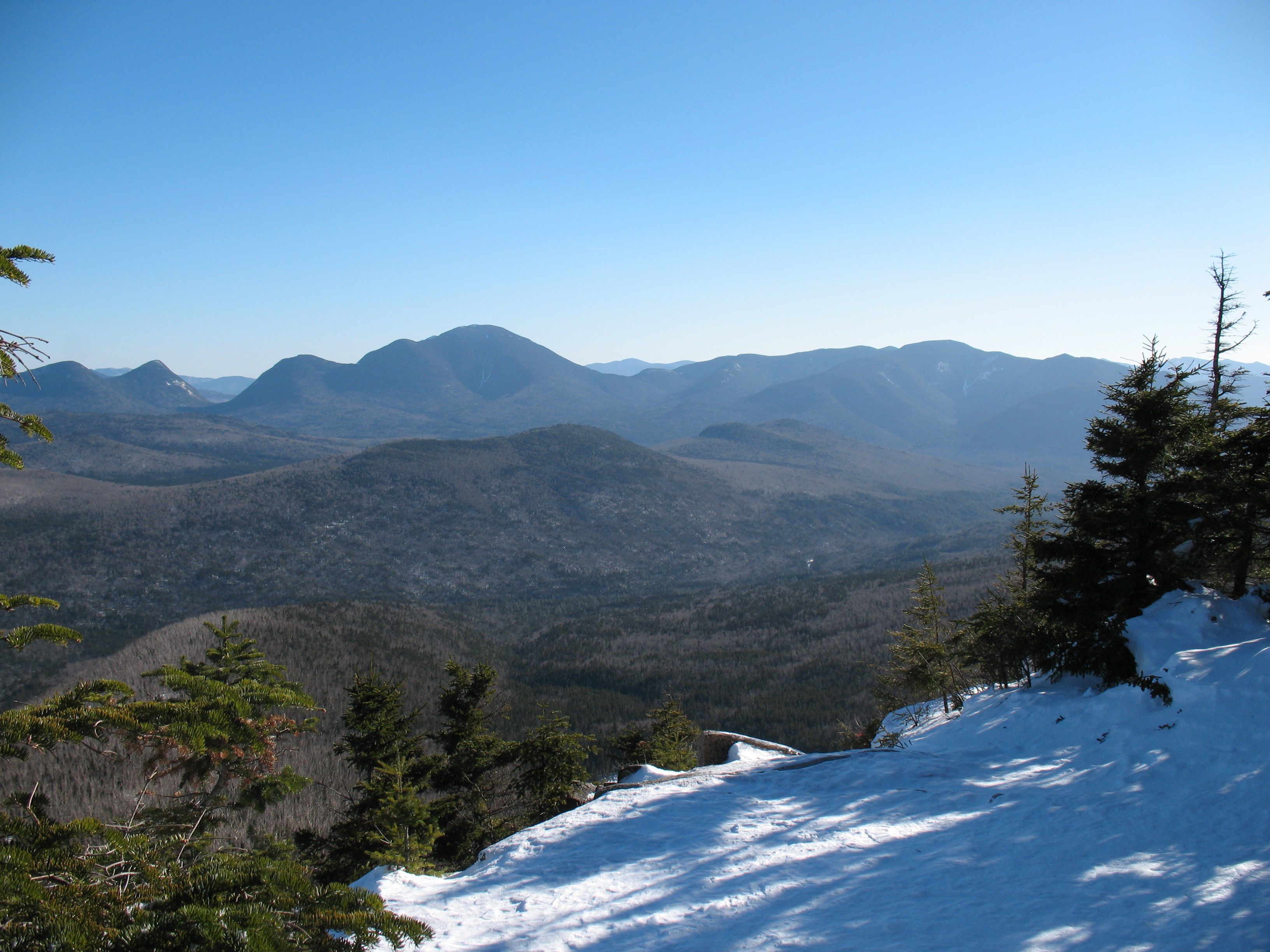
The Winter Hills - White Mountains

The Winter Hills – White Mountains

The other day, as the rain pattered companionably on the roof, I was mulling over an incident, and, at the same time, wondering what familiar walk I would take later when the rain let up. This wondering brought Henry Thoreau to mind. Famously and early in “Walking,” Thoreau sets his criteria for a walk: “If you are ready to leave father and mother, and brother and sister, and wife and child and friends, and never see them again, and are a free man, then you are ready for a walk.”

It is, of course, an “extreme statement,” and in its extremity designed to jar us from the complacency of routine – a little work, a little walk…ho hum…what’s for dinner?

The incident I was contemplating and then writing up was about a college student, who during finals week, went to the mountains, purportedly to clear his head. Here’s the summary, written in the column’s reportorial style:

On December 12th at 3:00 a.m., New Hampshire Fish and Game received a call about a missing hiker in the Franconia Notch area. David F., a Lyndon State College student, had left school to go hiking and climbing in that area the day before. He was reported to be well equipped. David had also given his roommate his intended route, and Fish and Game officers decided that he might simply be delayed and to give him time to hike out on his own. Morning temperatures were very cold (on Mount Washington at 5:17 a.m. it was -15 with the wind registering 73 mph; a windchill advisory was in effect) and there was still no sign of David F., so Fish and Game began to organize a search, which would necessarily be broad and people intensive. At 12:30 p.m., as the search was getting under way, Fish and Game learned that hikers on the Falling Waters trail had come across David not far from the summit of Little Haystack.

Fish and Game believed that David F.’s condition merited an airlift off the ridge by a New Hampshire National Guard helicopter. He was treated for mild hypothermia at a local hospital. In an interview with Fish and Game, David said that he had begun his climb on the Falling Waters trail at 9:00 a.m. on the 11th, diverging later to climb an off-trail drainage called Lincoln’s Throat; eventually he became lost, spent the night in his sleeping bag and wrapped in a space blanket and tarp, then found his way to the Falling Waters trail in the morning. When found, David F. was without his pack and gear, saying he must have lost them that morning.

Such a report sets off head-wagging among the mountain cognoscenti, as it should – conventions violated, personal ability overestimated, etc. But most of us recognize too the need to slip the trap – whether it is a spate of final exams, a daily job or the overly-civil layerings of language over experience – and go free. “Westward I go free,” wrote Thoreau later in his essay, and it takes only a slight change to say, upward I go free. I remember that, even as I point out a student’s errors in pursuit of that freedom.