Category Archives: Living Deliberately

Blue Sign

“We go listening for bluebirds, but only hear crows and chickadees.” Journal, 3/1/55

The light suggests it. It peers in-house before 6:00 a.m., and even amid the ongoing cold, it has crusted the snowbanks that angle toward the south. And also even as more snow filters in, the drifts have begun to shrink. The growing light is sublime. Also literally, as the shrinkage of snow comes of sublimation.

Like Henry Thoreau, I think there must be bluebirds about. And I know where to look. Back in January, when our winter looked to be a humdrum sort of thin cover and open fields, I noticed that an old relic apple tree on one of my walking routes flashed often with chips of blue color. A whole crew of bluebirds – what is the word for a gathering of bluebirds? An azure of birds? A sky of them? – favored this dense, spiky tree. Clearly, they were intent on weathering and wintering here.
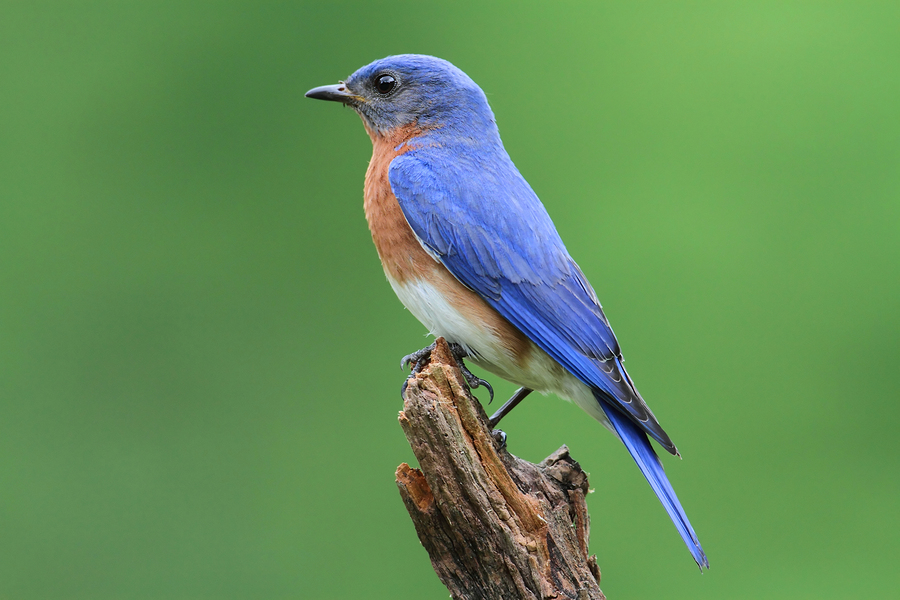
Eastern Bluebird

And a quick trip to my bird book showed a sliver of purple riding the nearby coast, sign of possible year-round range, even as the rest of northern New England is usually summer range only.

What about now, I wondered. Were the bluebirds, after this month of snowy onslaught, still here? Or had they, like many of us, been “innived?”

I went to look, and there along the border of snowfield and hard by an old track that promises sometime a walk into the woods, they were. Even more blue against the always white of the day. Leave aside the sobering thought that these bluebirds may winter here now because warming is on the rise. Today they are blue relief against the deep white.
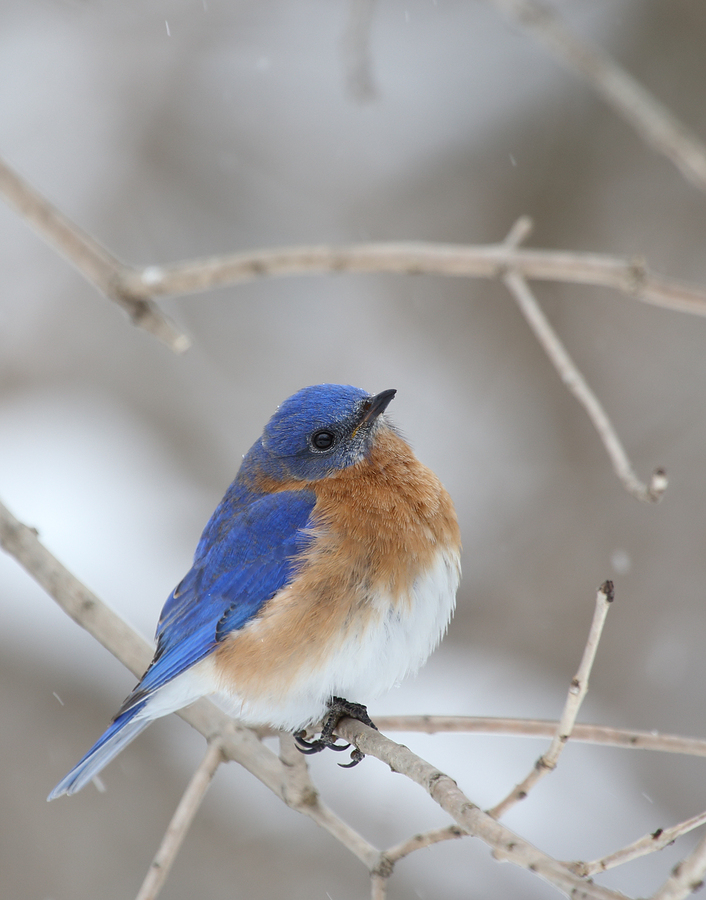
Puffed against the Cold

Puffed against the Cold

I like the little riot of chickadees always at the birdfeeder, and surely the crows are our most talkative neighbor. But the bluebird’s a sign I’m happy to go walking and listening for. Welcome to March.
Cold Fridays (or Other Days of the Week)

By Corinne H. Smith

“Mother remembers the Cold Friday very well. She lived in the house where I was born. The people in the kitchen – Jack Garrison, Esther, and a Hardy girl – drew up close to the fire, but the dishes which the Hardy girl was washing froze as fast as she washed them, close to the fire. They managed to keep warm in the parlor by their great fires.” ~ Thoreau’s journal, January 11, 1857

If you have visited Thoreau Farm, you can no doubt picture this scene. An assortment of family members and a few servants were huddled beside the large fireplace in our first-floor parlor. They had abandoned working in the kitchen in the salt-box shed attached to the back of the house. Outside the wind whipped across their fields. None of them knew how long they would have to stay here. And if they had to keep building “great fires,” perhaps we should feel fortunate today that they didn’t accidentally burn down the whole house back then.

Every region has its dramatic weather stories. For winter records, New England has the Blizzard of 1978, the Great Snows of 1717, and the Cold Friday of January 19, 1810. (Perhaps the Winter of 2014-2015 will get a fancy name and will be added to the list.)

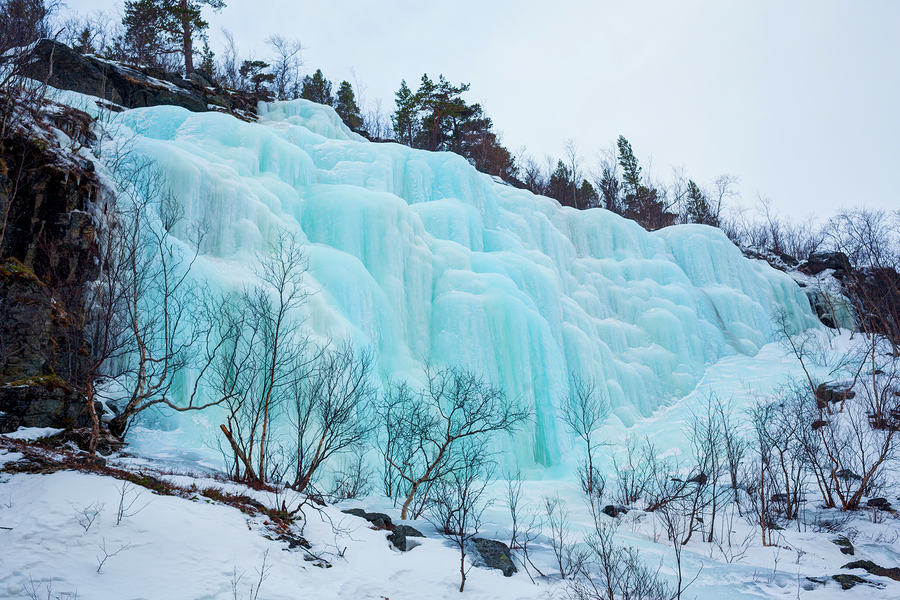
Yes, that's cold.

Yes, that’s cold.

Thursday, January 18th, 1810 had been an unseasonably warm day. Some spots reported temperatures as high as the 50s and low 60s. But by sunset a line of snow squalls moved into western Massachusetts “with the power and fury of a tornado,” according to one source. “Desolation marked its course.”

Temperatures plummeted as the storm moved from west to east. By midnight, many thermometers were down to zero. On Friday, they dropped to -14, even -20. And those readings didn’t take what we call now wind chill into consideration. Wind velocities weren’t reported then, but they must have been catastrophic. The front brought a sustained “high wind, cold and piercing in the extreme, and of such force as to prostrate many trees and buildings.” Tree trunks were sheared off at various heights. The meeting house in New Ipswich, New Hampshire, was just one of the buildings that lost its roof. The wind and cold abated a bit by Monday, but the rest of January remained frigid.

Cold Friday was tragic enough that it was written about in town histories. In Woburn, Massachusetts, Joseph and Benjamin Brooks had gone to a nearby woodlot to chop wood that Thursday. On Saturday, they were found frozen to death. In Sanbornton, New Hampshire, Jeremiah Ellsworth’s house was torn apart by the wind. He pushed his way against the gale to a neighbor’s house for help, then returned to his own to rescue his wife and three children. The wind tore the children’s clothes right off their bodies. In spite of their best efforts, Jeremiah and his wife lost all three.

While other New Englanders dealt with dire losses of property and lives, the Dunbars and Minots and their friends stayed safe in this two-and-a-half story frame house we now call Thoreau Farm, built in 1730. According to entries in Henry Thoreau’s journal, members of his mother’s generation brought up memories of Cold Friday whenever the winter was particularly cold or snowy. Cynthia Dunbar had been 22 years old back then: still two years away from becoming Mrs. John Thoreau, and seven years away from giving birth to little David Henry.

As we in the Northeast hunker down to experience our own version of cold Friday, perhaps we can take inspiration from Cynthia and the people of Concord in 1810. They made it through the cold, and we can, too. Let’s hope ours isn’t one for the record books.

SnowMoon

“In a journal it is important in a few words to describe the weather, or character of the day, as it affects our feelings. That which was so important at the time cannot be unimportant to remember.” Journal, 2/5/55

SnowMoon Rising

SnowMoon Rising

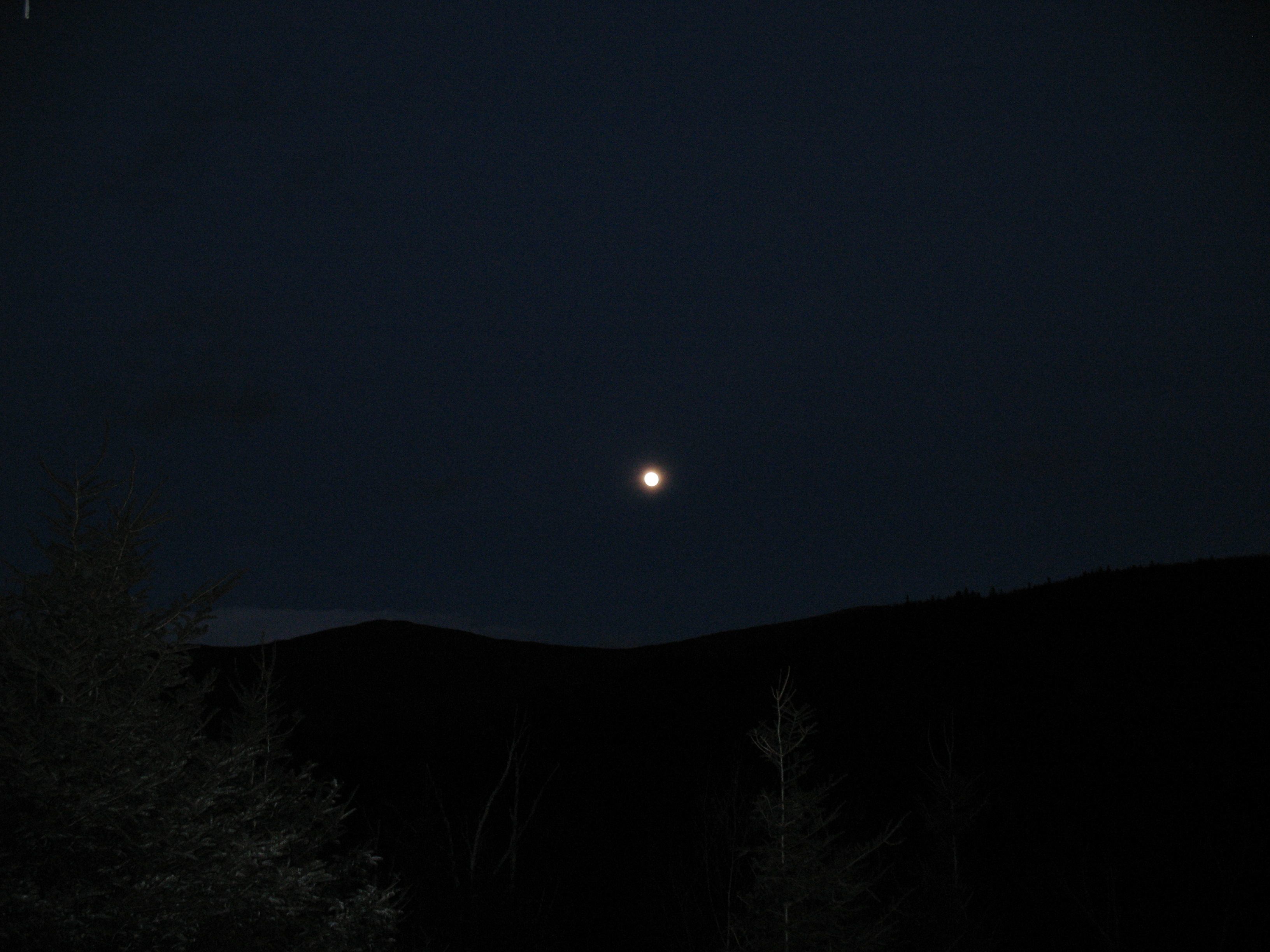
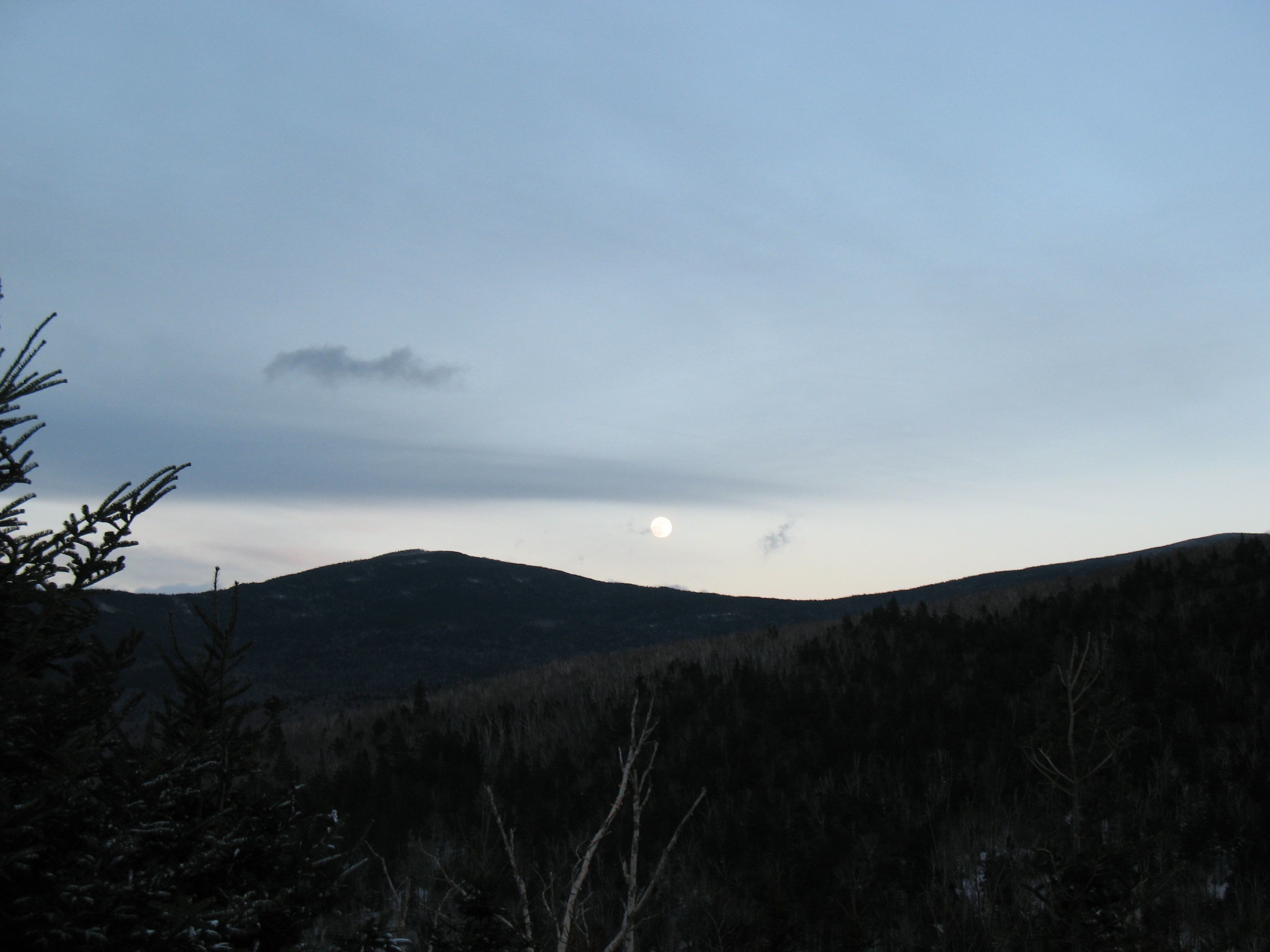
During some winters, a sub-zero temperature is enough to draw me out – the snow that whines underfoot (even it offers cold complaint); the webbed nose hairs; the downright rarity of it all. Ah, then there’s our current winter, where the high temperature during a recent snow was 2 degrees. And last night, when February’s full moon, the SnowMoon, shone like a huge lamp in the white pines, it was 10 below, when I went out to try for a photograph of its deep blue shadows on our feet of snow.

Our SnowMoon follows early January’s Wolf Moon, which arrived when our ground was nearly bare (remember that?) and the winter felt decidedly unwolfy, a sort of Midatlantic compromise. No longer, of course; we seem into a winter that summons the mythic, and so the wolves are back, their ways lit by this moon in the pines. At least imagination suggested this as I squeaked over the snow and pointed my lens at the tree-framed SnowMoon.

My little camera, unsophisticatedly automatic, like much decision-making technology, caught little more than what looks like a wan light in a pitchy night, though it did amuse me by firing a weak flash of return light each time I pressed the button. All the blue shadows and pathways of pale light go missing in each frame.

Not the moon of story, but a SnowMoon nonetheless

Not the moon of story, but a SnowMoon nonetheless

Which left only the walk in the cold-crazed air.

Which is, I suppose, as it should be. All the better for listening and wondering:

“My, what a big moon you have.”

“All the better to summon the next snow.”

“And that faint, distant moaning sound?”

“It could be the wind. Or it could be the dogs of night, my dear. The very wolves.”

Ah, company of what once was for a night’s walk under the SnowMoon.