Category Archives: Living Deliberately

Spring Walk Back to Walden

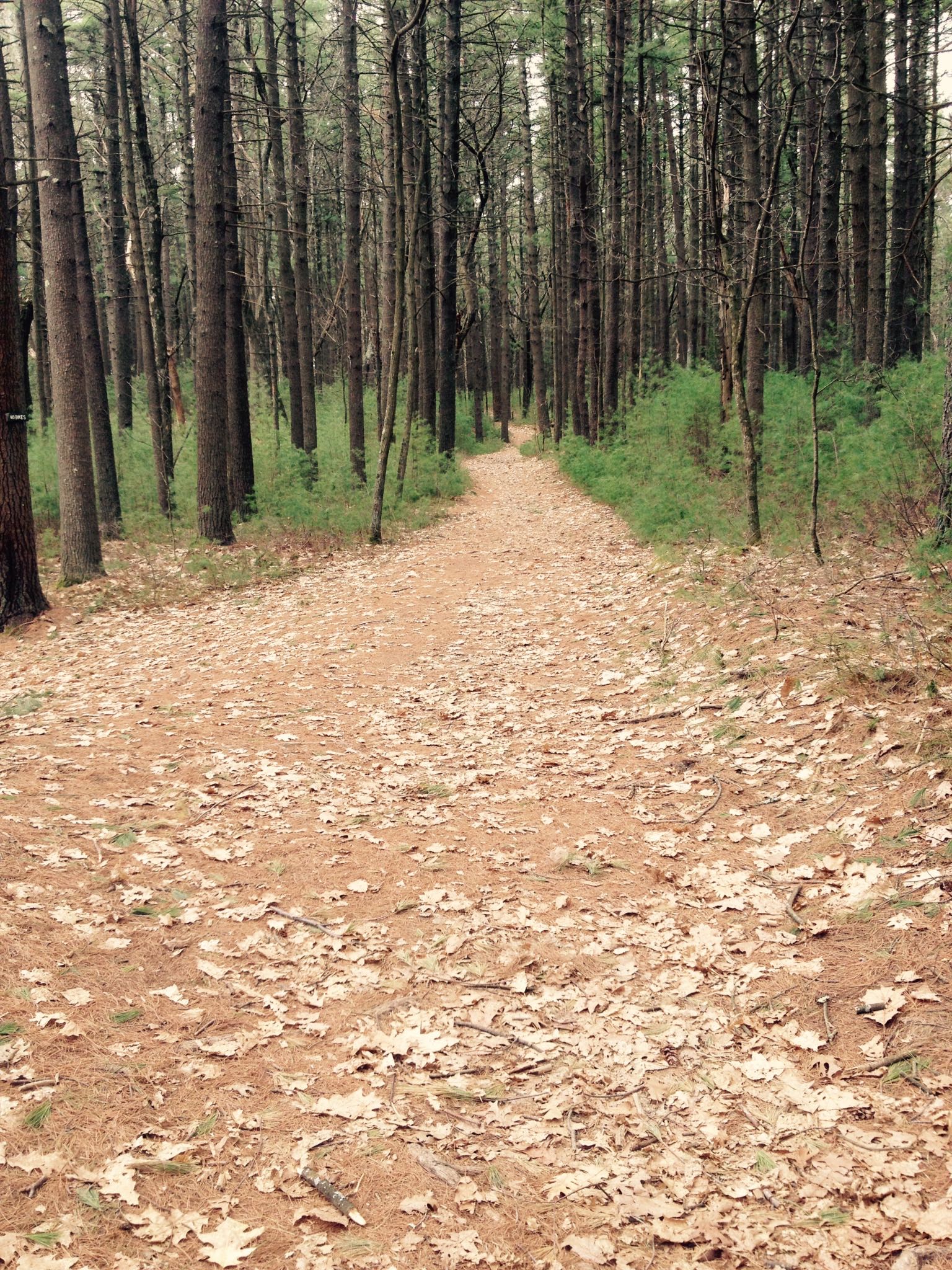
A way through the pines

A way through the pines

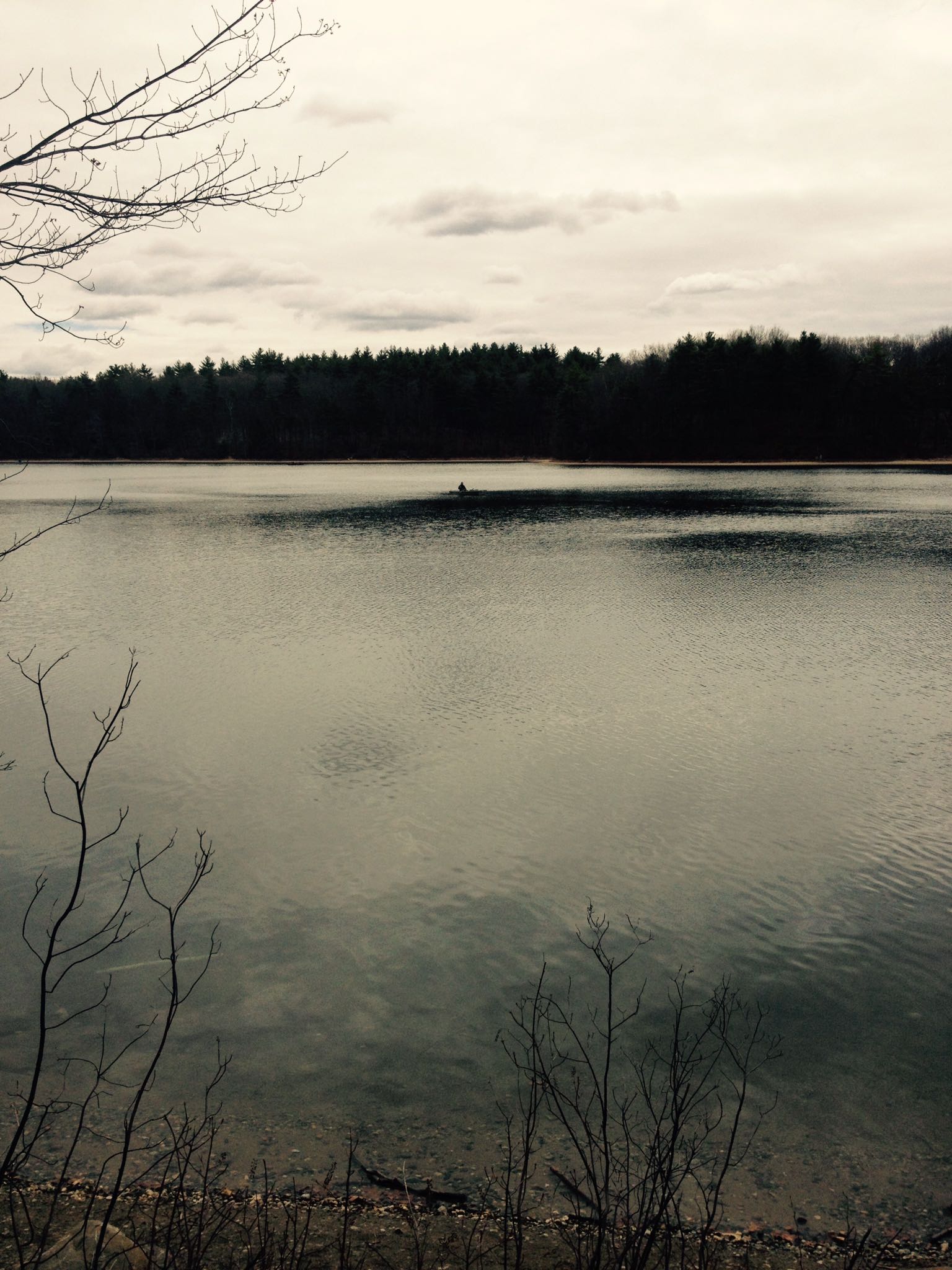
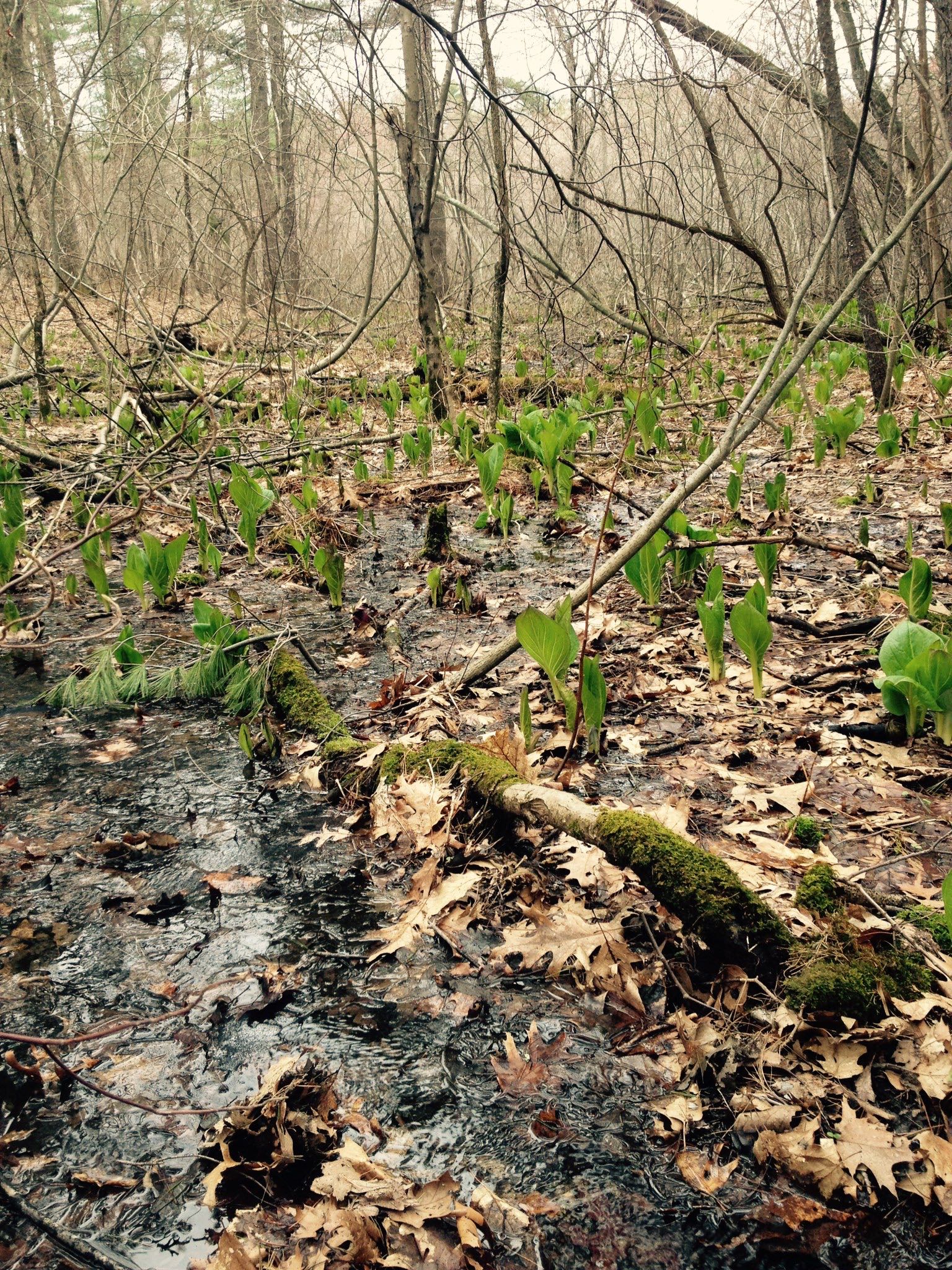
Famously, we’ve been told that you can never go home, but you can walk in your own and others’ footsteps. And so, on this April weekend past, given a few hours for wandering, we set out to do just that. We left from the parking area by Bear Garden Hill and aimed first for Walden by the fine, pine-needle-softened trails that lead into the Wright Woods and on to the pond. Then around the pond, its surface rippled by a cool wind, its fisherfolk seemingly stationed every 50 yards along the thin strand that surrounds it during this low water phase. Then back across the Fitchburg Line’s tracks, and down by the Andromeda Ponds – mostly eutrified now – toward Fairhaven, following the flow of old glacial melt. Skirting Fairhaven, where the spring waters had receded just enough to let us pass, and finally returning along the broad Sudbury, stopping a few times to admire the eruptive skunk cabbage in the small, wet valleys above the river.

Here are some sights from along such a way:

Lone fisher on the water

Lone fisher on the water


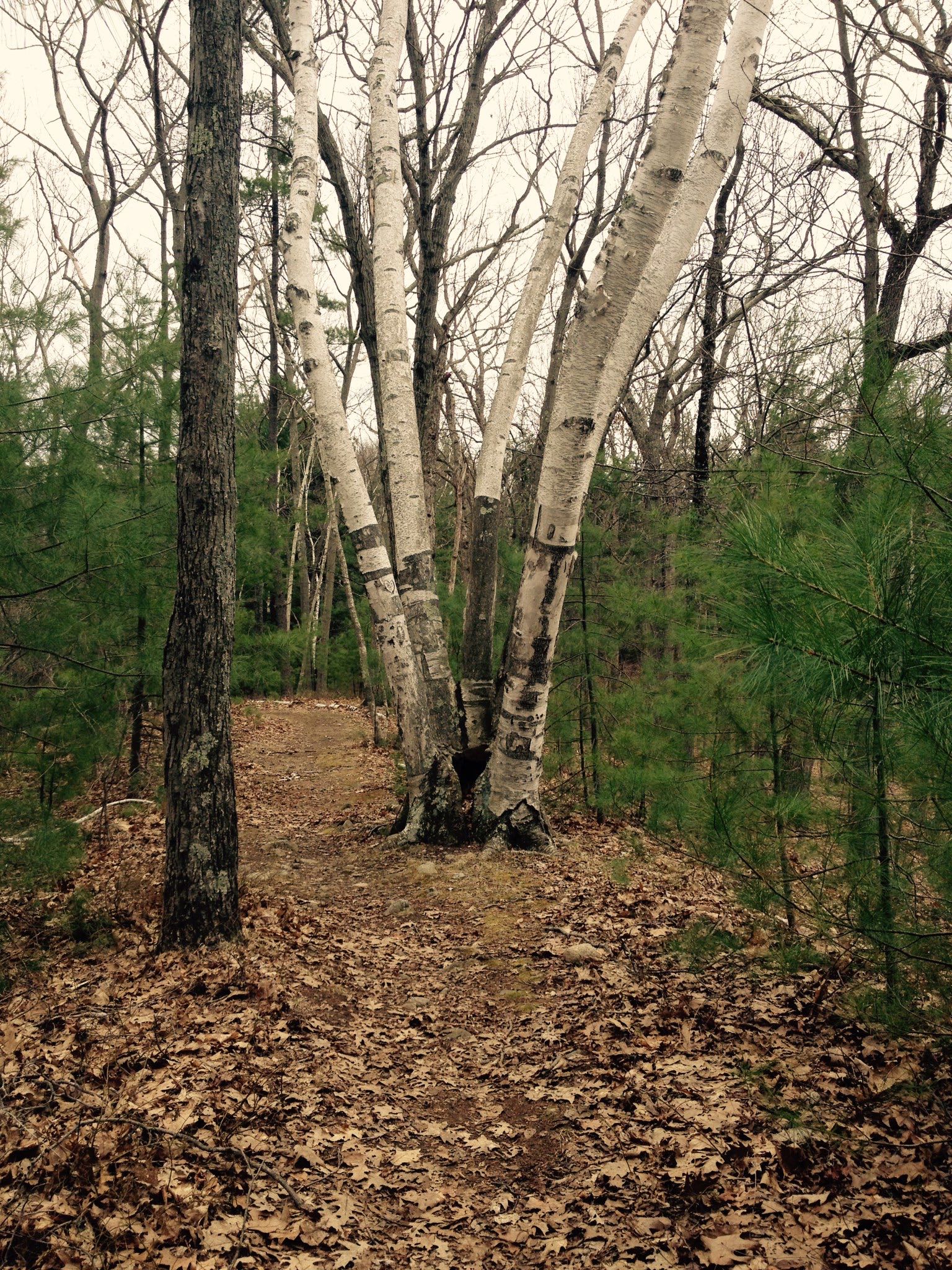
5-stalk birch on Heywood's Peak

5-stalk birch on Heywood’s Peak


Waiting on the Fitchburg Line

Waiting on the Fitchburg Line


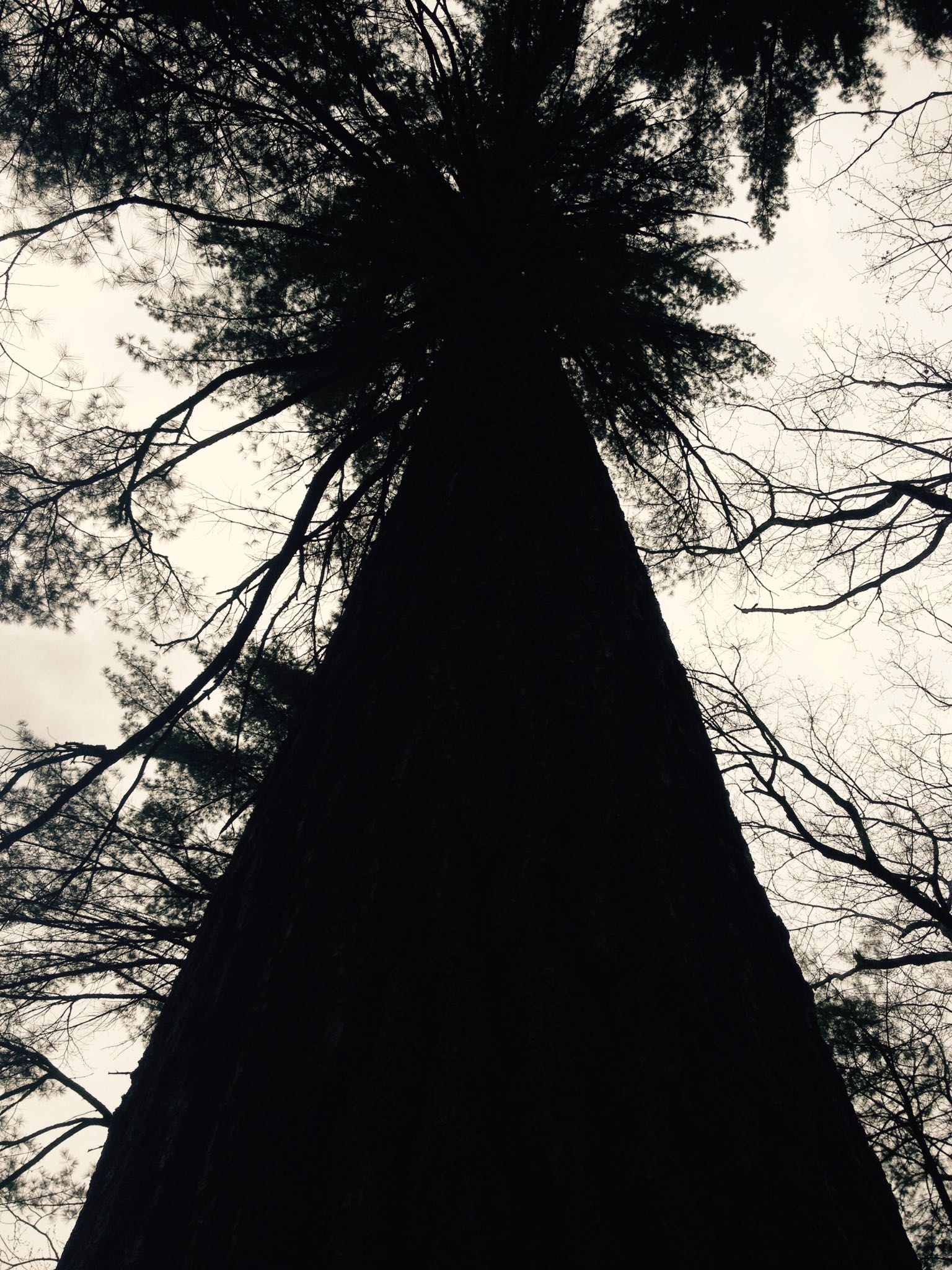
Favored pine on the Fairhaven Trail

Favored pine on the Fairhaven Trail


Maple flowers at Fairhaven

Maple flowers at Fairhaven


Skunk cabbage rill

Skunk cabbage rill


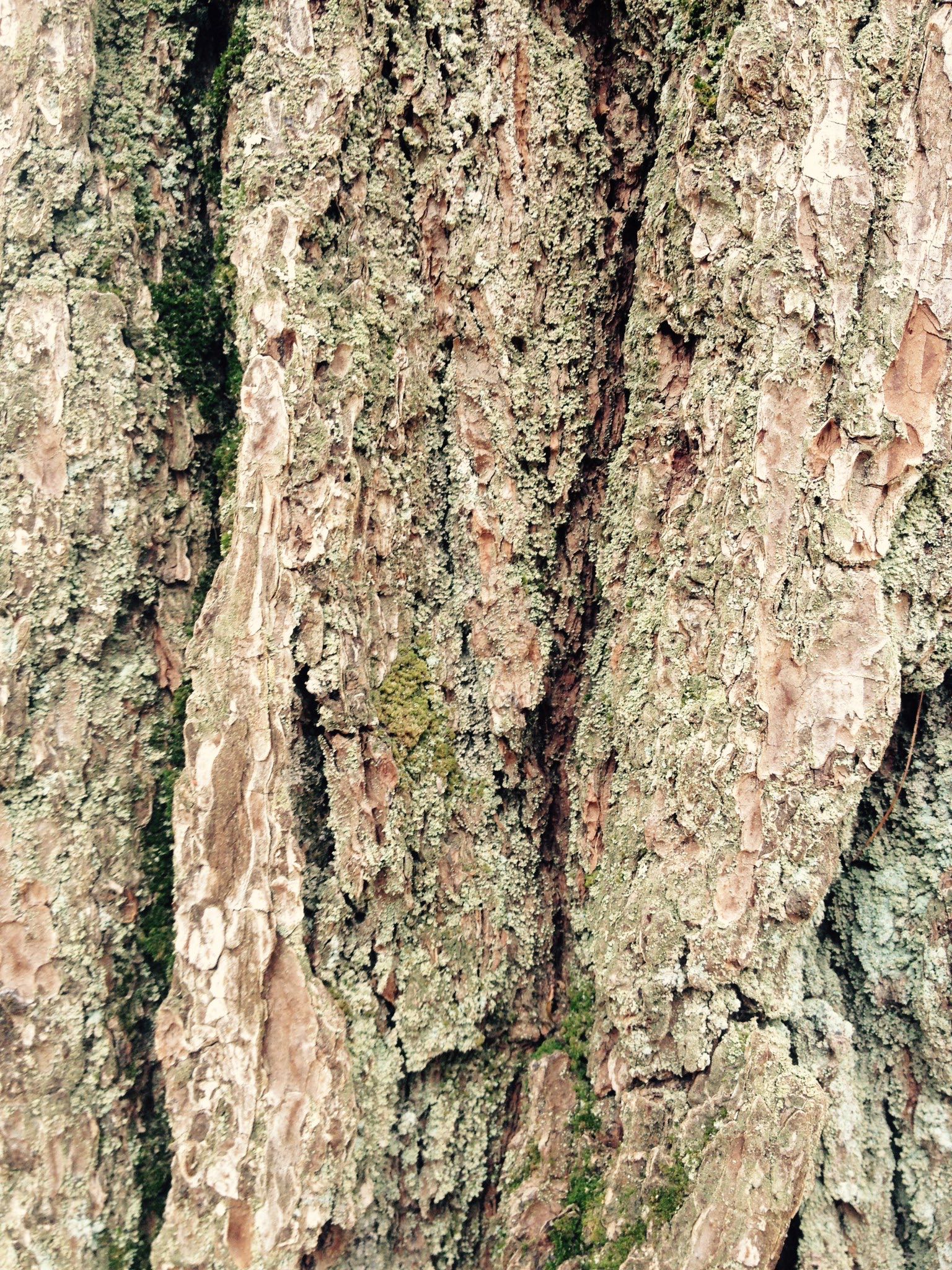
Hands-on bark of favored pine

Hands-on bark of favored pine


Feathers of a Bird

By Corinne H. Smith

“The question is not what you look at but how you look & whether you see.” ~ Thoreau’s journal entry, August 5, 1851

Wednesday is garbage pick-up day on my street. The recycling truck comes first, usually before breakfast. The regular truck follows a few hours later. My routine is to put the recycling bin out at the curb when I hear the noise of the truck a block away. Then I know I have time to gather the week’s other garbage into a bag or two.

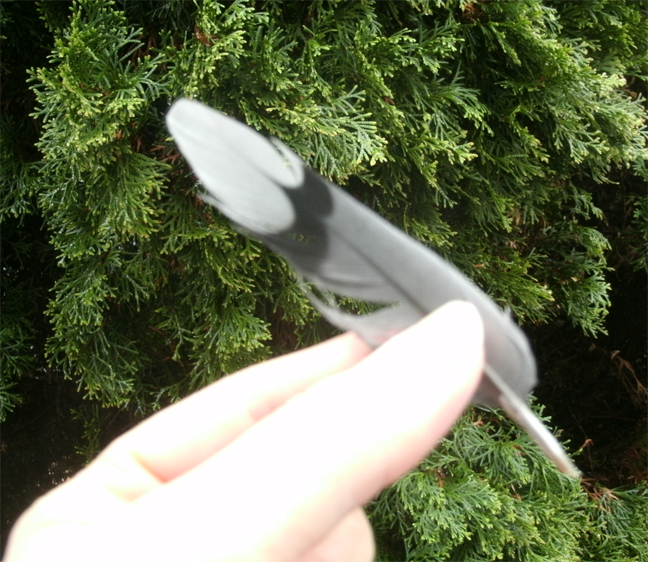
Last week, I placed the recycling bin on the sidewalk just as the sun was coming up. Then I headed back to the house along the driveway. I looked down to admire how green the grass was turning, now that Spring has come and our days are warmer. Suddenly I spotted a white and gray feather lying in the grass near the macadam, all by itself. I picked it up to inspect it. It was blue-jay like, except that it had no blue.
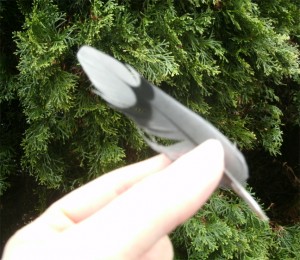
feather1

I brought the feather into the house to look at it again. I made the mistake of showing it to one of the cats, who wanted to chew it. I took the feather away from her, washed it off, and put it on a shelf out of her reach.

The recycling truck came along and took our plastics away. When I went out to pick up the empty bin, I looked down at the grass again. Wouldn’t you know, I saw ANOTHER feather! It was very similar to the first. Why hadn’t I seen this one when I spied the other? I had no idea. I brought it in and put it on the shelf, too.
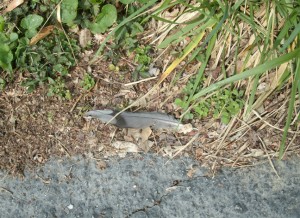
feather2

A short time later, I dragged two full garbage bags out to the street. Again, on my return trip, I looked at the grass. And again, here was yet another feather!
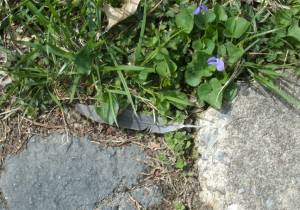
feather3

Okay, now I began to worry. Next, I expected to stumble upon a dead body. Now that I had found three feathers, I widened my view and searched for more. I soon found an all-gray feather in the front yard, and another striped one on the other side of the driveway. Thank goodness, I had found no dead bird. But there must have been a mishap of some kind. Maybe a stray cat had chased it and nipped at it. Maybe the neighborhood hawk had carried it away. Maybe the bird had gotten too close to a branch and scraped itself, jarring loose a few feathers. I’m not sure that this last scenario ever happens. But then again, I’m not a songbird. How could I know?

A few days later, when I mowed the lawn, I found another gray feather. This brought my total to six. I could study them and look at them more closely, as Mr. Thoreau would have done. The colors suggested that they may have come from a mockingbird. On its own, each multi-colored feather looked like the others. But if I put them side by side, I could see the variations in color. I could see which way the feathers curved. They had come from various parts of the bird’s body. This led me to believe that the hawk was involved, and that the story of these feathers was one of a small yet everyday tragedy.
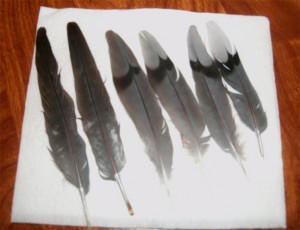
feathers

The first feather, the smallest and brightest, is already my favorite. Whenever I pick it up. I imagine that I feel a life force pulsing from the shaft. This is impossible, I know. The bottom of the quill is tinged with red, too. With remnants of blood? This makes it even
more real, and gives me a connection to the animals, to both prey and predator. I could stare at these feathers for hours in wonder, imagining. Had they belonged to a mockingbird? A nuthatch? A robin? How could I ever know for sure?

It seems like a decent enough exchange: trash for treasure. Even a simple act like taking out the garbage can offer us new discoveries, if we only pay attention. How else could I end up with a collection of six maybe-mockingbird feathers? And what will I find on my next trip to the curb?

In Celebration of “the Citizenry of All Things within One World”

Earth Day 1856

I could have chosen randomly
leafing through their pages
pausing here say or

there – so rich
are their records that
even the page-skipper-

bird that I am soon finds
a twig a branch a point
from which to fly

and I can be sure
of a song recorded
somewhere in italics –

chirr whee – to denote
what’s heard
day after day as

they set out to find themselves.

Who then can resist “sailing
in the rain” on April 22, 1856
or sailing with today’s rain coming

on, or the rippling east wind
and finding that even Henry
tried as he held the tiller

to hold too an umbrella
to keep himself dry? Or
knowing that a sudden

“seizure of happiness”
can come on at walk’s end
on this quietest of mornings?

Two Voices: Henry Thoreau and Mary Oliver

Here then, in celebration of this 22nd, are short excerpts from two voices that I turn to when I want to hear from and of the earth, which is another way of saying every day.

Soon after I turned about in Fair Haven Pond, it began to rain hard. The wind was but little south of east and therefore not very favorable for my voyage. I raised my sail and, cowering under my umbrella in the stern, wearing the umbrella like a cap and holding the handle between my knees, I steered and paddled almost perfectly sheltered from the heavy rain…From time to time, from under my umbrella, I could see the ducks spinning away from me, like great bees…But though my progress was slow and laborious, and at length I began to get a little wet, I enjoyed the adventure because it combined to some extent the advantages of being at home in my chamber and abroad in the storm at the same time.
– Henry Thoreau, Journal, April 22, 1856

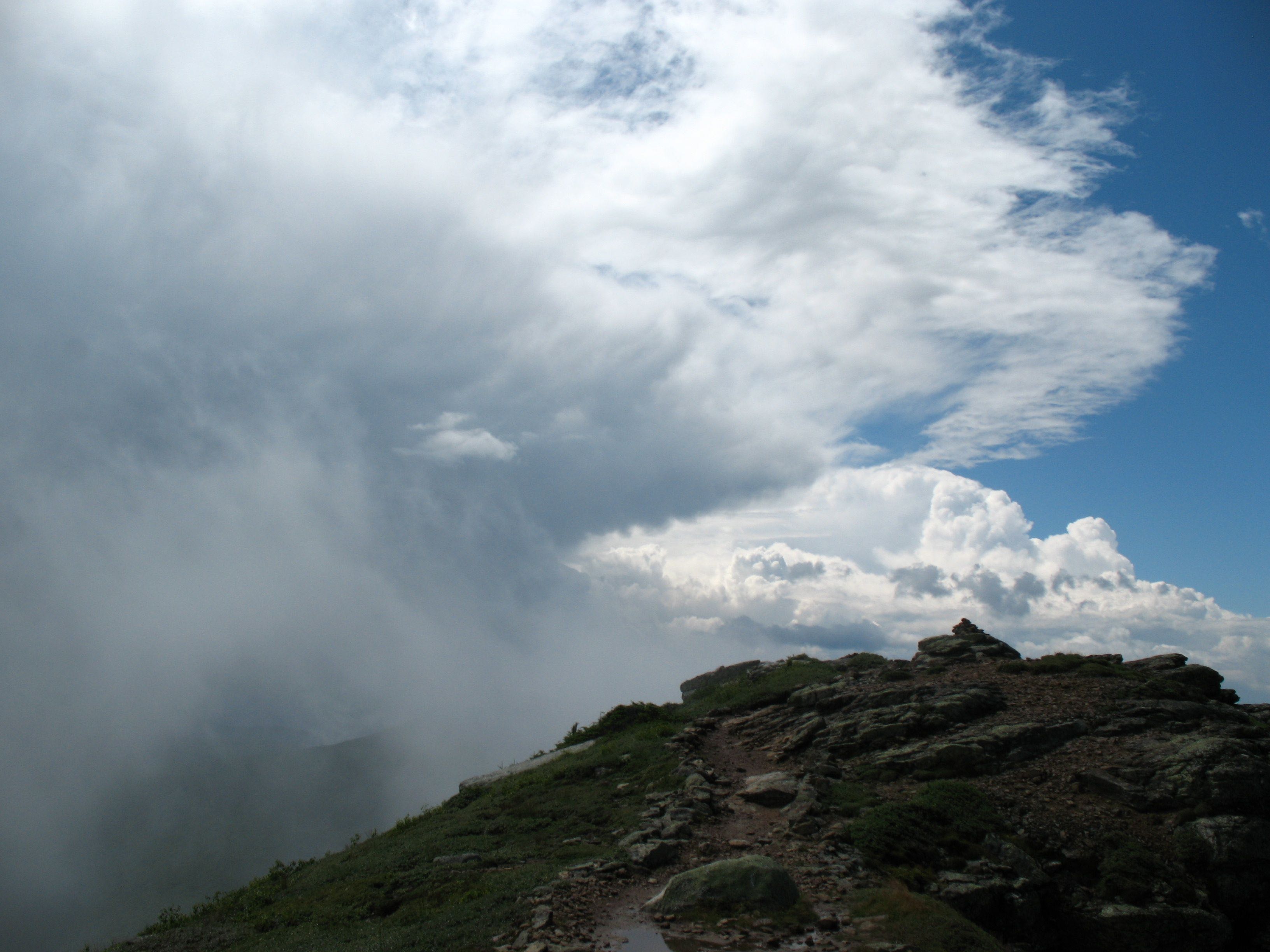
Rain comes on

Rain comes on

Once, years ago, I emerged from the woods in the early morning at the end of a walk and – it was the most casual of moments – as I stepped from under the trees into the mild, pouring-down sunlight I experienced a sudden impact, a seizure of happiness. It was not the drowning sort of happiness, rather the floating sort. I made no struggle toward it; it was given. Time seemed to vanish. Urgency vanished. Any important difference between myself and all other things vanished. I knew that I belonged to the world and felt comfortably my own containment in the totality. I did not feel that I understood any mystery, not at all; rather that I could be happy and feel blessed within the perplexity – the summer morning, its gentleness, the sense of the great work being done though the grass where I stood scarcely trembled. As I say, it was the most casual of moments, not mystical as the word is usually meant, for there was no vision, or anything extraordinary at all, but only a sudden awareness of the citizenry of all things within one world: leaves, dust, thrushes and finches, men and women. And yet it is a moment I have never forgotten, and upon which I have based many decisions in the years since.
– Mary Oliver, from the essay “The Perfect Days” in the book Long Life.

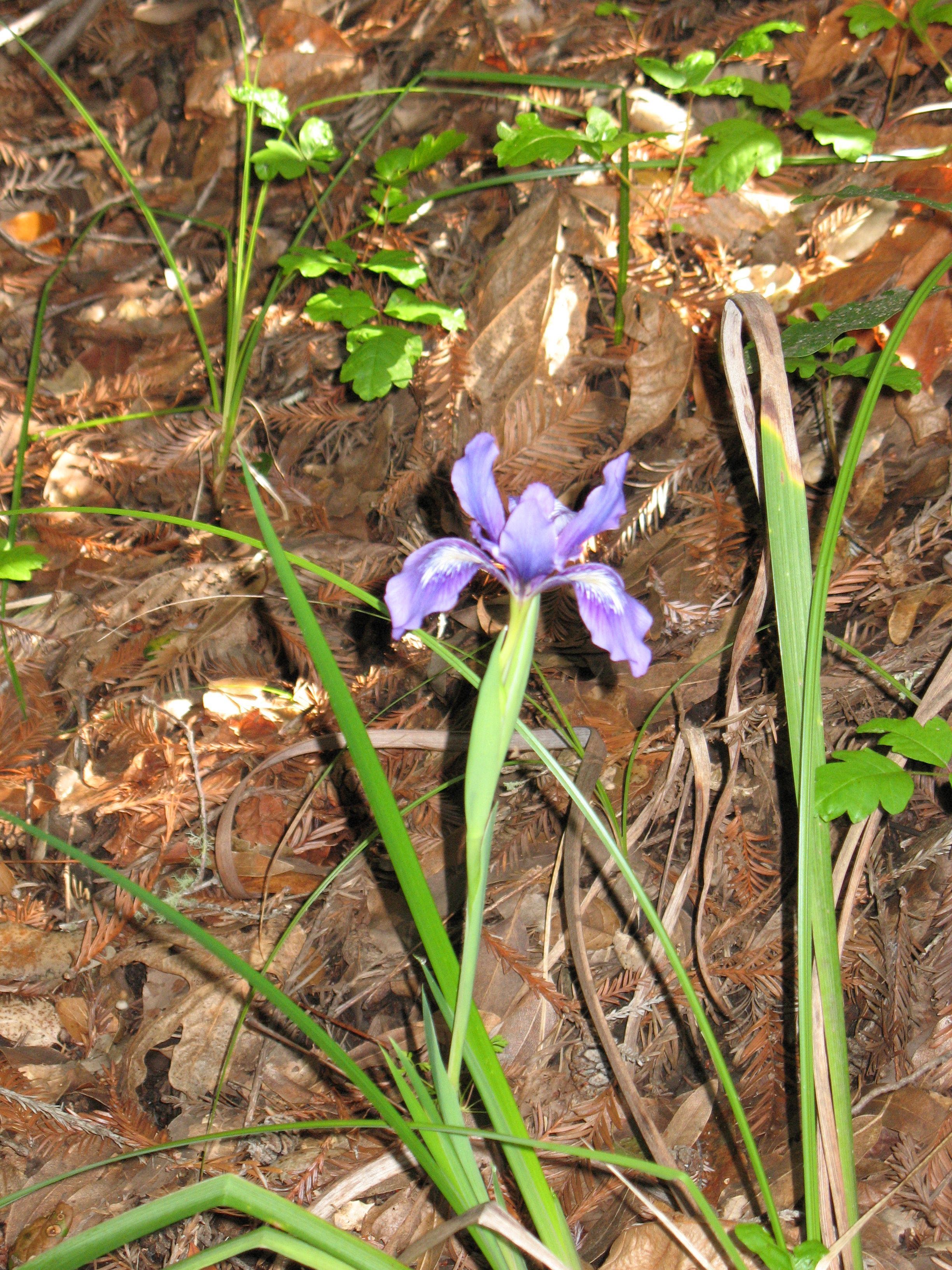
End-of-walk flower

End-of-walk flower