Category Archives: Literature

Teaching @ Distance

Words Over Water

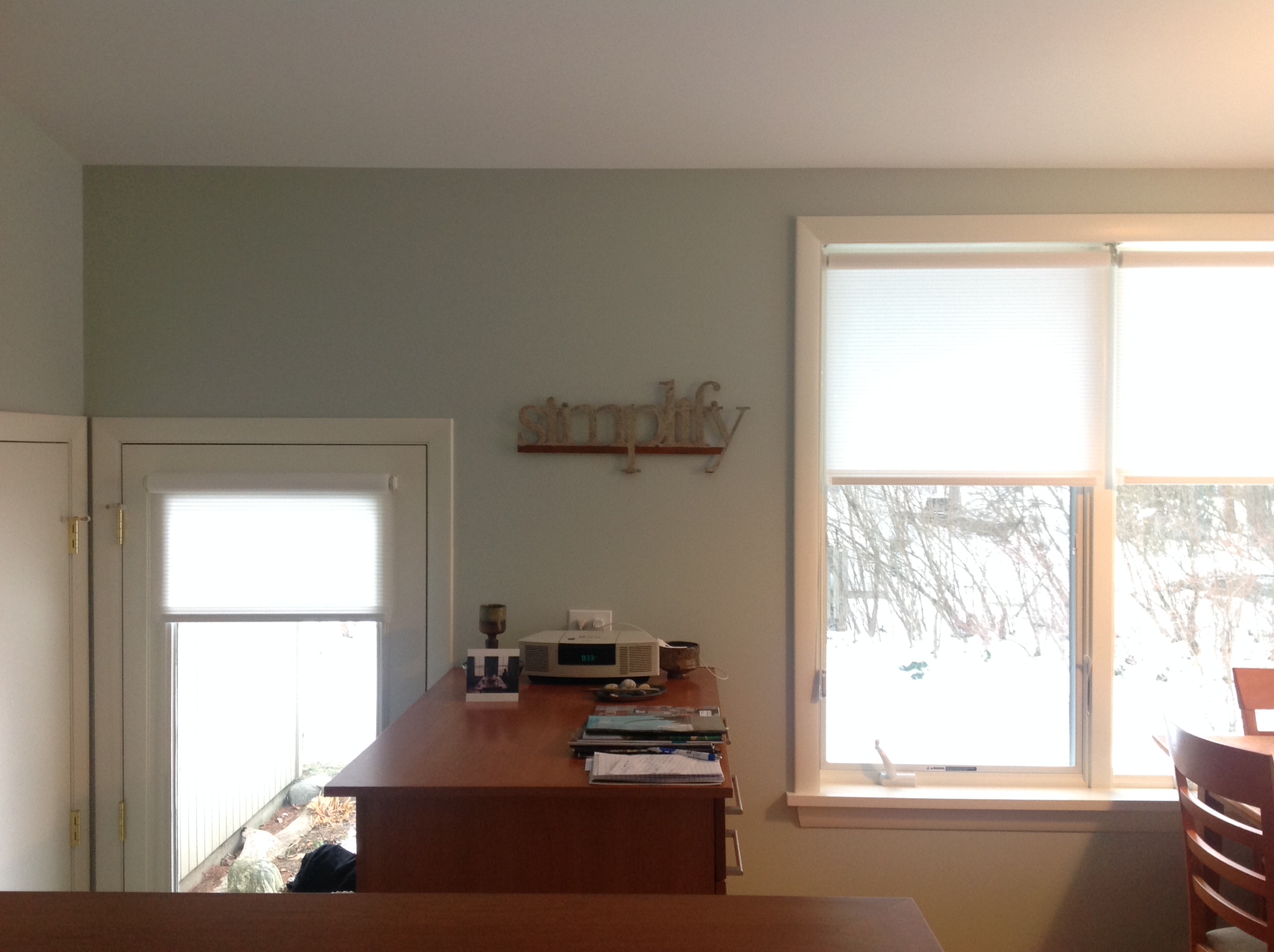
The appointed time approaches. I am, I think, set. My notes are aligned before me; books I might need are at hand; I’ve changed from sweatshirt to collared one; my computer-camera is aimed my way, its mic amped up. And the sign we bought as this house’s first purchase will appear in the upper-left quadrant of the screen. SIMPLIFY, it says. Say it twice to make it quotation. A sign…and a command. Something to live up to. Nice touch, I think.
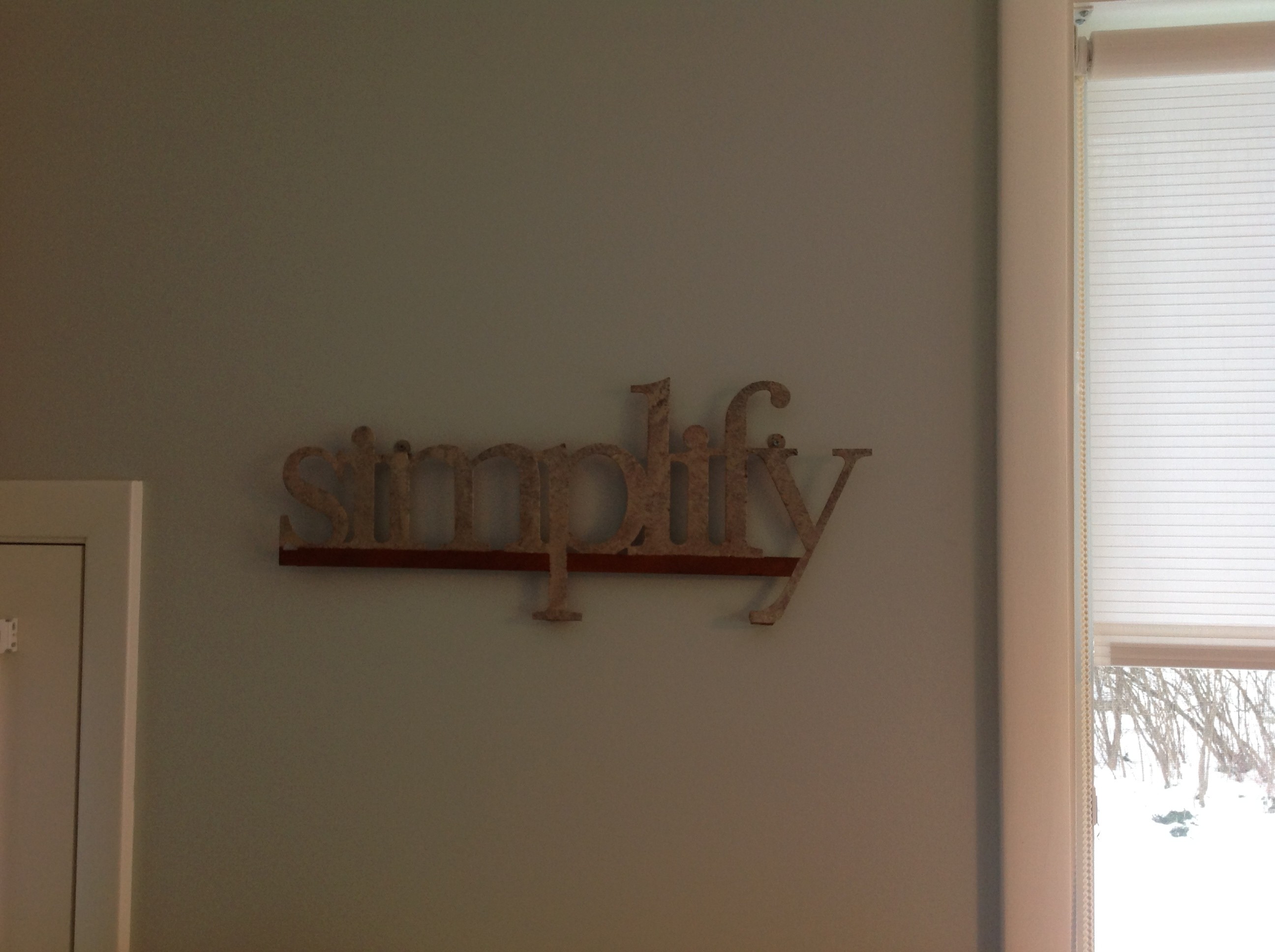
image_1

An odd underwater sound, like air escaping from a submerged shoe, signals the start; I click the phone icon, and there in dark forms they are – my class. I think that phrase to myself, adding a question mark. I know one person in the room. The rest are there, I suppose, for the myriad reasons that bring us all to our commitments, largely to commitments made for us.

Some 3500 miles away, it is 4:30 in the afternoon, and outside the sun is leaving the city streets. Wine and cigarettes must issue a siren’s call. Here, I’m pressing into late morning, and our short sun is working on what little December warmth it can conjure. Coffee is still ascendant.

As ever, I think, noting that my eyes look squinty, my face puffy on the small embedded screen on my desktop. We are not made to be photographed by a camera looking up as gravity pulls us down.

But, having settled the lights in their Paris classroom and greeted each other, we say it’s time to begin. Here, I say silently, comes Henry, and I begin limning some of Henry Thoreau’s subtractive practices I’ve thought through during the past few days. “To affect the quality of the day, that is the highest art,” he wrote in Where I lived and What I Lived For. And a page later, he pounded twice on the nailhead of advice: “Simplify, simplify.” And then, a little later, for those resistant (or asleep) among us, he offered the repeating rumble-stroke of “Simplicity, simplicity, simplicity.”

“That ought to suffice,” he might have said, laying down his hammer/pen and imagining us, his readers. “They should get that, at least.”

And, of course, they do get this pruning of life to its “necessaries” to make room for the work chosen, for the I-work of becoming and making.

As I talk and lay out a sketch of Henry Thoreau’s move to and “experiment” at Walden Pond, I begin to sink into the familiar rhythm of story and teaching. I read some more of Henry’s words, offering paraphrases on the side as I travel a good deal from line to line; I pause and scan the room before me. Teaching makes me alive to how Thoreau’s words may sound for others, what they may mean. But every so often, motion draws my eye outside the borders of the screen – birds arc toward the backyard feeder; a woodpecker hammers at a pine; the squirrel is back eyeing the feeder; I suppress the urge to chase. Good dog.

Strangeness settles over me. I was going to write, “an estranged feeling settles over me,” but that isn’t so. The familiar book, the voicing of tentative understanding, of question, the partly-visible audience in dark relief on the screen.

I ask a question and watch the familiar scene of students turning to each other to see who will speak – I’m at home in two places.
image

December Immersion – from Walden to Paris

No, I’ve not been soaking in Walden water, or any other water, as our winter comes on, but I have been re-immersed recently in Henry Thoreau’s words. Prompted by an invitation to explain Thoreau’s experiment in living to 20 graduate students at Institut des Hautes Études en Arts Plastique (IHEAP) in Paris, I’ve returned to Walden, and, as always happens when I reread this deeply familiar book, I’ve been amazed by its insights and universality.

At the same time, I’ve been challenged by the “seminar” that lies ahead this week. Not only will it be via SKYPE, not for me a familiar way of being with others, but the group of artists from around the world I’ll be working with reportedly have only the slightest sense of who Henry Thoreau was. And, as added complexity, a number of them will be working in a 2nd language.

How to bring Henry into sharp and real focus in our 90 minutes?

IHEAP’s focus for this year’s program is a help: soustraire, or subtraction, as method for and in support of creativity and art is the year’s theme, and I’ve found it a fine lens for looking at Henry’s Walden experiment. After all, Walden is all about subtracting the usual or familiar from life in pursuit of awakening and then adhering to the real, and Thoreau, crucially, has to subtract the expected self in favor of finding a real self.

Hmmm…I’ve just reread the last sentence and found myself saying, “show me what you mean.”

Okay, here’s example: Henry Thoreau, possessor of exceptional physical and mental vitality, and – very rare for his day – a college education, would have been expected to be a central figure in Concord. He became just that, but not in the way local society would have imagined. Rather than becoming a “select” man of the town, at 27 Henry decamped for a nearby pond and set up solitary living. “What’s that Henry (or David) Thoreau up to?” many must have muttered. Added to that consternation was Thoreau’s determination to become a writer. “He’s gone off the tracks,” more than one Concordian must have declared. And indeed he had (as well as going off on the tracks, but that’s a pun only Henry would like.)

What more did Henry subtract from his life so that he might develop his insights and art? Here’s a partial list of identities not pursued or subtracted: husband, father, teacher, householder, pillar of town society, rich man, majority member, all-day worker, church-goer, elected official.

And what subtractions might you add to this list? Or remove from it?

Thinking of creativity and art as subtraction has been fascinating; it is, among other things, another application of Thoreau’s famous advice: “simplify, simplify”;  it is also acknowledgement that we are in need of less rather than more in this age of surfeit.

Season of Sight Season of Heart

For me November has always brought the advent of sight’s season, especially in the woods; often, what has been hidden by leaves – a burl, a nest, an old sign – comes clear. And the long-boned outlines of the land also appear. Then, there is the thin transparency of November’s light; on a cloudless day, it is the clearest glass. Yes, the span of daylight is short, but vision’s length and depth more than compensate for that.

The other day, I was poking around in Thoreau’s November Journal writings, figuring that he too might have found revelation in the month’s light, when I came upon this:

Day before yesterday to the Cliffs in the rain, misty rain. As I approached their edge, I saw the woods beneath, Fair Haven Pond, and the hills across the river, — which, owing to the mist, was as far as I could see, and seemed much further in consequence. I saw these between the converging boughs of two white pines a rod or two from me on the edge of the rock; and I thought that there was no frame to a landscape equal to this, — to see, between two near pine boughs, whose lichens are distinct, a distant forest and lake, the one frame, the other picture. In November a man will eat his heart, if in any month. Journal, 11/1/52.

A different sort of November day, to be sure, but no less lovely in its grays and greens and browns. Here too was Thoreau in the museum of his vision, finding “frames” for the “pictures” hung liberally there. He walked his woods with no less reverence than the slow, heel-clicking strides of museum-goers as they cross polished stone floors and contemplate painters’ visions.

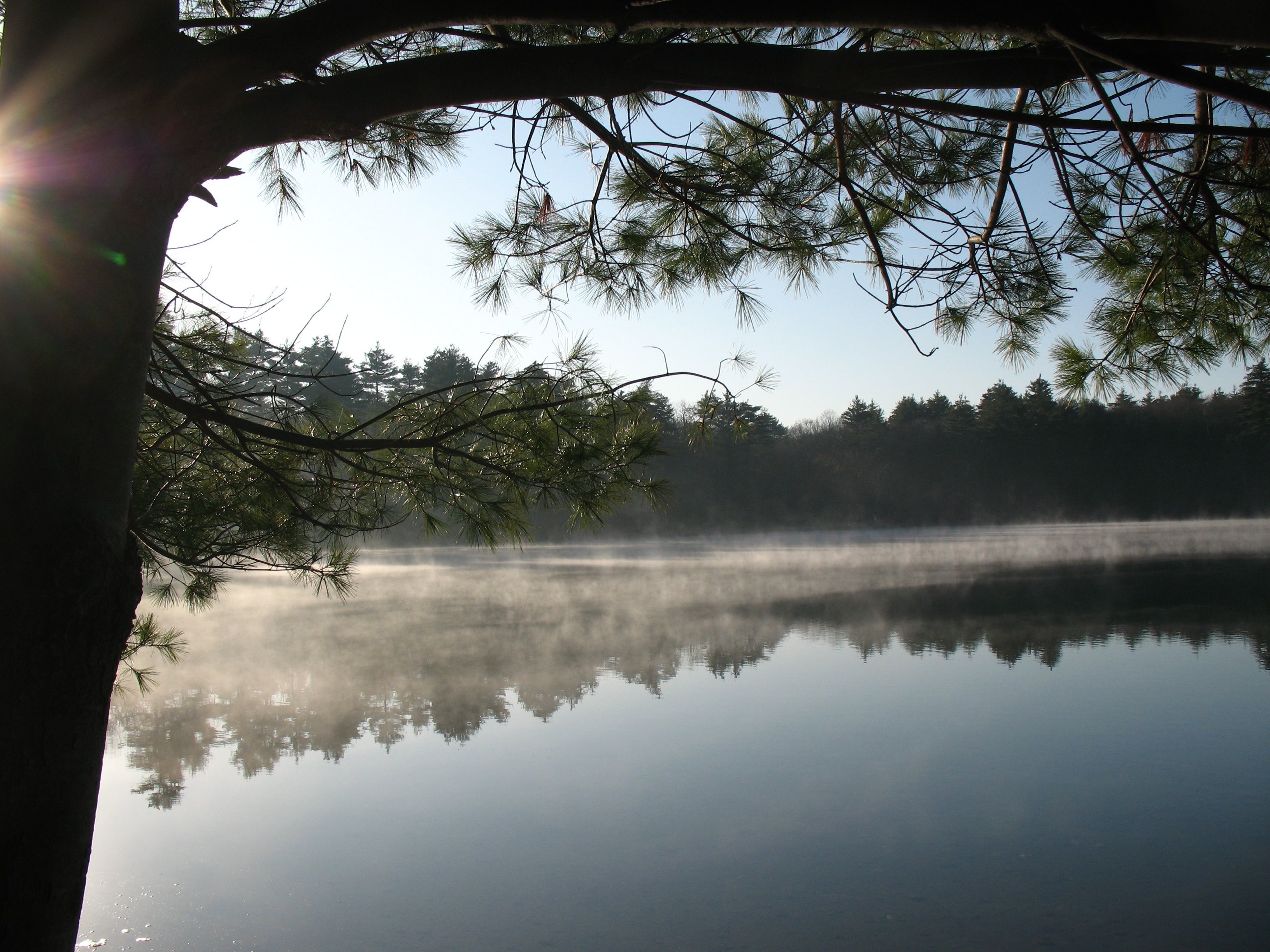
Tree-framed November Light at Walden

Tree-framed November Light at Walden

But what stopped me was the final sentence in this passage – what does it mean to eat your heart? And what in November might incline one that way?

It’s common enough to say “Eat your heart out,” when we think we have something others want. Well, okay, but envy seems unrelated or a small reading of Thoreau’s sentence. Somehow, I thought, it is the unequaled nature of the “frame” that triggers his observation. And the image of Thoreau stopped near the edge of the Fairhaven Cliffs, looking at this loved landscape came clear to me. There he was, and here I was, looking through his eyes at a landscape hung just so; here, contained by the lichened boughs, was the best world, a world to swell your heart.

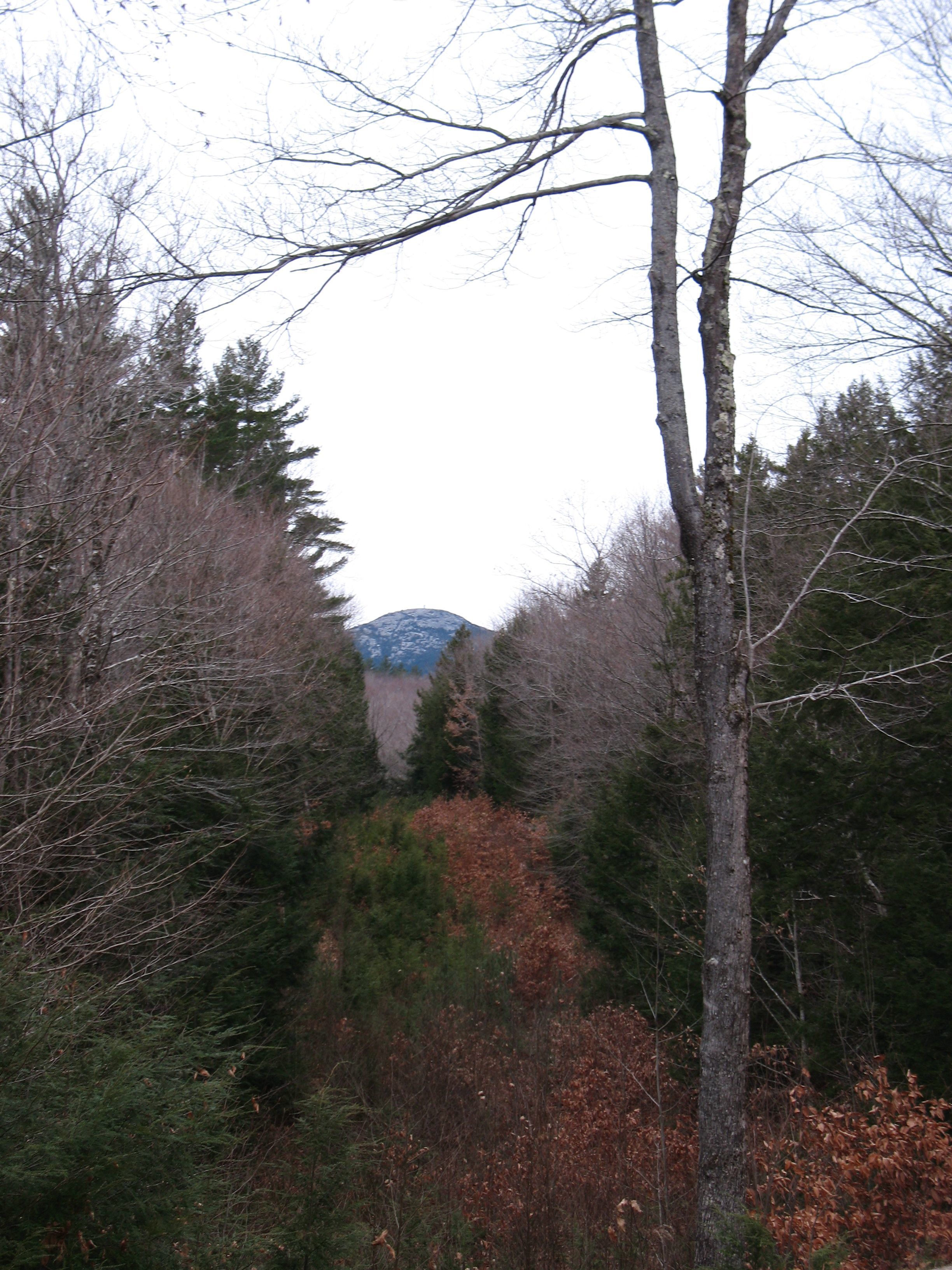
Tree-framed Cardigan Mountain - heartland

Tree-framed Cardigan Mountain – heartland

For a while I could live on that expansive vision, in that framed, chosen world. Perhaps feeling such affectionate surplus is what it means to eat one’s heart.

But you may see through other eyes, see it otherwise. If so, let us know.