
Category Archives: Environment

Leafing Out

Suddenly, it seems, my field of vision is crowded – from accustomed long sightlines over sweeps of terrain it has narrowed to pinholes and hints of what’s beyond. The greeny leaves have unfurled, and I am back in the lime-lit world of the immediate. Also now, the merest stir of air lends an arrhythmic wobble to each leafy mobile as the breeze passes, and even a mild wind bends whole branches to its will. All of this news is sung each morning; starting just before 4:00 a.m. with the birds, spring is expressed.

That it has been a cold spring is a still strong memory, and perhaps that accounts for the sudden feeling of the leaves’ arrival. The buds swelled early, it seemed. But the buds always swell well before they offer leaves. We wait out the days of their return.

Much has been made recently of spring’s surge to earlier and earlier expression, and Henry Thoreau’s records of its advent have offered the sort of precise observation that satisfies scientists and floats popular narratives. Boston University scientist, Richard Primack, has made compelling use of Thoreau’s work as part of the tsunami of evidence that suggests our climate is changing.

Here, at the Concord school where I work, we have our own modest set of observations that add to this legacy of looking for spring. One of our scientists has been photographing the maple tree behind our meeting house for the past 8 years, and one of the occurences he has tracked is the date of the first leaf on the tree. This May 11th our first leaf appeared – and we haven’t been this late for leafing out since 7 years ago. This spring is almost 2 weeks later than what we’ve been experiencing for the past 2 years.

2008 12-May
2009 10-May
2010 2-May
2011 1-May
2012 29-Apr
2013 30-Apr
2014 11-May
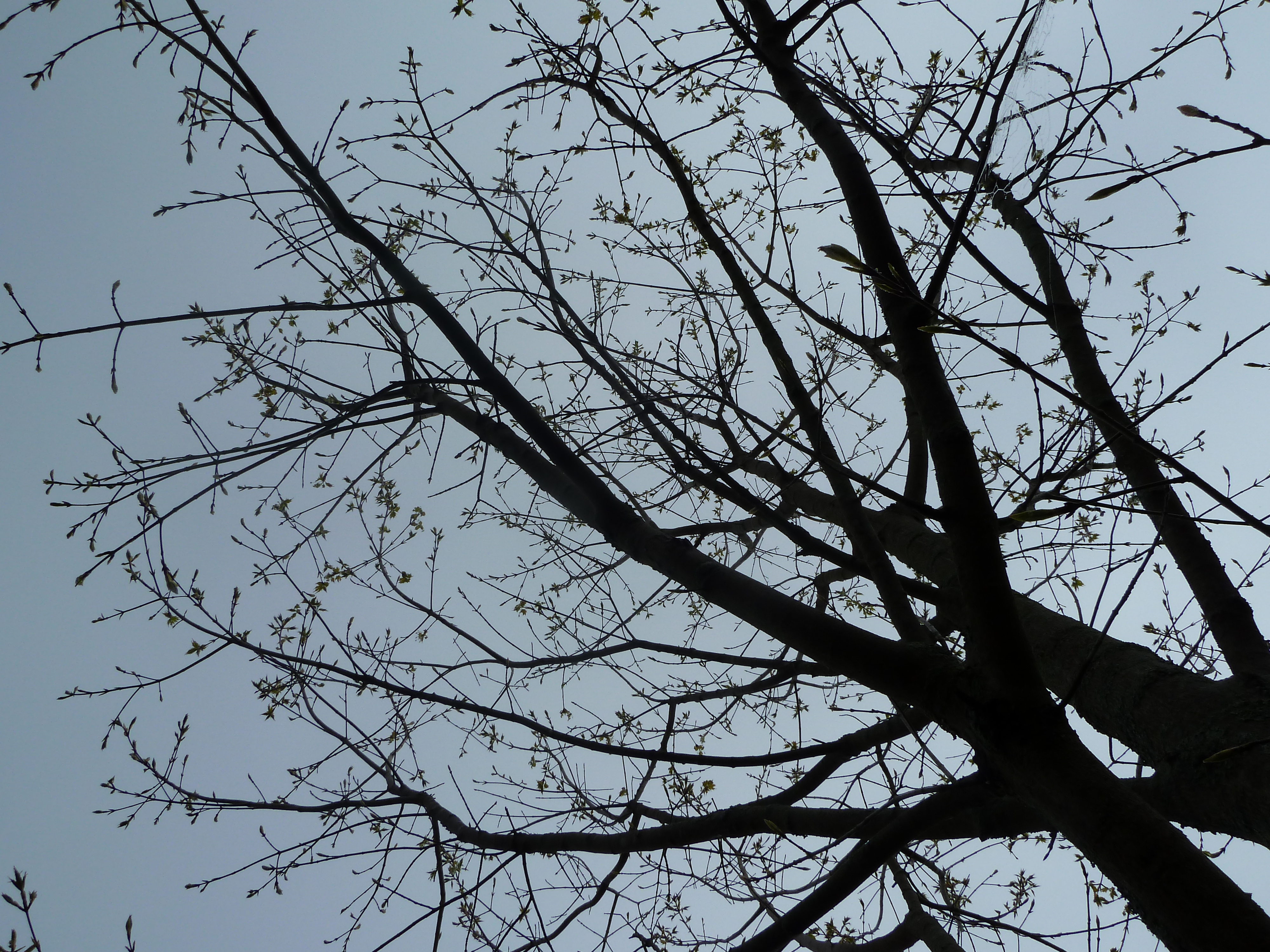
P1020601

It’s modest example, but of such variability is public skepticism of climate change made. We are, with our 360-degree sense of touch, characters of the immediate; even in our most cerebral and farsighted moments what touches us often varies from what prolonged observation and reason support.

Today, the wind is from the south, and the hazy air is thick with the scent of lilacs; we’re only a few degrees short of drowsy. Stringing the steel wire of will to long-term findings and change is hard work for this immediate animal, especially as the body feels the soft stir of warm air that it loves.
Solarity

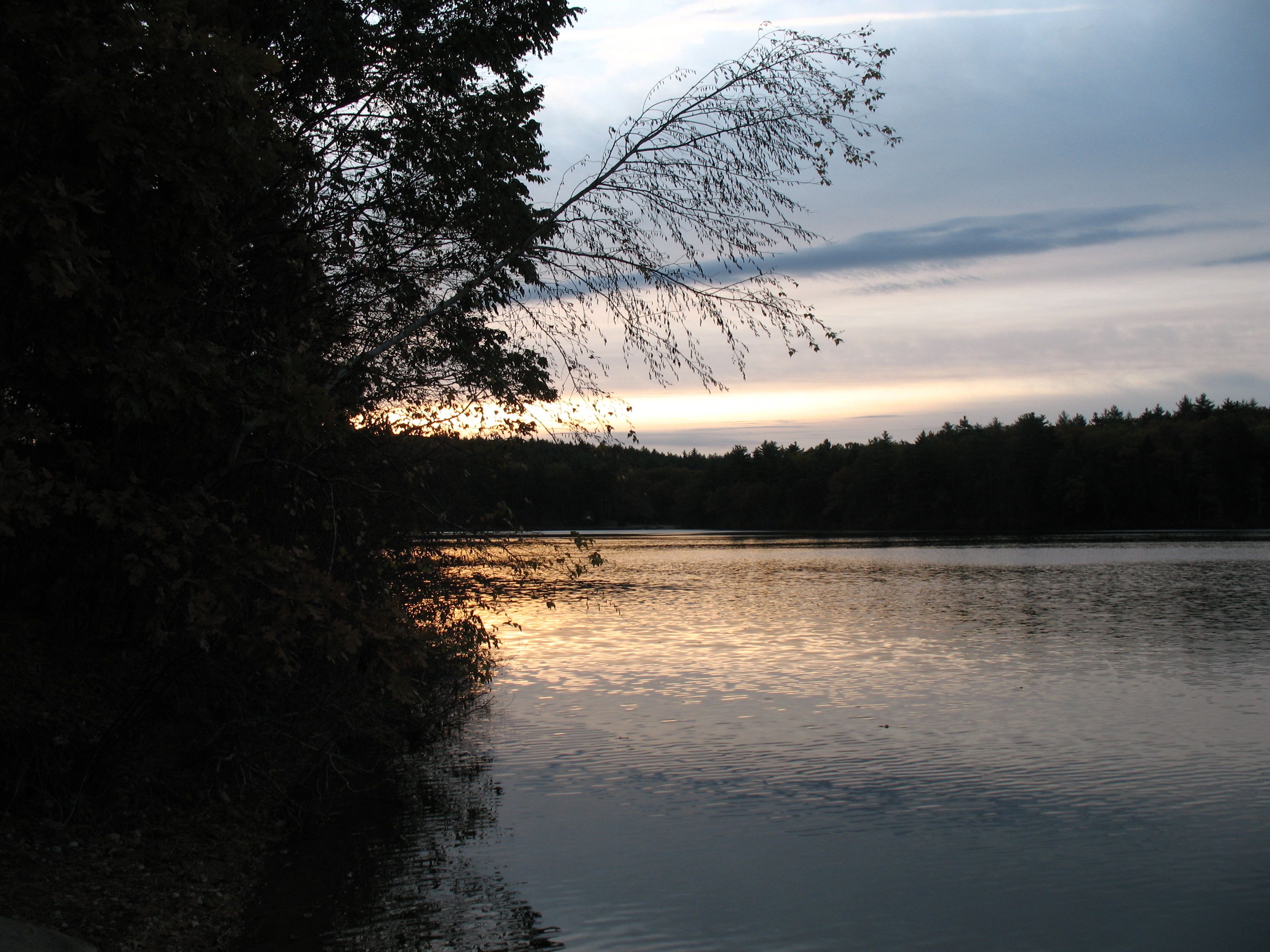
The other day, after reaching Thoreau’s closing image in Walden – “The sun is but a morning star.” – we went to the pond. We left early, driving the two miles over quiet roads and arriving (with permission) at the closed park. One lone angler was on the east shore; we headed for the house site. Outside the book after six weeks in its room, we were headed back to where it began.

At the house site, we crowded into the little post-and-chain rectangle and read a few passages about the March morning in 1845 when Henry Thoreau began building his house. We looked up at the “tall arrowy pines” and in imagination felled a few; we “left the bark on.” Then, we admired the sprawling cairn nearby. Now, it was time for the water and the sun, and each of us went to a sitting place along the banks of the northwest shore. Everything was afire with sunlight, even the undersides of branches had caught the light of the “second sun,” the one that flashes up off the pond. Already the night cold was gone; the new day was afoot. The sun had brought it.

Morning at the pond

Morning at the pond

While my students entered their various solar reveries, I watched them from across Thoreau’s cove, and it wasn’t long before I entered a reverie of my own, this one about the power possible from the same sun that lights Walden. Are we not, clever species that we are, able enough to use that power directly instead of continuing with our habit of unearthing its stored remnants and burning them, thereby setting off a cascade of unnecessary change in our atmosphere?

That, in turn, made me think of Thoreau Farm’s solar challenge – to which we have given happily. The challenge seems especially apt, as I emerge from another reading of Walden, where it has been a gift to be brought over time again to this morning star, and then left there on the shores of a new day to choose my direction.

And, now that we have “fallen back” into Standard Time, it is a gift to awaken each morning to the low-angled, November sun as it streams through the leafless trees. Even at this northern latitude and in our shortened days, the sun has power.

That morning, we left the pond warmed; perhaps some of us were newly awake. The sun had worked its daily magic.

I hope you’ll consider helping us bring some of this magic to Thoreau Farm.

Henry Goes Solar!

“No light illuminates me.” ~ Henry David Thoreau

Update on our solar campaign – We have raised $8,600 toward the $12,000 match and our total goal of $25,000. We also received an equipment donation which will defray the project cost by nearly $2,000. We continue raise funds for the balance – you can make a gift through our PayPal account (“Donate” button to the left).

Bottom line – we are moving forward with the installation! Take a look at the info below for more details on the project. And please help us raise the remaining $3,500 by making a gift today!!
———

Henry David Thoreau is going off the grid once again, 168 years after his famous experiment in living deliberately in a simple cabin at Walden Pond!

In keeping with Henry David Thoreau’s environmental values and in the spirit of living deliberately, Thoreau Farm has launched a fundraising campaign to install a solar photovoltaic system at his birthplace. We need to raise $25,000 by the end of November to get the system installed before the ground freezes.

This is a very important project to us and will have the following impact on our organization:

  • Environmental – we will no longer have to use electricity generated from non-renewable sources (we use a low temp heat pump for climate control, which needs electricity to operate so a solar pv system will enable us to be completely non-dependent on any fossil fuels, even for our heating and cooling needs).
  • Education – we use all the green features at Thoreau’s birthplace to educate visitors on how we can all be more environmentally conscious.
  • Economic – by being able to generate our electricity we will save $2,000-$3,000 in operating costs per year.

Take a look at this video to see just how important solar energy is to Henry himself – http://www.youtube.com/watch?v=GcNOx_TbzAI

A donation of any amount is welcome, and all donations make a difference. A generous donor will match your gift – this means your gift has TWICE the value and will get us to our goal TWICE as fast. You can make a tax-deductible gift using our PayPal account (“Donate” button to the left).

And please help us spread the word by sharing this campaign with your friends!