Category Archives: Thoreau Quote

Shell Games

June 2, 1860: “A catbird has her nest in our grove. We cast out strips of white cotton cloth all of which she picked up and used. I saw a bird flying across the street with so long a strip of cloth, or the like, the other day, and so slowly that at first I thought it was a little boy’s kite with a long tail.” – Journal

They are four, our shells gathered from a recent beach-walk – somehow a few, and not always the pristine ones, make it into a pocket and then the car each time we go. And for the past few days they’ve been mellowing on the front deck, waiting either inside arrangement or return to the beach on a next walk.

Yesterday, however, the shells began to move. I’d been out for a walk in local woods, and when I ambled back home, two of the shells were gone. Not far, mind you; they had shifted…somehow…to the far side of the driveway, where, amid the pine needles, they looked lost. I shrugged and put them back with their brethren.

The next morning the same two shells had vanished again. Again, not far: this time they were on the front lawn. I picked them up, puzzled over them a bit, placed them in their foursome and began to wonder – who or what either objects to these shells or finds fascination in them? Later in the day they were back in the driveway. Our resident chipmunk? One of the myriad gray squirrels? The chickens that reside in the pines across the street? Some unknown skulker? Or, perhaps, the catbird that “talks” to me whenever I’m in the yard, following me and speaking in its many tongues wherever I go.
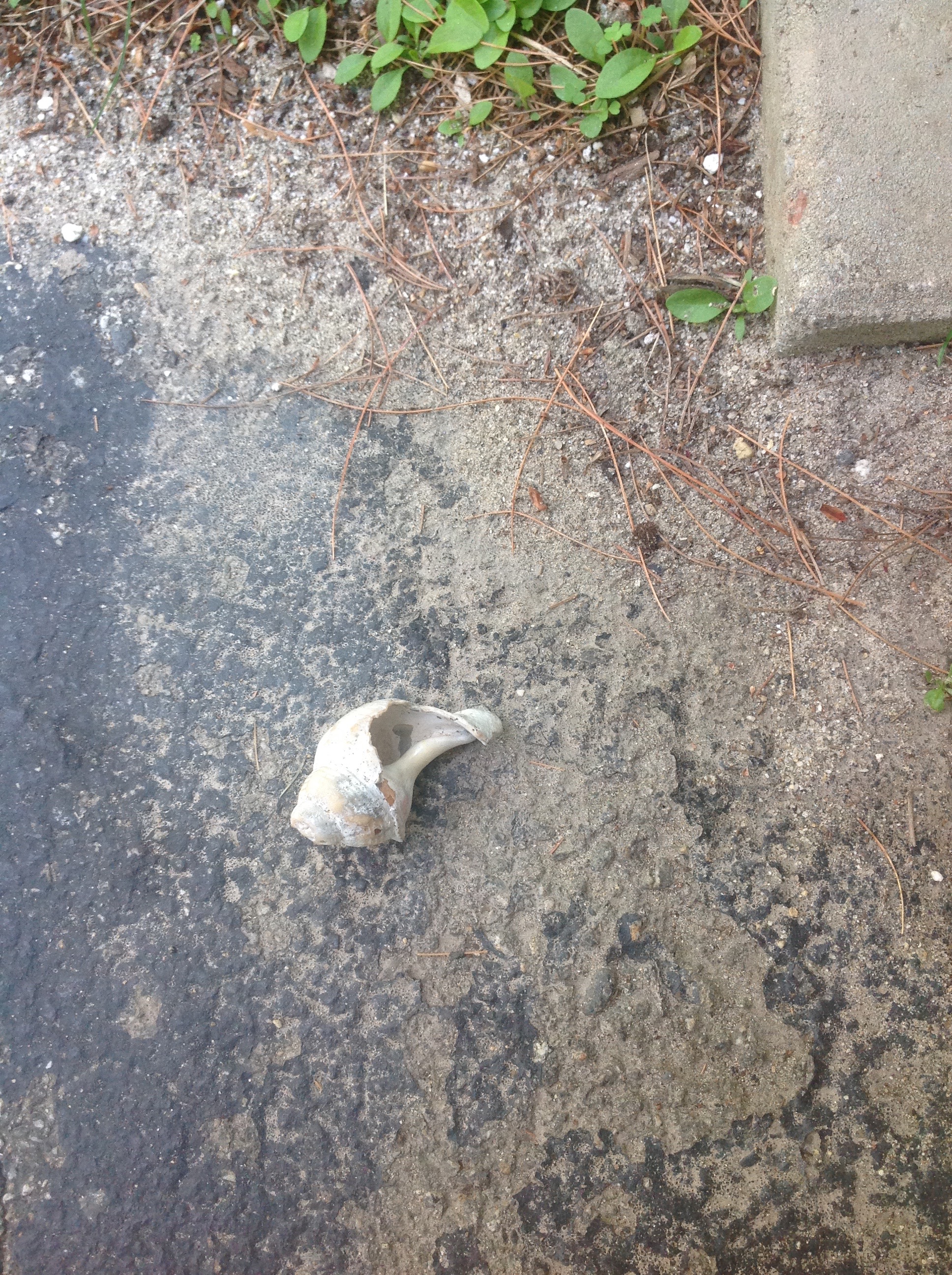
The shell most often moved.

The shell most often moved.

I replaced the shells, evening came on, and, after dinner, I took a stroll around the neighborhood, going, for a change counterclockwise. Part way around I realized that I’d arrive back at our house unseen from the shells’ point of view. As I neared home, I slowed to a quiet creep, and then peered around the car’s fender and in at the shells.

Aha! There he was, suspect #1 during my afternoon mulling of possible shell-shifters. The catbird, he of a hundred voices; also he of the rhododendron along our house front, which borders the deck of shells.

As I watched, the catbird seized the small conch that is easiest lifting and hopped two steps into the driveway; then, with a flick of the head, he flung it a foot farther. Hop hop; grab the conch; hop hop; fling. Repeat until you reach the driveway’s middle.

Satisfied with this new placement, the catbird returned to the other shells, tapped and considered them for a long minute, and then – who knows why – he flew into the rhododendron and began to sing. I left as he sang what now I hear as his shell-moving song.

Now, it’s night. The gray tree frogs are calling indefatigably, and some unidentified laugher has come, laughed and gone. I wonder if the catbird has been back to the shells, if under night’s cover, he’s been hopping and nudging the largest of the three toward deck’s edge. I’ll see in the morning.
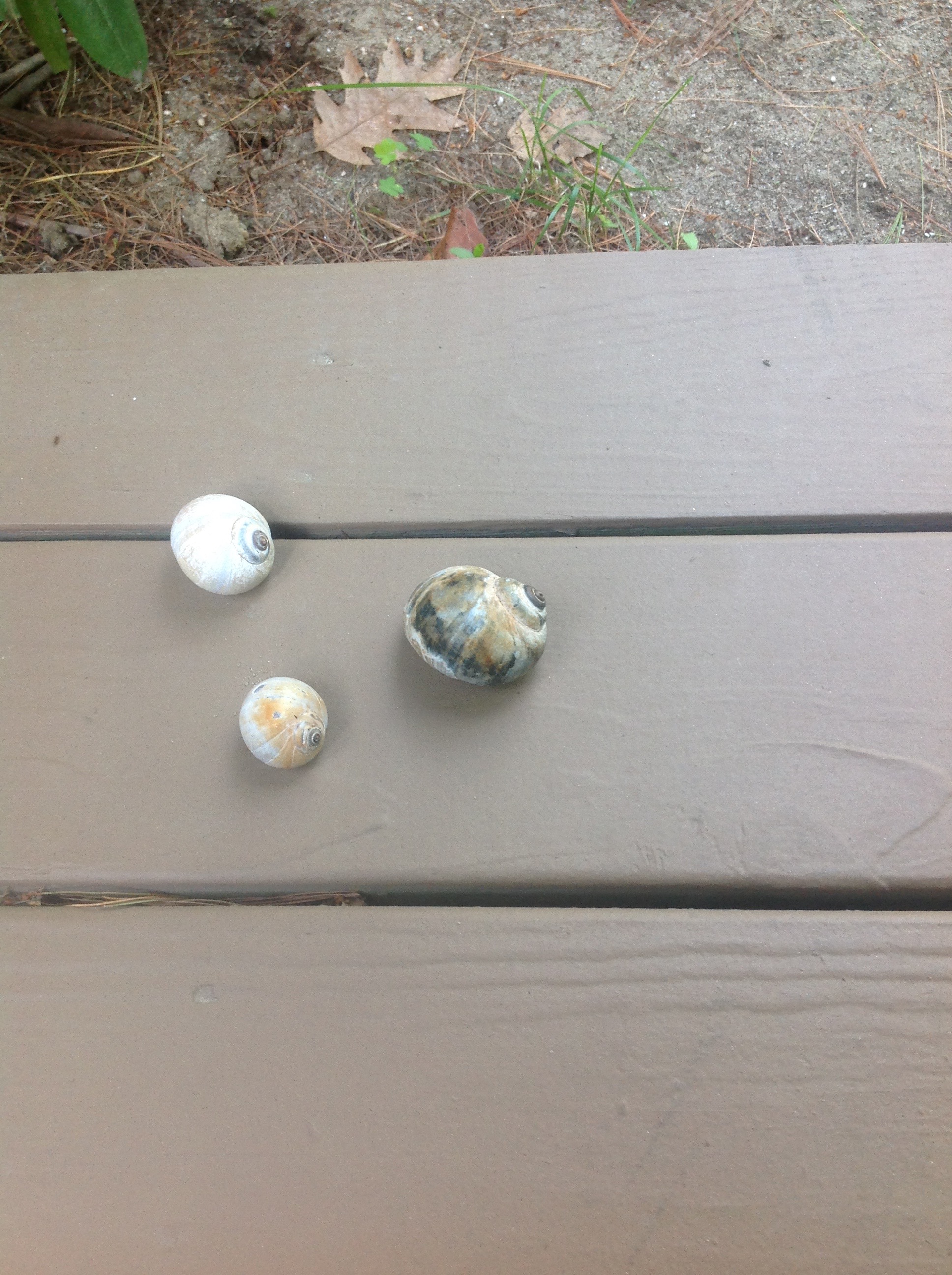
This morning's scene.

This morning’s scene.

Walking Up Waking Up

On July 19th, 1842, Henry Thoreau and his friend Richard Frederick Fuller (Margaret Fuller’s brother) set out, “resolved to scale the blue wall which bounds the western horizon,” or the long-looked-at Wachusett. Even so, Thoreau was “not without misgivings, that thereafter no visible fairy land would exist for us.”

Still, by walk’s (and essay’s) end, he had this to say: “And now that we have returned to the desultory life of the plain, let us endeavor to import a little of that mountain grandeur into it.”

So it is in this expansive season that often sees us walking toward horizons blue with distance and often imagined. Up then, I go up on a recent morning, with the blue wall of ridge rising along the valley’s west. Like Thoreau and Fuller, I left early, with the eastern light at my back; but unlike Thoreau and Fuller, I had only a short walk before I began to climb that blue wall, and I soon fell into the meditative cadences of climbing, all built on the audible work of breathing. It is a different sort of meditation, but contemplative nonetheless.

As often happens to me when walking is also working, some time slipped by without my noticing it. I came back to full awareness as the light shifted: first it grew dark (I had entered a spruce grove) and a fading line of snow glowed, light rising from the forest floor; then, the light intensified ahead of me, and I arrived at a sort of door. Before me was the first set of open ledges in a day of ridge-walking; I had entered the “visible fairy land” of the upper mountains; I was atop the “blue wall.”

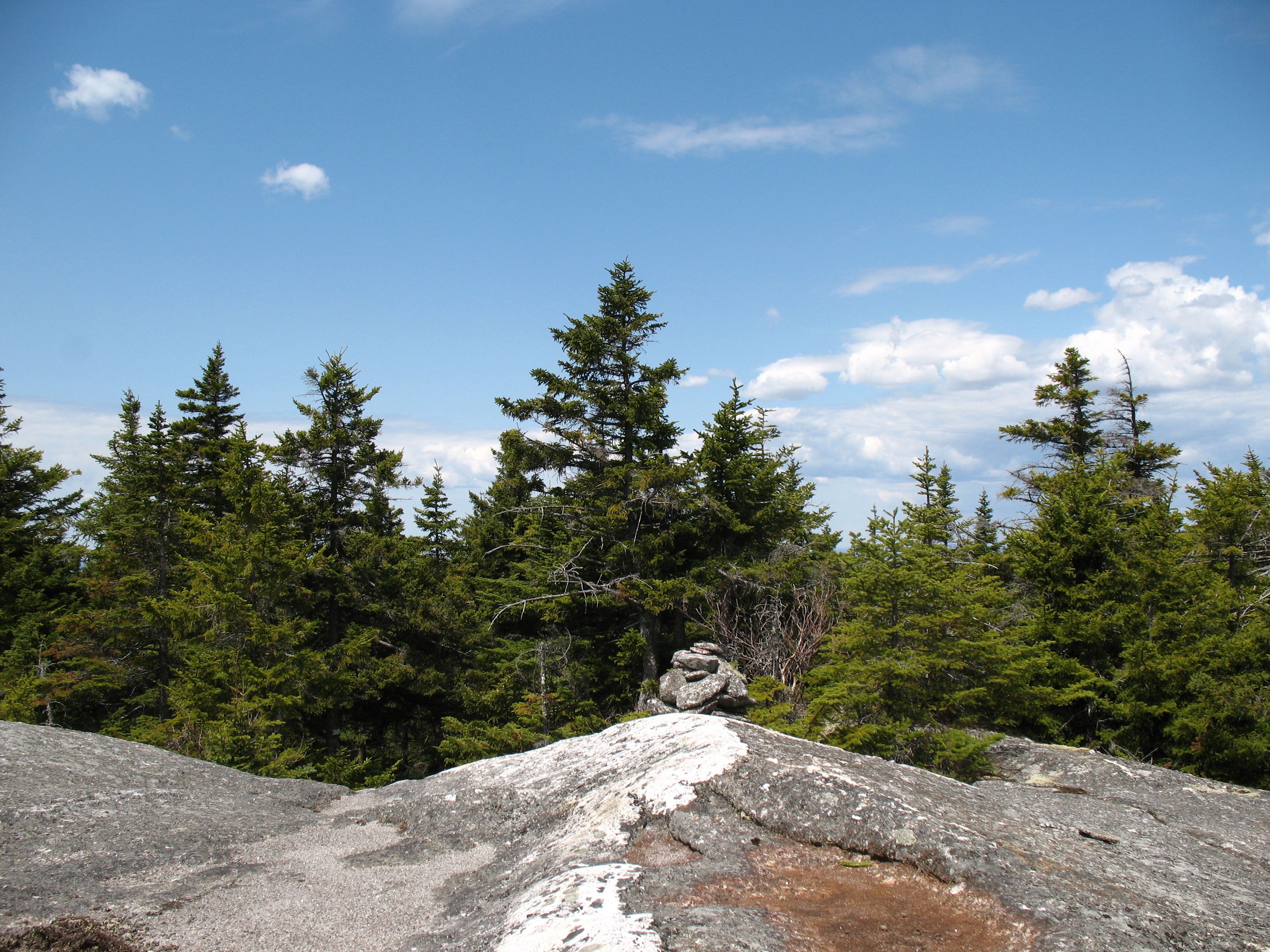
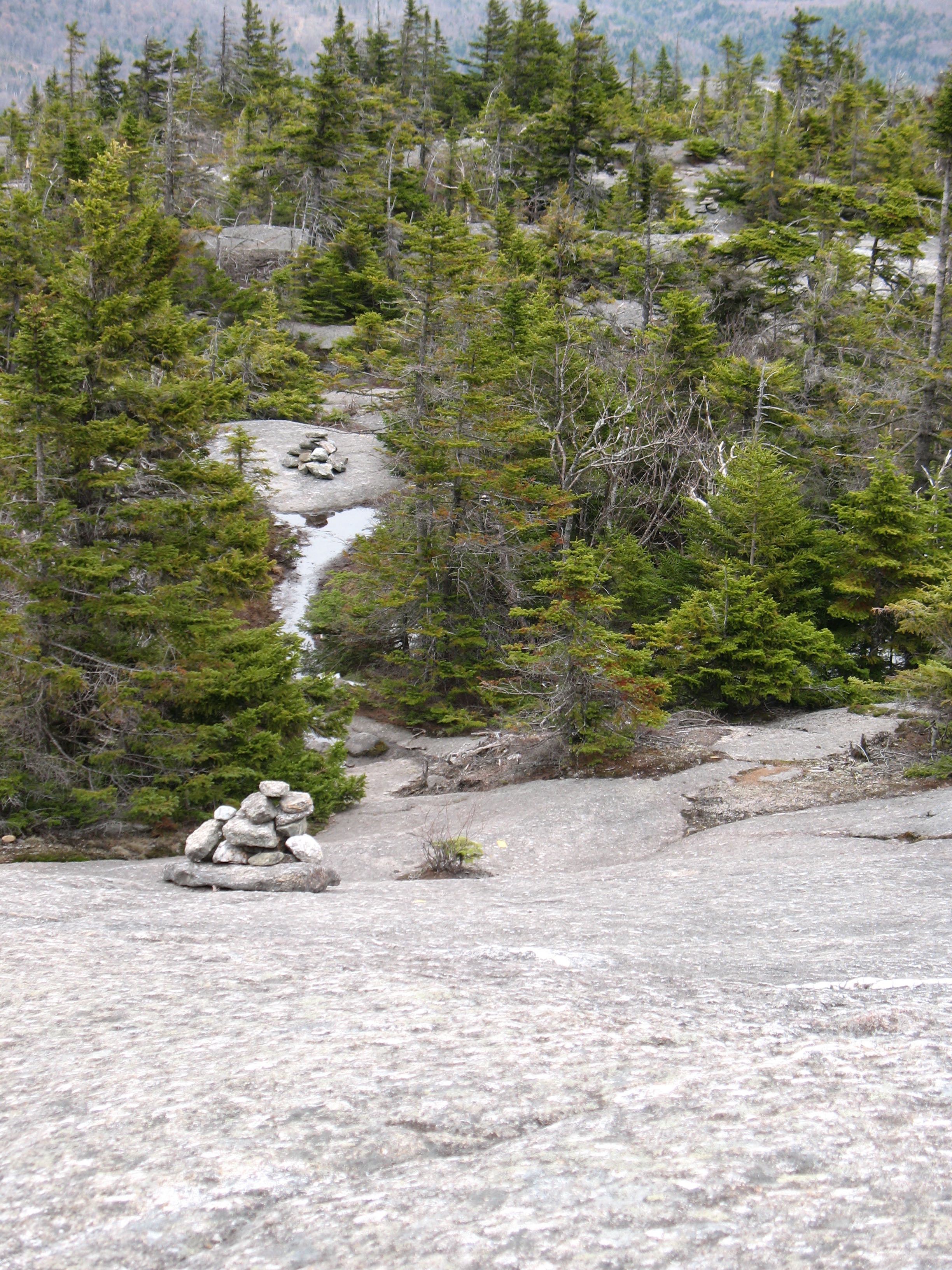
It seemed fitting then in this up-there world that the way should have new markers too, guides across the stone where feet leave little sign – cairns. Born of the bare Scottish Highlands, cairns are often simple piles of stones assembled by passersby to indicate that you – walker-next – should pass by this way. And, as both marker of passage and contribution, many of us add a stone as we pass by, especially to small cairns that have suffered from scatter. And so some cairns grow.

First Ledges Early Cairn

First Ledges Early Cairn

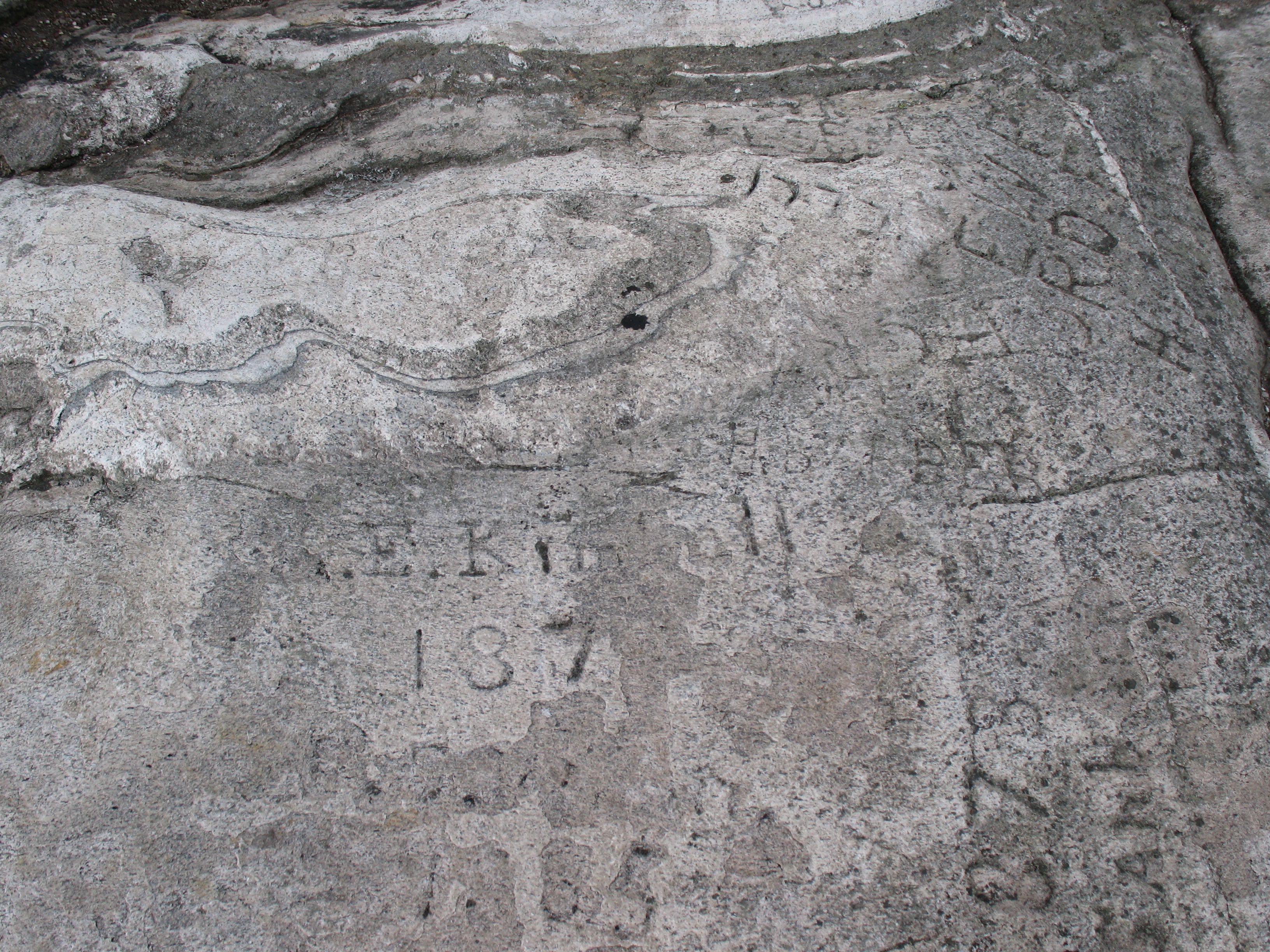
Atop the day’s central summit, I stopped to look at the bare stone and then the series ridges, especially those that rise to the north. On the stone, I found inscription, some dating back to Thoreau’s era, the sort of “I was here” writing inspired by the being above the valleys.

Summit Inscription Palimpsest

Summit Inscription Palimpsest

And I was reminded again of Thoreau’s Wachusett walk and the essay that flowed from it. Here’s its ending:

We will remember within what walls we lie, and understand that this level life [on our return to the valleys] to has its summit, and why from the mountain top the deepest valleys have a tinge of blue; that there is elevation in every hour, as no part of earth is so low that the heavens may not be seen from, and we have only to stand on the summit of our hour to command an uninterrupted horizon.

Cairn-way

Cairn-way


Fog in the Trees

Journal, May 19th, 1856: “Thick fog this morning, which lasted late in the forenoon and left behind it rainy clouds for the afternoon.”

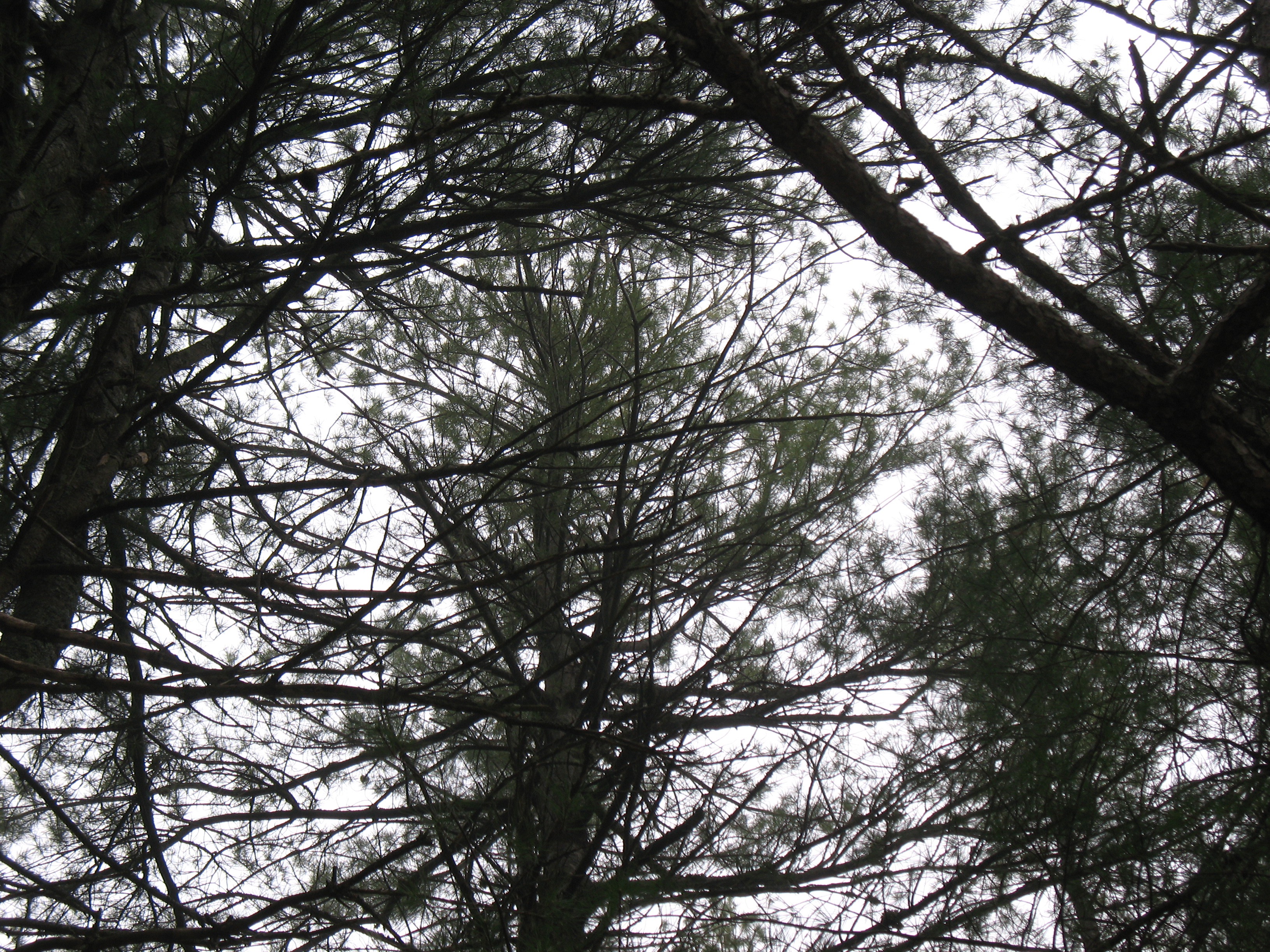
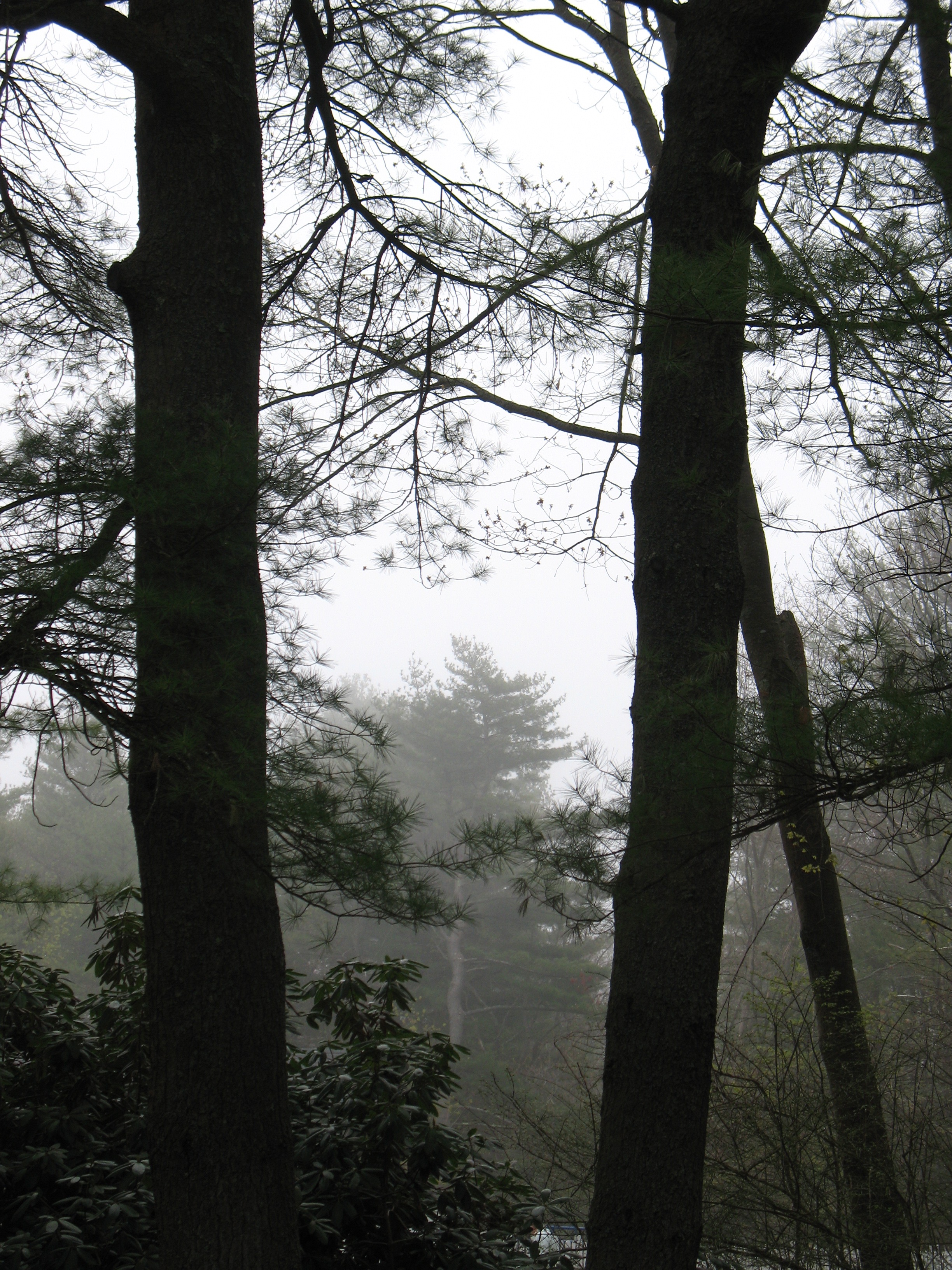
It is still. It is quiet. The days of rowdy, sun-stirred air end with this gray morning fog in the trees; it is perfect for a Sunday, the slowest kind of time, contemplative, a piney retreat from the wound-up weeks on either side.

IMG_1755

It seems to me that fog’s human expression is unlabored breathing, the slow, quiet in and out of merger with what’s beyond. A morning like this is as close as I come to being a tree, as close, perhaps, as I come to simply being in place. I am not a religious sort, but if I were, I’d say this fog is visible prayer; surely it is subtle song seen.

IMG_1753

Thoreau, of course, was not kept in by thick air or promise of rain; instead in the afternoon, he is sailing up the Assabet, when he hears this:”…a traveller riding a long the highway is watching my sail while he hums a tune. How inspiring and elysian to hear when the traveller or laborer from a call to his horse or the murmur of ordinary conversation rises into song! It paints the landscape suddenly as no agriculture , no flower crop that can be raised. It is at once another land, the abode of poetry.”