Category Archives: News and Events

Opened after 110 Years – Advent Pages in Thoreau’s Journals

It is clear that I have never been here before – this early winter, 1860 section of my 1906 edition of the journals is rife with uncut pages; drawing a knife carefully along the joined edge of two pages is a little like opening a present or finding a secret glade. I have never seen these words, these observations, before; and yet each is a little window into a world I’ve come to know, to anticipate.

Like many children who grew itchy at time’s slow passage as Christmas neared, I liked the advent calendar. December’s dark days seemed a sort of tunneling toward magic, and the calendar’s little windows lit the way. My more religious grandmother had given the calendar to her somewhat-wayward son’s family, and in one season I had memorized each window’s offering. Still, until each window opened and its little painting appeared, the future felt like mystery.
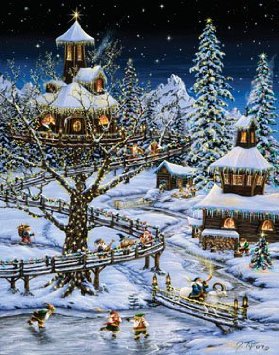
Modern Advent Calendar

Modern Advent Calendar

Now, as I reopen each in memory, I realize that they were refreshingly free of religious iconography, that most of the tiny paintings behind the doors showed birds, pine cones, trees and snow; our calendar was paean to the world beyond the windows, and, during the short days of waiting for first snow and the 25th’s presents, that’s where I went to pass the time.

That you could only open one advent window per day kept time tugging at its reins. The fifth, as I recall, featured a Christmas tree, and sometime during that week, we too got our tree, which then spent the obligatory 48 hours in a bucket of sugar-water outside the backdoor. The candles along our mantle mimicked the green and yellow painting of day eight. Double figures neared, then arrived.

Now, I no longer have an advent calendar, but the habit of countdown remains; I imagine little woodland scenes behind the door to each day; then I go looking for them. And in this season of small windows, I confess that I have been bad, a little. Each day, when I’ve picked up Thoreau’s journal, I have opened more than one page, read more than one window’s words. That turns out to have been unavoidable, because after December 4th, Thoreau recorded little of that December.

The largest door in my remembered advent calendar was, of course, that of the 25th; behind it lay the day toward which we had been counting. The 25th doesn’t appear in Thoreau’s 1860 journal, but the 26th bears mention of what must have been a present received on the 25th. That year Thoreau’s 25th opened to an owl: “Melvin sent to me yesterday a perfect Strix asio, or red owl of Wilson, — not at all gray.”

And, in the next paragraph, Thoreau’s fascination with the details of his gift are clear. As ever, the windows of Henry Thoreau’s calendar opened to the natural world, even when it was brought to him as a present. And this gift-owl was part of a local habit wherein Thoreau’s neighbors brought to him their findings from the woods when it opened its windows to them.
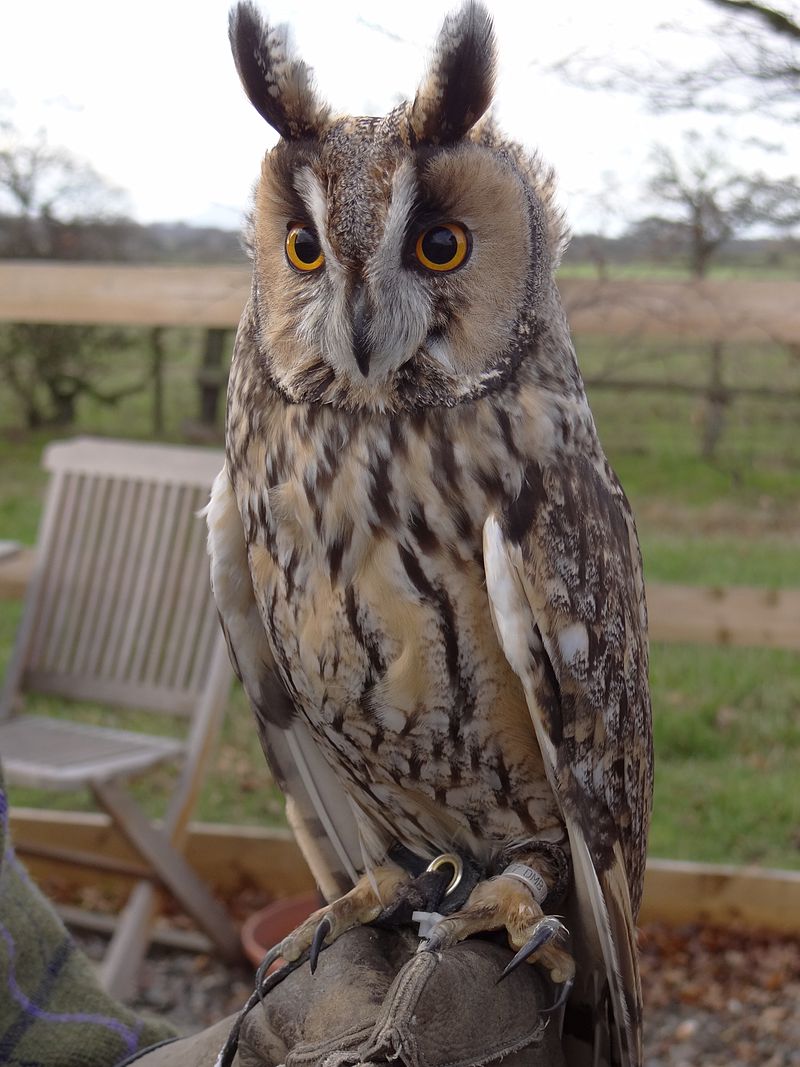
Long-eared Owl

Long-eared Owl

In my long ago calendar, we too had an owl; it was painted into one of the early December days, its large eyes looking out in anticipation. I didn’t know then these little paintings of the owl and the fir tree and the snowy path led to the present I’d receive over a lifetime. But perhaps, when she selected that woodland calendar, my grandmother intuited it.
Cloud Calculus – Paris Musing

“Our whole life is startlingly moral.” – Henry Thoreau, Walden

While the race of events makes it hard to maintain focus, I have been thinking often about the climate talks in Paris. They and the questions of climate link us all; something’s stirring there.

A recent NY Times op-ed piece (Koonin, 11/4/15, see link below) about accumulations of atmospheric carbon, measured in tons, brought the childhood song, John Henry, back to mind, and now – we all do this, yes? – it plays as soundtrack throughout my day…“you shovel 16 tons, and whatta you get, another day older and deeper in debt…St. Peter don’t you call me ‘cause I can’t go, I owe my soul to the company store”…dum, dum dum dum dum de dum dum of descending notes.

I write often about various footprints, in part because, for me, each day is, in some or many ways, foot won, and footprints and strides are also measure of our ways into the world. But, even as I look skyward to figure the near weather-future, I don’t often invert myself and see also my feet tracking across the sky, see my sky-prints.

Not my cloud, of course, but atmosphere made visible.

Not my cloud, of course, but atmosphere made visible.

It seems to go against gravity and, perhaps, tempt divinity to look up for sign of self. But, of course, science, which specializes in the invisible, tells me my prints are there, that I am Bigfoot of the above. As are we all.

Up there, my science reading tells me, above each of us hovers an annual cloud of our carbon exhalations; if we are Americans, it weighs, on average, 17 tons. If we are at home on other continents, the per person figure is markedly smaller – Europe: 7 tons; China: 6 tons; world average: 5 tons. Still, as John Henry reminds us, tons are heavy matter.

Used to the increments of each day, I try to shrink my cloud to the scope of my mind, and so I call up my calculator app and divide 34,000 pounds by 365 days, and get a daily poundage. Zow, I think – at 93.15 lbs that’s more than half of a me rising daily. And, even if I am a simplified or restrained American, a Euro-sort-of-guy at closer to 7 tons per annum, that still makes my daily exhalation 38.35 pounds. For feel’s sake, at my local Planet F(itness), I walk over to the free weights and lift the 40-pound barbell. (The 90 pounds I leave racked.) Can that really be? How is it possible that seeming nothing can weigh so much?

So, I look for a way to gain deeper purchase; here’s one: tonight, when company comes, we’ll burn an open fire in the fireplace, for cheer, for warmth. I’ve weighed the wood that will be this fire; it comes in at 20 pounds. Let’s say the leftover ashes will weigh a pound, tops, when I shovel them out tomorrow. Does that mean that – given conservation of matter – I’ll have added 19 pounds of gasses to what’s aloft? Yes, and more: elementary chemistry reminds me that for each carbon molecule, there are two oxygens bound in. And so the mass of my exhalation is even greater than the carbon I burn.

Henry Thoreau got all this in his blunt and startling statement in the Higher Laws chapter of Walden. “Our whole life is startlingly moral,” he wrote. Then, he added: “There is never and instant’s truce between virtue and vice.” Even the breath we take in and the CO2 we give back.

My brain whirrs in wondering: of what are my pounds and tons made? How much driving, heating, eating? How much of the tiny engine that’s me? How can I contain my tonnage, lessen it? I am, I think, the little engine that does; I am combustion on foot.

Still, each day I set out walking. I value the trees that take in my CO2, offer back oxygen. I keep trying to live little, to maintain balance, to shovel less.

Link to Steven Koonin op-ed in the 11/4/15 NY Times: http://www.nytimes.com/2015/11/04/opinion/the-tough-realities-of-the-paris-climate-talks.html?action=click&pgtype=Homepage&module=opinion-c-col-left-region®ion=opinion-c-col-left-region&WT.nav=opinion-c-col-left-region

Easy Walker

Each town should have a park, or rather a primitive forest, of five hundred or a thousand acres, where a stick should never be cut for fuel, a common possession forever, for instruction and recreation … All Walden Wood might have been preserved for our park forever, with Walden in its midst, and the Easterbrooks Country, an unoccupied area of some four square miles, might have been our huckleberry-field.
— Thoreau, Journal, 15 October 1859

Happily, much of what Thoreau thought “might have been” has come to pass in Concord and Lincoln. And many, most, who visit these pages can sign on to such sentiment. But how, in these people-heavy times do we keep other lands free…of us? For many, putting land “in conservation” offers answer. That act can take a number of forms, but one that interests me here is the nicely titled conservation easement.

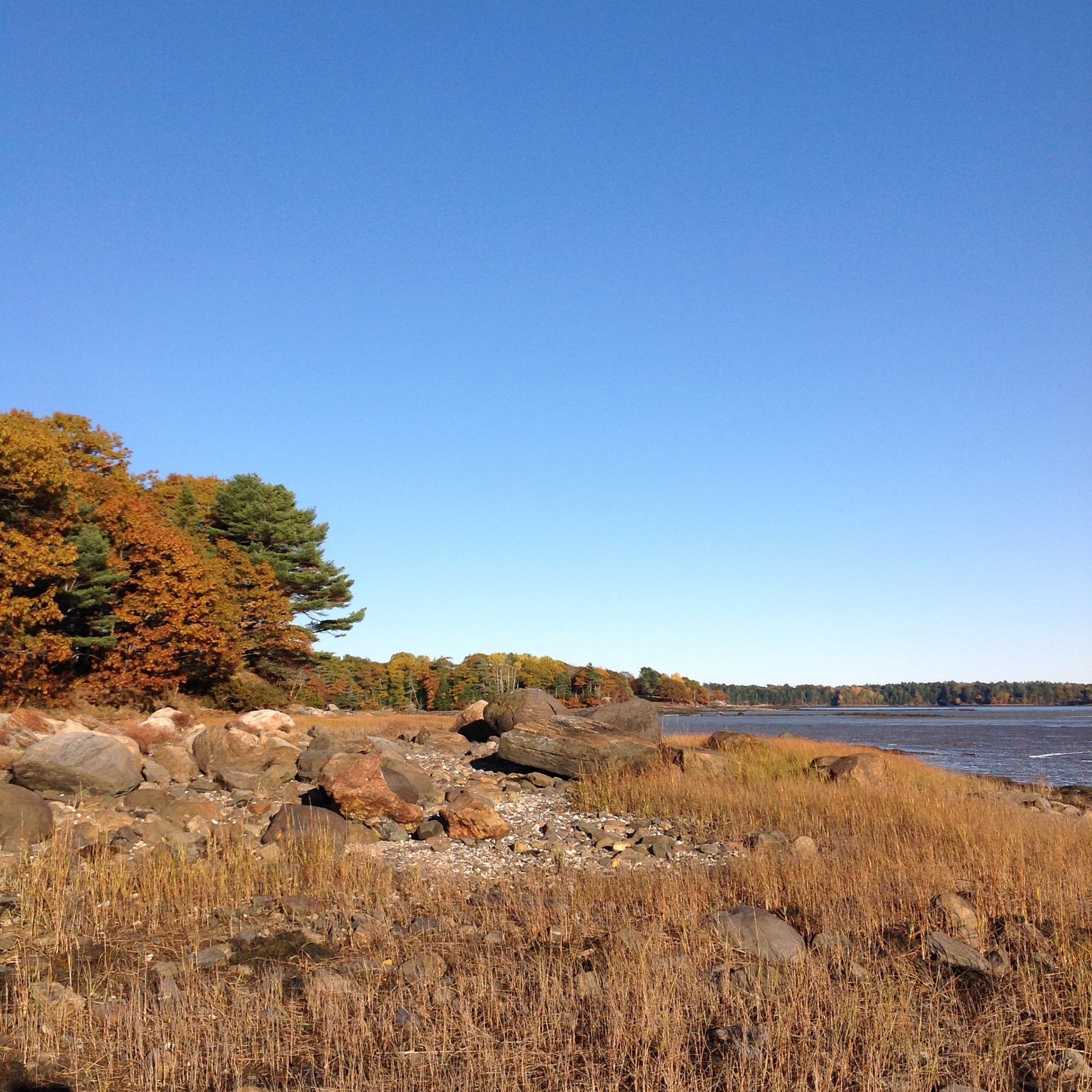
Part of what got saved at Walden

Part of what got saved at Walden

We are curious, expansive beings, ever nosing here and there, often settling in places where a first visit brings on a rush of exclamation: “It’s so beautiful! I wish I lived here.” And then, sometimes, we set about trying to do so. Beauty draws the heart, and often activates the hands. But once we set to with our building instinct, the results affect that beautiful place, and beauty itself. A little land rush of many of us compounds that effect; a beautiful place can become just another settlement. Conserving, saving, wildness and beauty then requires some way of easing that rush, holding us off.

Enter the easement. An easement in its simple form is a voluntary legal agreement made between a property owner and a land trust or government agency that permanently restricts certain land uses and activities. So, for example, a developer who offers a town a conservation easement on a 30-acre portion of a 60-acre subdivision could say that there will never be any houses or other development on those 30 acres. Once that agreement’s made, it’s up to the town to monitor whether it’s abided by.

Some easement land in my town

Some easement land in my town

Enter next, in my town’s case, the Conservation Commission, checker, among other duties, of easements.

It’s a middling summer day, enough heat to make me rue the blue jeans I pull on as guard against thorns, brush and, the new primary fear, deer ticks, but not so hot as to make you feel under the sun’s thumb. Two of us, members of our town’s Conservation Commission, meet a planning department intern at town hall, then drive to a stash of woodland that extends over 50 acres adjacent to a new development. We three are there to walk the easement boundary that marks the set-aside acres that the developer has said he won’t touch; these acres will be, by contract, forever wild…or, given nearby houses, wildish.

Surprise greets us as we pull up at the end of the dirt road: a logging operation is in full gnaw, its cuttings – 50 or 60-year old hardwoods – stacked by claw in a waiting truck. Quick consultation with the easement language says that part of this forest will also be “working.” Okay, add more “ish” to the word “wild.”

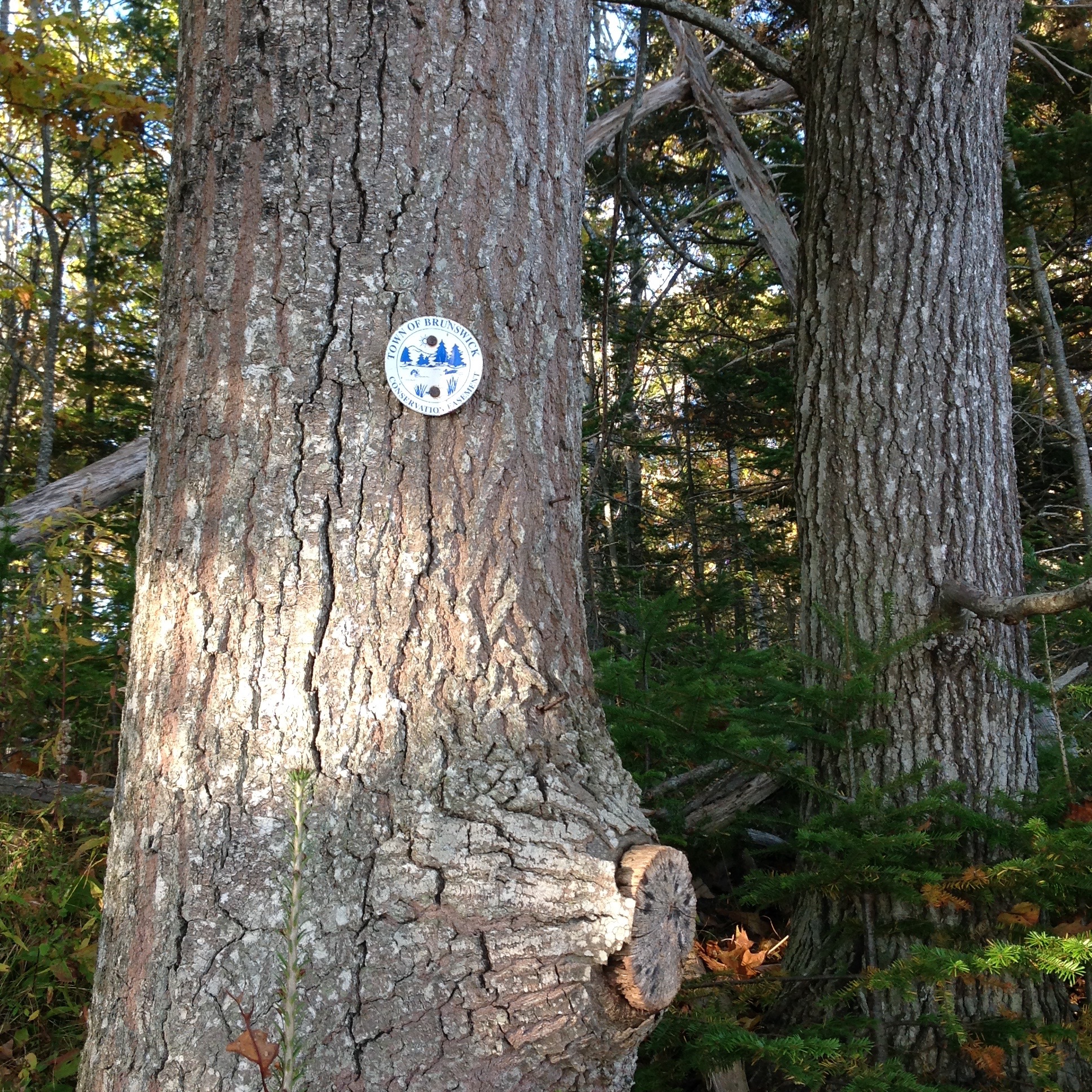
Still, we soon outwalk the cutting, and in the quiet woods fall to our primary task – following the easement borders by finding signs of that border. Those signs are three: best is a town “medallion” tacked to a tree as notice of easement boundary; next is some unofficial but prominent marker – a small cairn, a pipe driven into ground, a strip of orange “flagging”; last is the rusted wire bound of the old field this woodland once was. We fan out. I have a photocopied aerial of the woods; my fellow commission member uses her phone’s gps; our intern has the sharp eyes of youth.

Medallion - a best marker

Medallion – a best marker of conservation land

We nose our way along the wiggly border, which, on the map, is a straight line. Just as woodwalkers grow gradually adept at following animal tracks, we get better at spotting sign of easement; this saved patch takes live shape as we walk. What also emerges during our slow passage are some of the woods’ little secrets – a knob of ledge jutting whitely from the duff, a bull-pine rising well above the canopy, deer tracks in the mud of a hidden dell.

In the course of our tracings, a couple of hours slip by; we emerge from thick woods at the top of a field. The high grasses stretch down to a wink of pond, and a breeze stirs the field. To our west, the sky thickens and darkens; thunder grumbles announcement. We search for sign and find a driven metal pipe topped with orange flagging at field’s edge. Both map and gps say the rest of our walk’s a simply crossing of field and walking of road.

Time then to ease back for a moment and watch this conserved field bask in the late summer sun – birds cruise for insects, grasses bend heavy with seed; pines crowd the clearing’s edge. This land’s slow future’s easy to read, a good story lined out for an easement-walker.