Category Archives: News and Events

Firstling

It is, as the Roman god Janus is said to remind us, the time for looking backward and forward. And, for a two-faced god, or a weary human, looking one way inflects the other. In such a state it can be hard to inhabit the present. Resolution hotfoots it into the past or the future.

Enter the walking (or skating) man, Henry Thoreau, who lived the stuff of resolution – “I went to the woods because I wished to live deliberately, and front only the essential facts of life…” – but who rooted that resolution firmly in the immediate. Reduced to a somewhat inelegant phrasing, Thoreau’s life might be contained by this command: Be here fully, now.

What, I wonder, did Henry Thoreau make of New Year’s day?

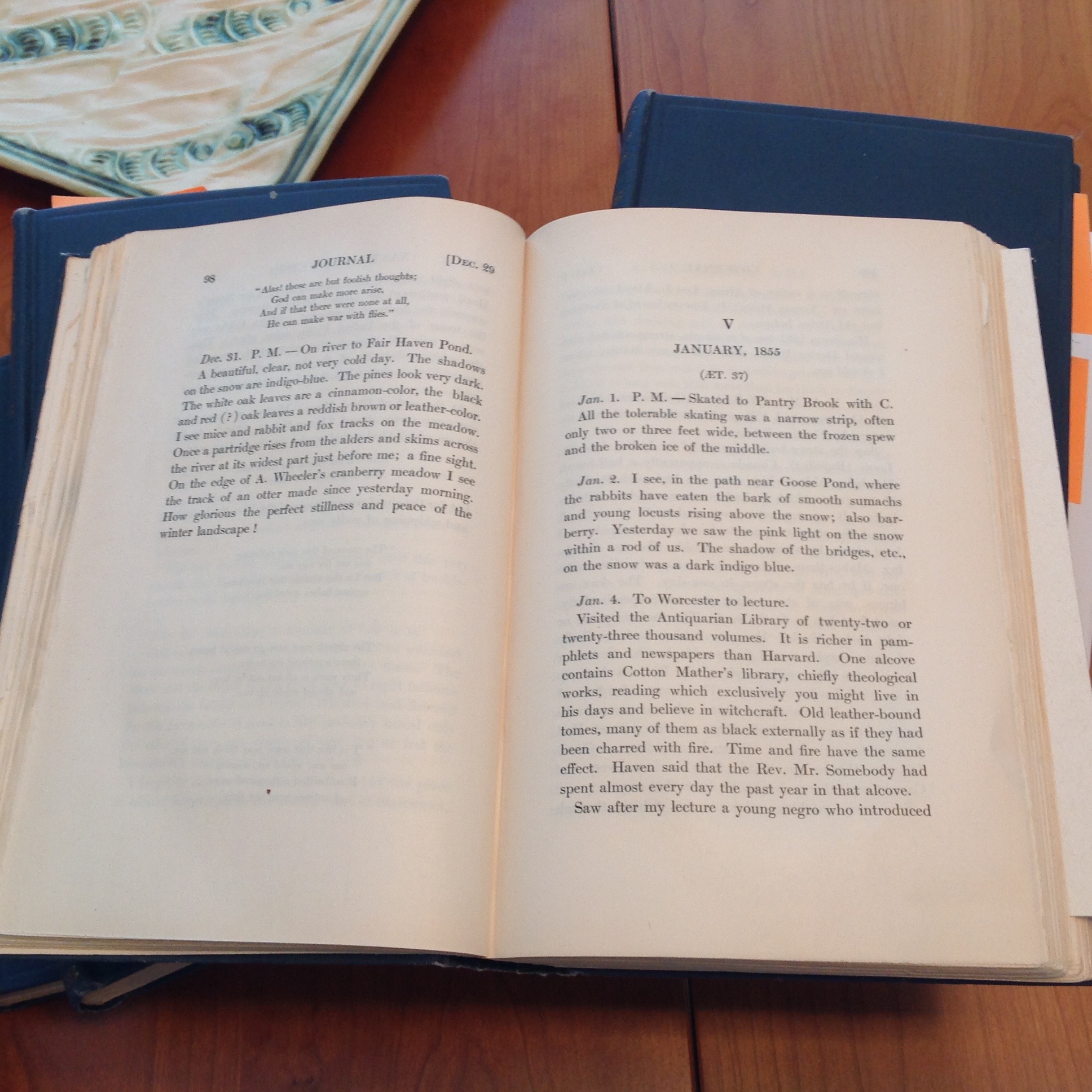
I pull out all the journals and align them chronologically; I make sure too that I have my buck knife, reserved on indoor days for the opening of still-joined pages, should I encounter some. Then, I begin to leaf through the years 1850 to 1861, years of prolific output and years when Thoreau attached his journal-writing firmly to dates. Specifically, I want to see those years’ endings and beginnings. How did Henry Thoreau ring out the old and write in the new? Did he even mention something as arbitrarily imposed as a “new year?” Or was the calendrical shift seamless, unmentioned as he opened his door on simply another day, which was simply another chance to walk out into and see the world?

Part of the scatter. With a bonus view of a piece of my step-sister Anne's pottery.

Part of the scatter. With a bonus view of a piece of my step-sister Anne’s pottery.

Page-turning (and occasional page-slicing) ensues. I work my way through this marvelous decade+ of expression, getting sidetracked sometimes by a flash of insight, an apt phrasing, a shiver of recognition.

It is just as I suspected – there’s no ringing out of old or in of new; these years (and others) are fused as neatly as uncut pages. I draw my knife along one joined set, pulling its edge smoothly, carefully toward me; the pages part. I set aside the knife, and begin to read as 1854 becomes 1855.

Both days are river-days, which is to say too they are outside days:

Dec. 31. P.M. — On river to Fair Haven Pond.

Jan. 1. P.M. — Skated to Pantry brook with C.

And one offers a near-ecstatic wheel of color, a feast for eyes. The other has a slightly grumpy tone. Sounds like the present, like everyday life to me.

Here is each in its entirety:

1/31/54: On the river to Fair Haven Pond. A beautiful, clear, not very cold day. The shadows on the snow are indigo-blue. The pines look very dark. The white oak leaves are a cinnamon-color, the black and red (?) oak leaves a reddish brown or leather-color. I see mice and rabbit and fox tracks on the meadow. Once a partridge rises from the alders and skims across the river at its widest part just before me; a fine sight. On the edge of A. Wheeler’s cranberry meadow I see the track of an otter made since yesterday morning. How glorious the perfect stillness and peace of the winter landscape!

1/1/55: Skated to Pantry Brook with C. All the tolerable skating was a narrow strip, often only two or three feet wide, between the frozen spew and the broken ice of the middle.

Just so life: one day stopped with exclamation; another day threading the tolerable between the spew and broken ice. Always present.

Best wishes to you for the immediate.
IMG_0994

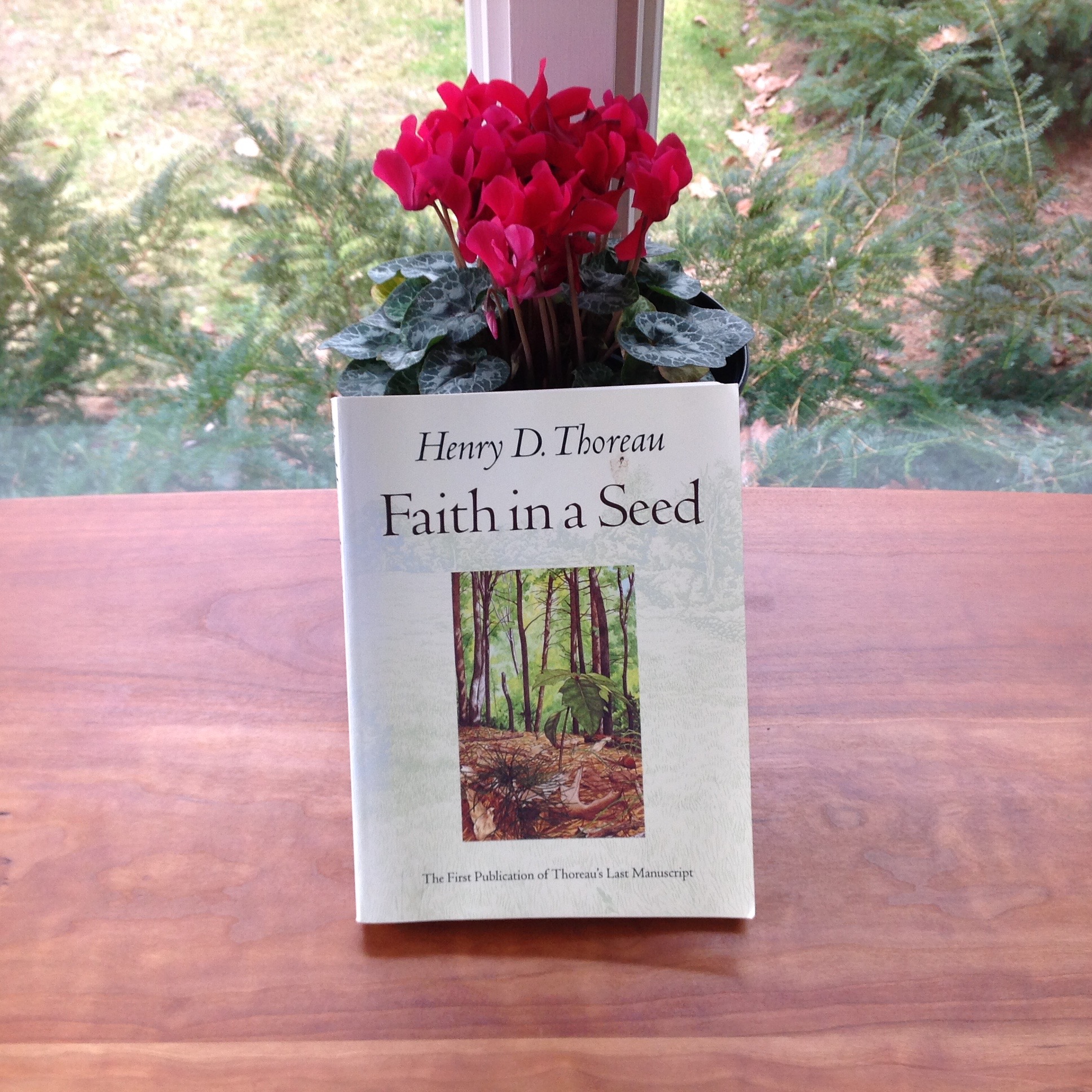
Faith in a Seed (of Light) – Two Solstice Stories

“I have great faith in a seed. Convince me that you have a seed there, and I am prepared to expect wonders.” Henry Thoreau

IMG_0990

Sisyphus at Solstice

Well that was, as always, a long way down to where the year’s slope relaxes and my stone is still.

But here’s a day of rest at the bottom; then, I get to begin the work I like, pushing this glowing rock uphill, seeing it add to each day a thumbnail’s worth of light on both margins. From here to the stretched light of summer’s a long climb. But that climb begins right after 11:49 p.m. on the 21st.; we top out next year on June 20th.

It’s not that I mind going downhill into this dark nick in time. Every day’s a gift, and I’ve said often that November’s long sightlines make it my favorite month. But like all my breathing brethren, I like also the light that rims each growing day, and I like the easy warmth it suggests may come.

Mostly, however, as I imagine my part in rolling this light up toward the sky, I like the direction – uphill is all about life; climbing is living. And so being put to this stony task seems also the greatest gift imaginable. Who wouldn’t go gladly, day in, day out, to this work?

What is funny, I reflect while testing shoulder to stone, rocking it a little, is that the old gods thought they’d devised the perfect torment when they set me this work. They thought it all added up to nothing. But they, in their haste, gave me a stone that’s round and weighted nicely to my strength. And they gave me – bless them, foremost – a hill to climb. And then, as if those gifts weren’t enough, I got also two days of pause, this near one down here at bottom, the other in the high country of summer light. Solstices.

And I get to do this forever.

Second Solstice Story

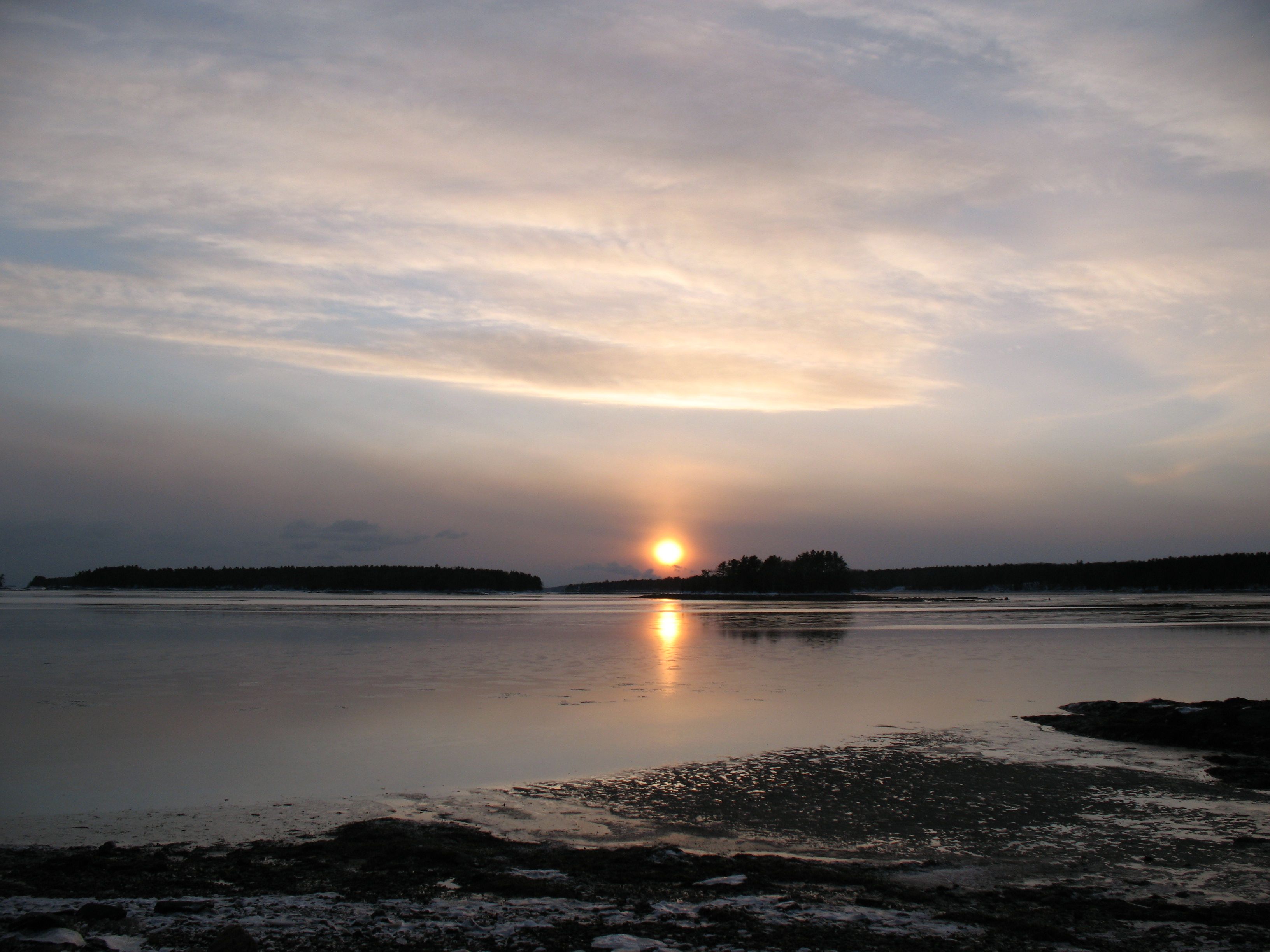
The season's low-angled sun

The season’s low-angled sun

The other evening, as a rare (for this year) cold front blew in, we went to a solstice party. Even as we took the narrowing roads that went finally to dirt, the lid of darkness slipped over the land; strings of lights stirred and winked in the wind. The house was warm and food-filled, and the small percussions of exclamation and laughter added to that warmth. We burn words too against darkness.

Later in the evening everyone bundled on coats and trundled back outside…for a celebration of light. A fire burned in an outdoor chiminea, but the wind quickly snuffed the candles and lanterns we carried; a few headlamps flashed on. We listened to the sweet voice of a child as he joined his mother in singing a nursery school song about light. Then, we held copies of a Wendell Berry piece aloft to catch the headlamp light and read together about an enduring sycamore he knows. Our murmur of voices threaded the wind.

Our eyes turned then toward the yard, where our host prepared an unsanctioned evocation of light that he promised would bring “slightly longer days starting soon. Just watch,” he said.

We looked up, as if from the bottom of a long well; the half-moon slipped behind a flying cloud; it was gone. Then, in rapid succession – green, red, blue, gold, gold again – little orbs of light raced up into the sky, where they blew into bright cinders that arced slowly back our way. The Roman Candles gave way then to the fizzing rise of three streaks against the night’s slate, and, above our upturned faces, each opened with a soft pop into starburst. Again, again, again.

Evocation of light drifted over the dark pines and settled down, seeding our minds.

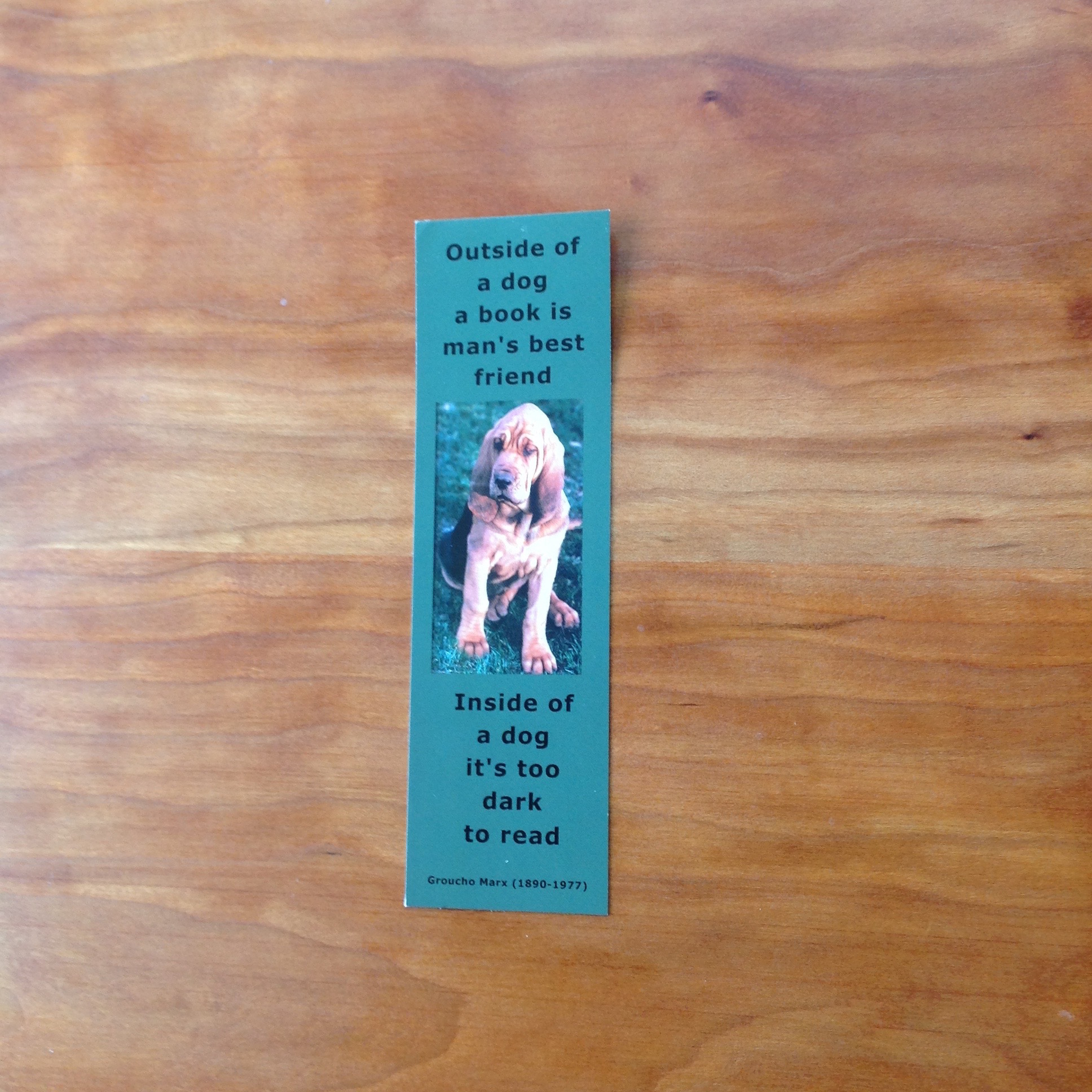
Reading to the end brings this little reward

Reading to the end brings this little reward

Pointed Questions – Seeing Like Henry

Every month, I drive over to town hall and join 4 or 5 other “commissioners” to learn what conservation issues are afoot in our town and offer opinion or, at times, decision on some of them. It’s a volunteer position to which I was appointed by the town council after submitting my resume and having a 15-minute interview. Most of our work involves review of development plans and easements, with an eye toward how they will apportion and protect conserved land. Or how our town will work with land already conserved and managed by the town. And, though we sit behind official nameplates and are televised on local cable, (where, reportedly, we are watched by some coterie of citizens), our meetings tend toward the quiet.

This week, however, brought a little noisy incandescence to our early evening gathering. Under discussion was a development to be sited on a point that juts out into our nearby, muddy bay. The 4 houses have been planned for nearly 20 years, and approved that long ago, so, despite that lag, they were not the issue. What drew our attention, or, more accurately, drew public comment that focused our attention, was the delicate question of erosion of the soft bluffs along the point and the “hardening” proposed to block that erosion.

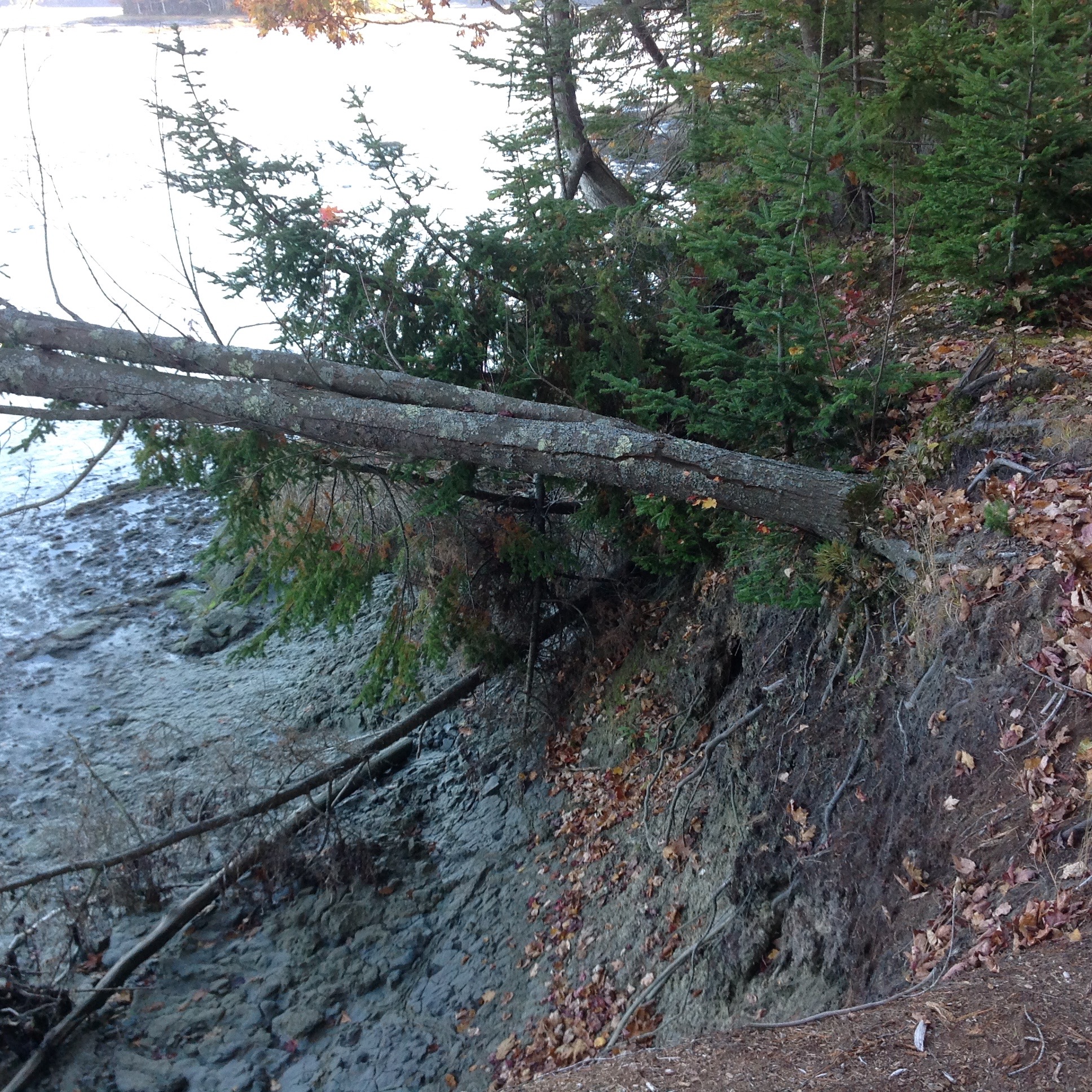
Eroding bluff - candidate for rip-rap.

Eroding bluff – candidate for rip-rap.

Rip-rapping, the dumping and/or positioning of stone, is common practice along the coast, where those who own land look warily at the sea. The sea is, of course, a primary reason why coastliners want to live where they do, but its relationship with land seems often like that of predator and prey. Waves, the ocean’s teeth when stirred by storm, can and do simply gnash land (and dwellings) away.

On a point such as the one under discussion this week – well up the bay and protected from severe storm effects by islands and mudflats – the gnawing away of land is a slow, seemingly gentle, practice. Still, even a cursory glance shows the way repeated rubbings of tide and current can add up to a lot of loss. A little seaside path along the 30-foot high bluff on the point’s east flank illustrates this action: in the ten years I’ve walked this area, erosion’s taken enough of the bluff to drop trees into the sea and force the path 15 feet inland. Left to their own rhythms, sea and bluff would dance slowly inland across this point, perhaps cutting it off entirely in a century or so.

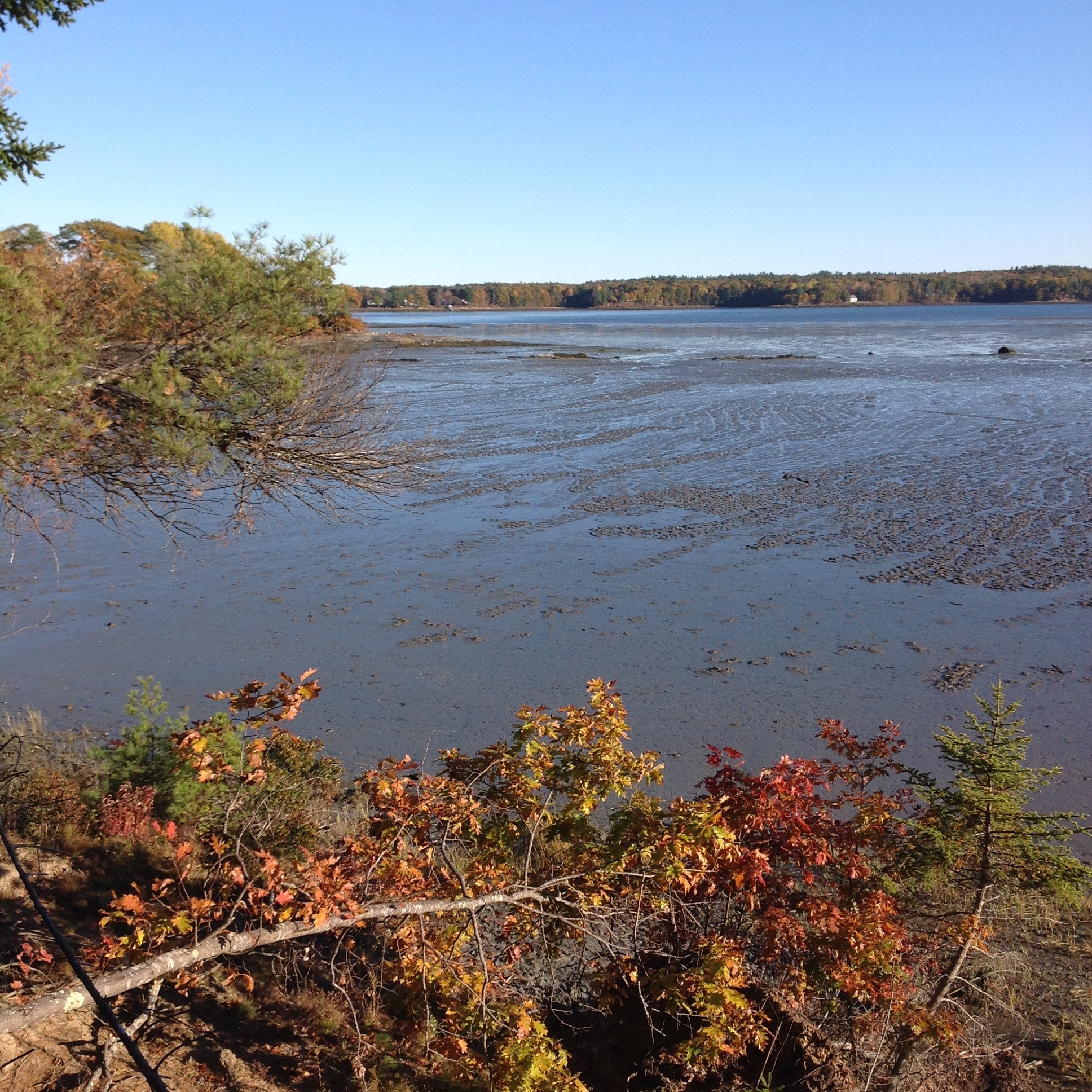
Looking out from the bluff path.

Looking out from the bluff path.

But, of course, we like our houses and landscapes to suggest permanence, even as that’s the last possibility on life’s list. And so: hardening of coast against change; and so: mild controversy at our meeting. Should rip-rap-rock be allowed? Those who would build the four houses say, yea, of course. They want the appearance of bluff security. Careful what you wish/rip-rap for, say others. Studies of coastal erosion show that often hardened coastline in one spot simply shifts erosion to the softer flanks of that hardening; the currents and tides, even the gentle ones up bay, will find a way. They will gnaw what they will gnaw.

Then, there is the possibility of unintended effect on the mudflats surrounding the point. These flats, extensive at low tide, are rich with shellfish; they are fished by clammers who depend for their living upon their consistency. Might the change in point stability affect these flats, either through redirected silt, of via redirected runoff? It’s happened elsewhere. Might a plague of invasive green crabs, clam-eaters linked too to the warming of our waters, make the rip-rap their residence? That too has happened elsewhere. So many pointed questions. To which we will return in January.

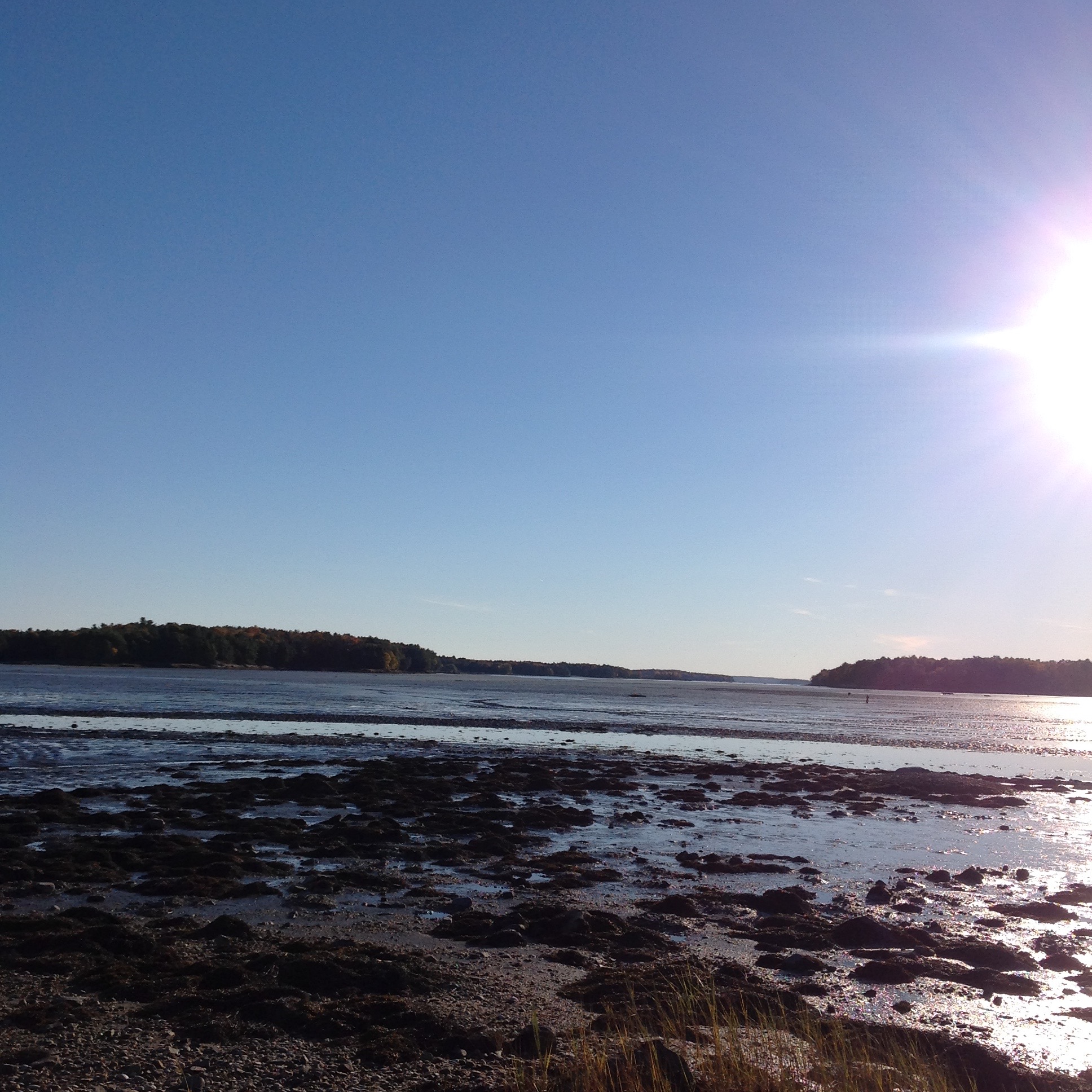
The point's extensive clamflats; the tiny figures are clammers.

The point’s extensive clamflats; the tiny figures are clammers.

All of this would fascinate Henry Thoreau, who walked to his observations, surveyed them closely, measuring often to decimals the works of winds and waters, looking for the stories land and water tell of themselves. Thoreau’s ability to see and tell those stories gets him named often as the father of ecological thinking. For Thoreau, a close look at what was present often allowed him to see back into the past and forward into the future.

When we meet again in January to look at the point proposals, I’ll have walked the land again and tried to see like Henry.