Category Archives: Nature

Season of Sight Season of Heart

For me November has always brought the advent of sight’s season, especially in the woods; often, what has been hidden by leaves – a burl, a nest, an old sign – comes clear. And the long-boned outlines of the land also appear. Then, there is the thin transparency of November’s light; on a cloudless day, it is the clearest glass. Yes, the span of daylight is short, but vision’s length and depth more than compensate for that.

The other day, I was poking around in Thoreau’s November Journal writings, figuring that he too might have found revelation in the month’s light, when I came upon this:

Day before yesterday to the Cliffs in the rain, misty rain. As I approached their edge, I saw the woods beneath, Fair Haven Pond, and the hills across the river, — which, owing to the mist, was as far as I could see, and seemed much further in consequence. I saw these between the converging boughs of two white pines a rod or two from me on the edge of the rock; and I thought that there was no frame to a landscape equal to this, — to see, between two near pine boughs, whose lichens are distinct, a distant forest and lake, the one frame, the other picture. In November a man will eat his heart, if in any month. Journal, 11/1/52.

A different sort of November day, to be sure, but no less lovely in its grays and greens and browns. Here too was Thoreau in the museum of his vision, finding “frames” for the “pictures” hung liberally there. He walked his woods with no less reverence than the slow, heel-clicking strides of museum-goers as they cross polished stone floors and contemplate painters’ visions.

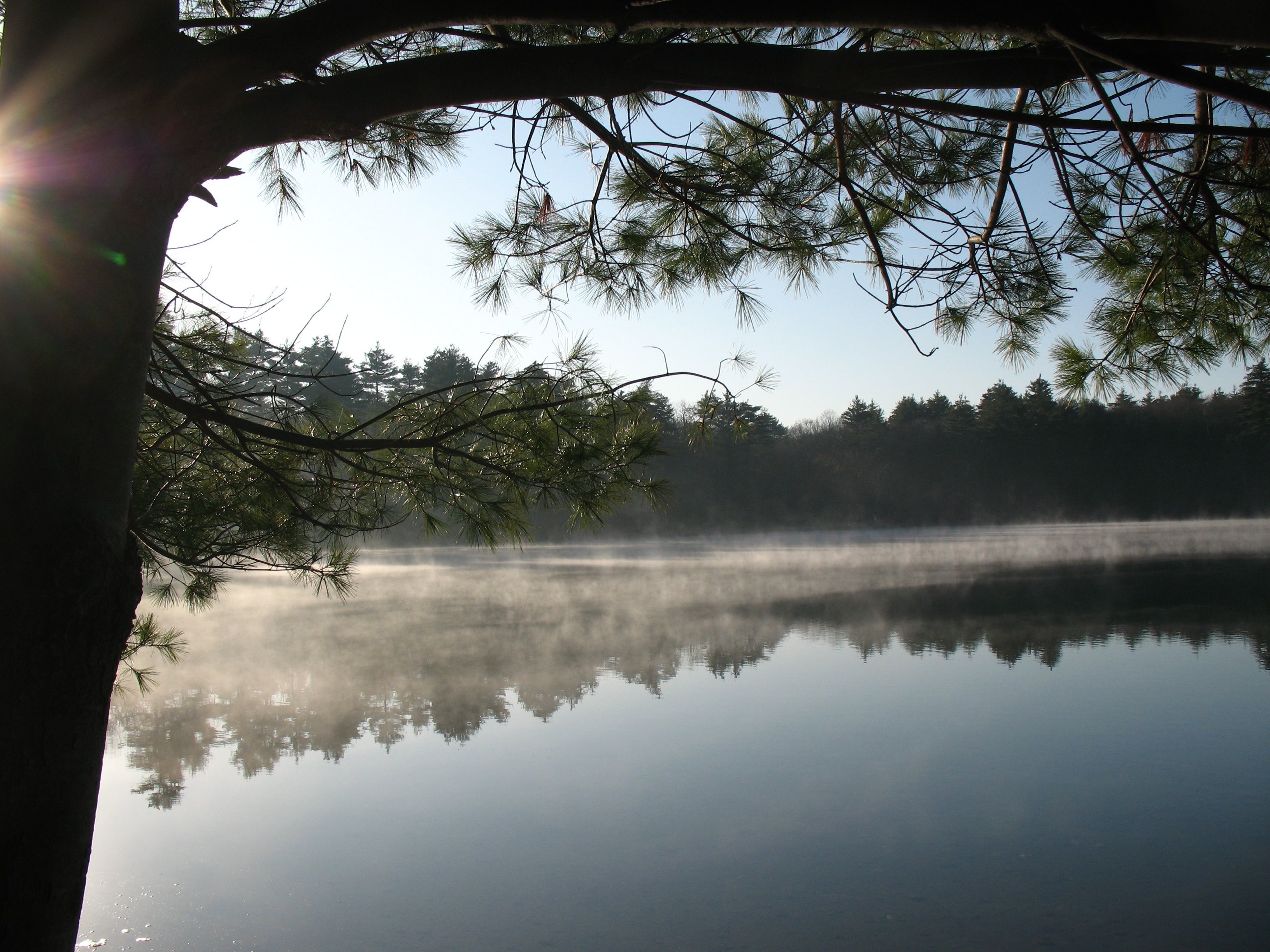
Tree-framed November Light at Walden

Tree-framed November Light at Walden

But what stopped me was the final sentence in this passage – what does it mean to eat your heart? And what in November might incline one that way?

It’s common enough to say “Eat your heart out,” when we think we have something others want. Well, okay, but envy seems unrelated or a small reading of Thoreau’s sentence. Somehow, I thought, it is the unequaled nature of the “frame” that triggers his observation. And the image of Thoreau stopped near the edge of the Fairhaven Cliffs, looking at this loved landscape came clear to me. There he was, and here I was, looking through his eyes at a landscape hung just so; here, contained by the lichened boughs, was the best world, a world to swell your heart.

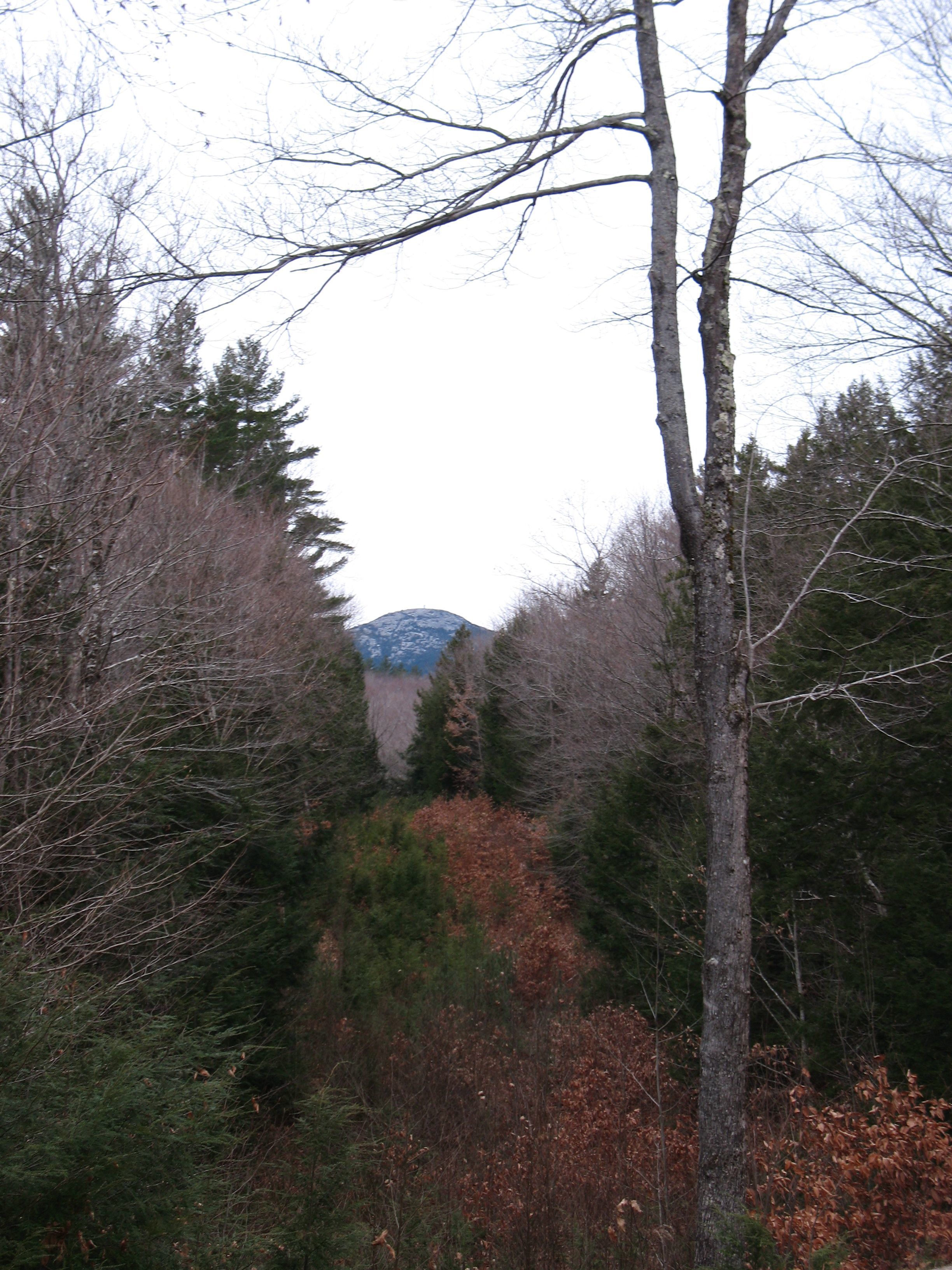
Tree-framed Cardigan Mountain - heartland

Tree-framed Cardigan Mountain – heartland

For a while I could live on that expansive vision, in that framed, chosen world. Perhaps feeling such affectionate surplus is what it means to eat one’s heart.

But you may see through other eyes, see it otherwise. If so, let us know.

After the Hawk

By Ashton Nichols

I have a sad story to tell today. It is about one of those red-tailed hawks that I have written about in an earlier piece on The Roost, perhaps; or, perhaps not. Not so long ago, I was out in the locust and pine woodlot behind Creekside, and I saw a splash of brown and white against the green of the grass underneath one of our largest pine trees. Pine needles littered the ground, but this different brown stood out, a deep burnished color set off by the white lines that surrounded it. As I drew closer it was clear: this was a hawk, a dead hawk, and a big one, lying under the pine tree with his wings splayed and his head cocked to one side, unnaturally crooked as though he had tried to look too far behind him. A red tail.

“He is so beautiful,” I thought to myself and, since I was alone, there was no one to talk to in any case. What can I do? I knew it was a Federal offense to possess even the dead carcass of a raptor. These birds are so valuable as species, and especially as consumers of carrion, that even American citizens can only report dead raptors and then let the Department of Natural Resources take over. Otherwise, we would be awash in the bodies of small, dead mammals, rodents of all kinds: rats, and mice, and voles, and more. But then I remembered something else: Dickinson College, where I teach, has permits–both state and federal–that allow for the obtaining raptor specimens, as long as they will be used solely for educational purposes. Of course, what else would I use this hawk for? Not just to sit on my mantel like a hunter’s trophy. Not just to hide away in a private collection of once-living specimens. Here was a beautiful creature, dead now for who knew what reason, and starting to rot back into the ground unless I intervened. So I did.

I got a large plastic trash bag and spread my hands wide on both sides, lowering the bag down over the body of the hawk. I picked him up, and I thought for a moment that he moved, but then I checked his eyes–one was clouded, the other one was closed–and so I was assured that he had breathed his last breath. (I keep saying “he” in full knowledge that I do not know his gender; sexing birds is very difficult, primarily because their sex-organs, such as they are, are all internal, and they are very often very hard to see and even harder to determine). As fast as I could I got him to our out-building, a large nineteenth-century, chimneyed structure that was used as the summer kitchen back in the day when Creekside was built. Once there, I placed him in the refrigerator’s freezer, closed it tight, and called Dickinson to make sure that I had access to our permits.

I did have such access, and several weeks later I contacted the best taxidermist in South-Central Pennsylvania to help me out. We met and made a plan, and he took the hawk and placed it into his own freezer until he had sufficient time to work on it. Birds are perhaps the most difficult of animals to stuff, primarily because of their feathers, evolutionarily adapted scales–from their lizard-skin days–that often “slip” when even the slightest bit of rot has begun to decay the cells around the follicle. The follicle is a small cavity, just like the one that holds your individual hairs into your head, but in a hawk’s case the follicle keeps the feathers from falling out. The taxidermist assured me that I had gotten him into my freezer in time, and he would make a fine mounted specimen. At least, that is what the taxidermist said.

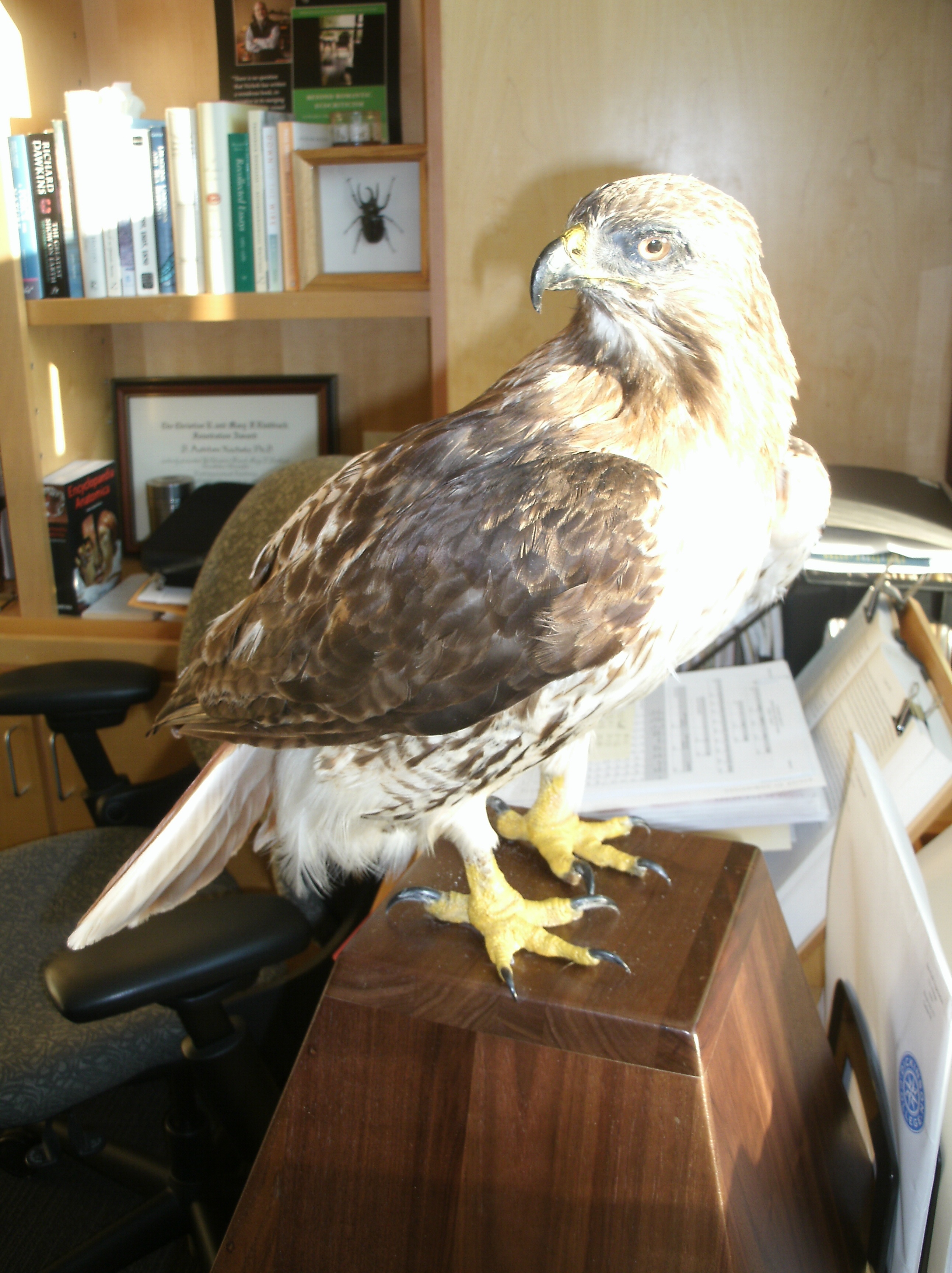
Several months later I had my result, and here he is:

HawkStanding

He is as beautiful a specimen as you will ever see, stuffed in the perfect way that makes me worry–and ask my students–about why it is that human beings like to take dead animals, return them to a lifelike condition, and then display them as though nothing has ever happened to them, as though they are still alive. I have been to natural history museums from New York to Naples, from Philadelphia to Florence, from London to Bologna, from Edinburgh to Rome and, in all of these settings I have wondered what it is that causes humans to track down these creatures, capture and kill then, and then finally display and exhibit them as though all of them are still among the living creatures on the planet.

I have no definitive answer to these questions. “I have killed and mounted this creature, so I am in control of its life,” is, of course, the most obvious answer. In colonial settings, we might say that every colonizer wants to say, at some level, “Look at what I have done; I have gone to the wilds of Africa [or Asia, South America, or the Arctic realms], and I have brought back these creatures and dominated them to such an extent that I can show them off to you now in a mighty civilized city.” But perhaps such an explanation is not sufficient. Perhaps we all collect, and kill [I work hard never to kill], and then display these creatures simply out of a desire to know them, a desire to possess, not out of greed, but out of a longing for knowledge, a longing for understanding. If I have this creature, then I am a part of this creature’s world. “I want to know you,” we seem to be saying; “I want to know you as well as other members of your species, and other species around you, know you.”

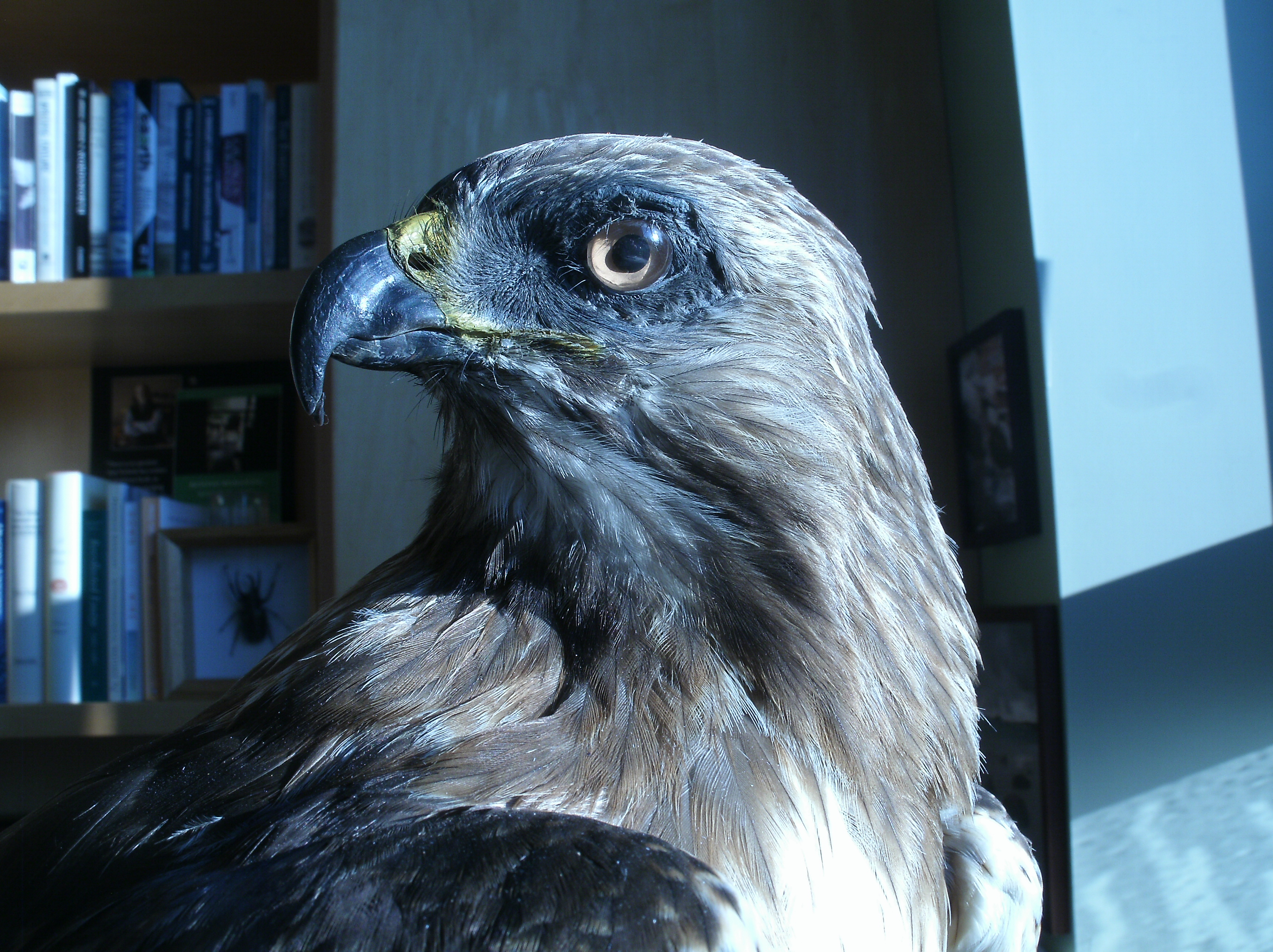
“Let me into your world,” we seem to be saying; and here is as close as we can ever get:
HawkClose

Redwoods Abroad

It’s been said that Henry Thoreau would walk miles to visit a tree, and, over time, I’ve come to understand the lure of arboreal friendship and walking for it. The tree, after all, can’t come to me. There’s a large white pine I like especially at the bend of a trail that descends from the Andromeda Ponds behind Walden toward Fairhaven Bay; I run my hand across its rough bark at each passing.

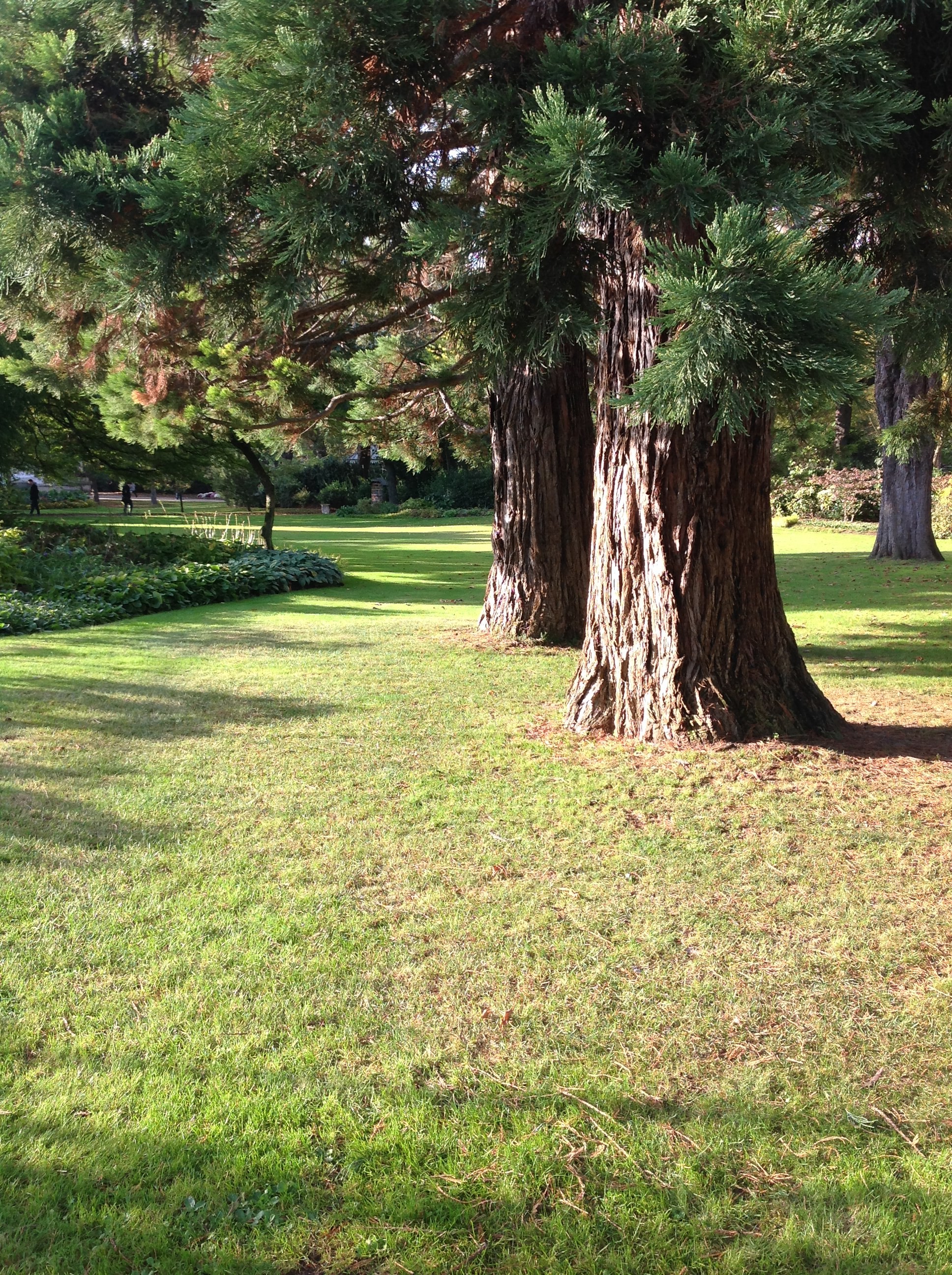
The other day, during a walk in the Luxembourg Gardens, my eye was drawn to two large trees – conifers of some sort, they looked decidedly foreign in this setting, and, even given good size, they looked young. I bent to read the small sign by the path side and found they were sequoias. And that, of course, set me to wondering how two redwoods had arrived in the middle of Paris.

Well rooted

Well rooted


Not long after I’d begun this wondering, I’d learned that there are redwoods all over Europe, the largest of which is Scottish and now reaches some 54 meters into the air. It is said to be “growing quickly.” Europe’s redwoods don’t yet match the sky-scratching height of our tallest trees out west, where a sequoia named Genesis rises 86.2 meters to the current record, but after only 160 or so years, they are on their way. The temperate U.K. and Belgium and France seem favored locales for redwoods in Europe.

What also caught my attention was the timing of an apparent enthusiasm for planting these monumental trees. The largest of the lot date from the 1850s, a time when, an ocean away, Henry Thoreau was traveling a good deal in Concord to visit woody friends of his own.

Discovered only in 1852 in California, the giant sequoia rapidly became a tree-to-have in English Gardens, which were fashionable in the 2nd half of the 19th century throughout much of Europe. The gardens, influenced by Romanticism, had intentionally wild sectors to them, and the sequoia came from the wild Americas. That it promised also to be monumental seemed in keeping with a European mindset.


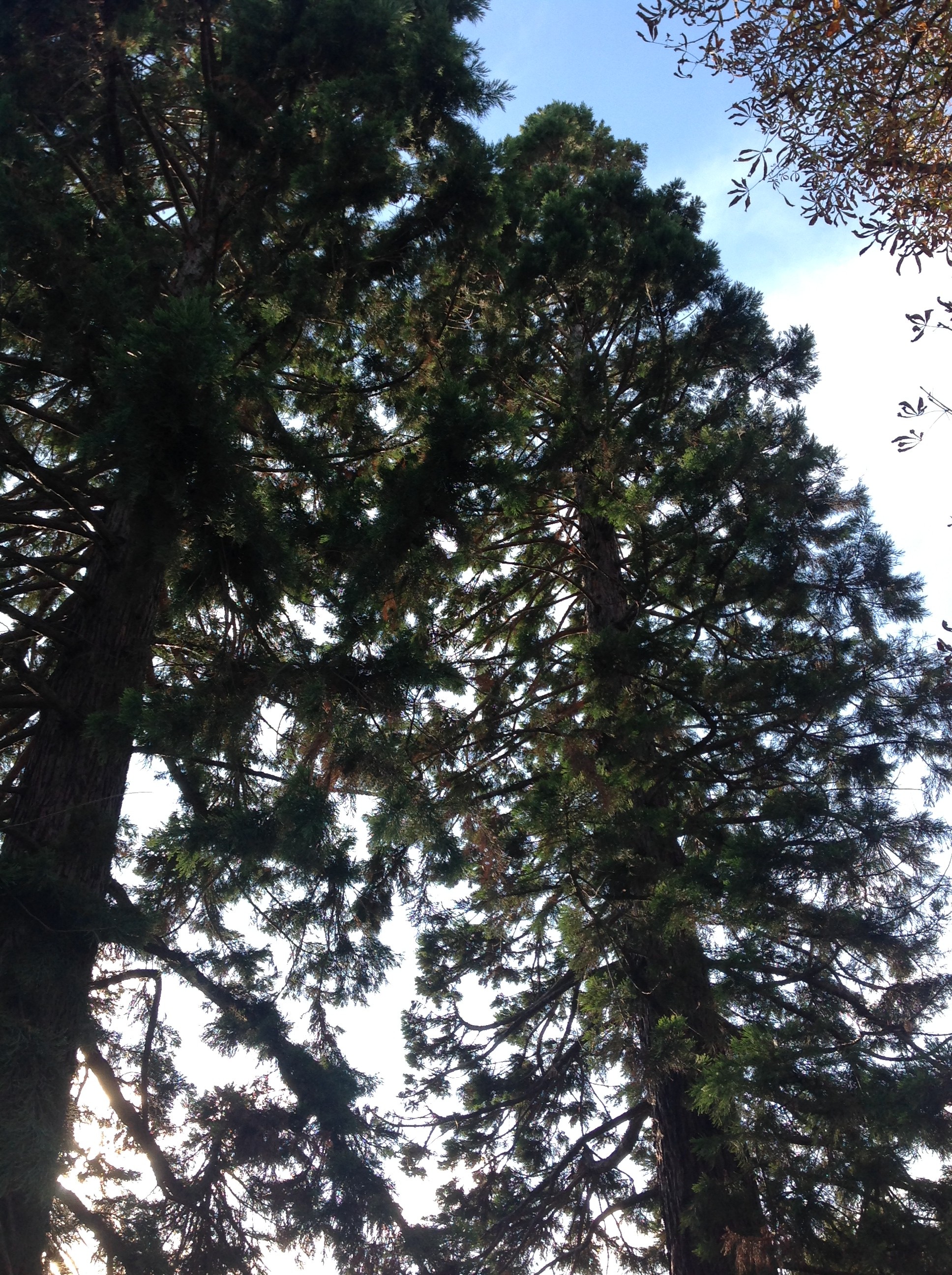
Looking up in the Luxembourg Gardens

Looking up in the Luxembourg Gardens

Whether Thoreau paid much attention to this woody discovery and its hopscotch migration eastward, isn’t clear. His journal doesn’t attend to the June 27th, 1853 felling of a huge sequoia (reportedly over 300 feet high and 1,224 years old) in California – a media sensation; eventual fallout from it and other cuttings helped lead to John Muir (who lionized Thoreau) and the 1872 founding of the park at Yosemite, and then on to the national park system.

It seems that, faithful to Concord and his local focus, Thoreau spent his time and ink thinking about trees he knew.

But Thoreau does mention the sequoia in the writings that became Faith in a Seed:
“What would Pliny and Evelyn have said of that eighth wonder of
the world, the giant sequoia of California, which springing from so
small a seed (the cones are said to be shaped like those of a white
pine, but to be only two and a half inches long) has outlasted so many
of the kingdoms of the world?
If we suppose the earth to have sprung from a seed as small in
proportion as the seed of a willow is compared with a large willow
tree, then the seed of the earth, as I calculate, would have been
equal to a globe less than two and a half miles in diameter, which
might lie on about one-tenth of the surface of this town.”

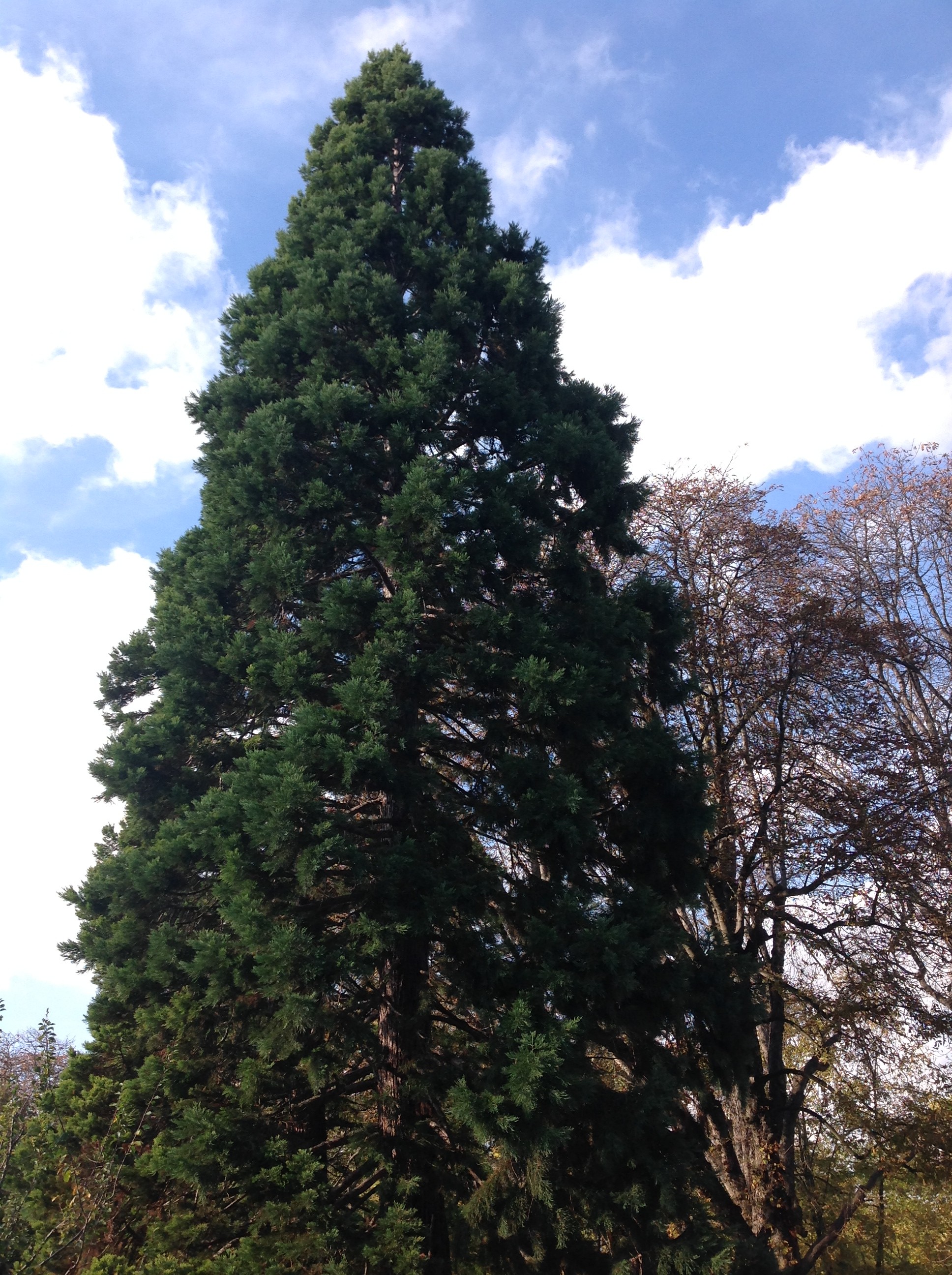
Almost every day during this sojourn, I walk over to see the two sequoias. Still in their youth – I estimate they are 20 to 25 meters tall – already they have begun looking down at many of their elders; it won’t be long before they see much of Paris. It’s good to make new friends.

Thanks to Corinne Smith for unearthing the quotation from Faith in a Seed.

Sky-scatcher

Sky-scratcher